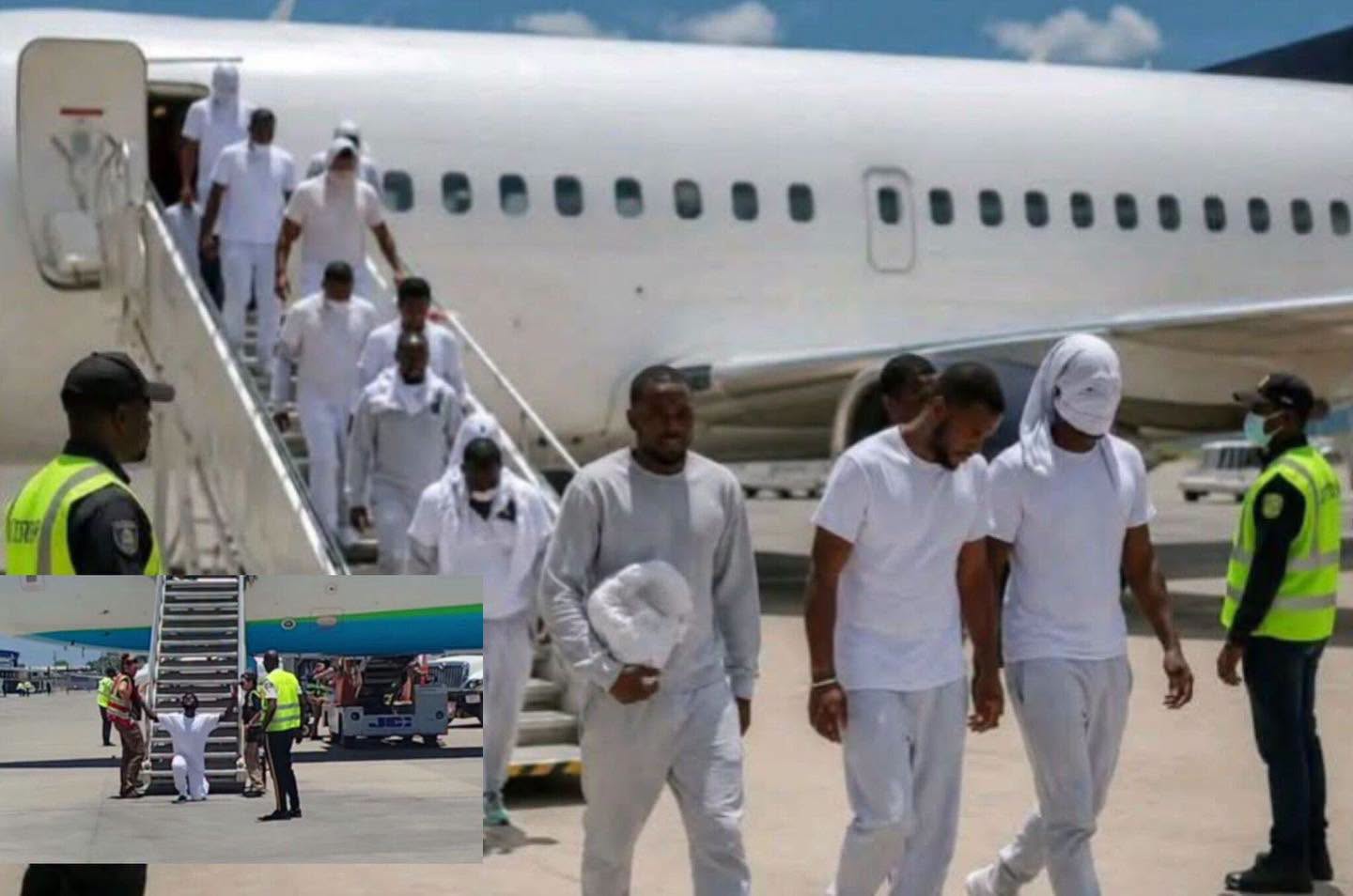


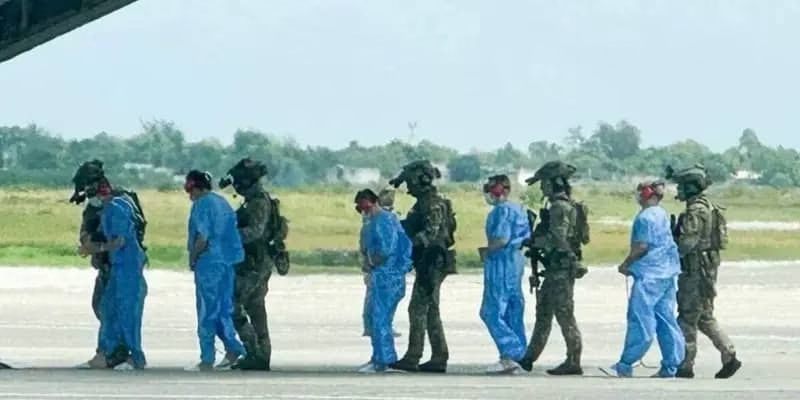
Eighteen people detained in Haiti were transferred to the United States on Sunday, September 20, 2026, aboard a U.S. military aircraft. They are due to appear before the federal court for the Southern District of Florida as part of the investigation into the assassination of Haitian President Jovenel Moïse. The federal prosecutor for that district, Jason A. Reding Quiñones, confirmed the operation.
According to U.S. authorities, a total of thirty people have now been indicted in this case. The group transferred on Sunday includes more than a dozen former Colombian soldiers as well as Haitian nationals, among them Joseph Félix Badio, a former head of the anti-corruption unit at the Ministry of Justice, considered a key suspect, according to available information. However, the American prosecutor has not officially disclosed the names of the eighteen people transported.
In a message posted on X, Jason A. Reding Quiñones described the transfer as a new stage in the American proceedings, stating that investigators will continue to follow the evidence in order to identify those who may have financed, facilitated, or supported the operation that led to the assassination of the Haitian president. This step comes as four men have already been found guilty in Florida, in May 2026, for their role in the plot against Jovenel Moïse.
Five years of prosecution: The milestones already reached
Jovenel Moïse was killed on July 7, 2021, at his residence in Pèlerin, in Port-au-Prince, by an armed commando. His wife, Martine Moïse, was injured in the attack but survived. The crime plunged a country already weakened by years of political, economic, and security crisis into even deeper instability.

U.S. authorities believe that part of the planning and logistics of the operation took place in southern Florida, which justifies the jurisdiction of the American federal courts in this case.
In May 2026, a federal jury in Miami found four men guilty of their role in the plot against Jovenel Moïse. They are Arcangel Pretel Ortiz, Antonio Intriago, Walter Veintemilla, and James Solages. They were found guilty of conspiracy to kill or kidnap the Haitian president, as well as providing material support to this criminal enterprise. All four face life in prison.
According to the Department of Justice, the evidence presented during a nine-week trial showed that these men had recruited around twenty former Colombian soldiers, provided them with funds, weapons, ammunition, and tactical vests, and coordinated the operation that resulted in the death of the Haitian president. The defense argued that the defendants believed they were executing an arrest warrant and not an assassination.
Before this verdict, at least five people had already pleaded guilty and been sentenced to life in prison in this case, including two former Colombian soldiers, former Haitian Senator John Joel Joseph, and Haitian-Chilean businessman Rodolphe Jaar. A sixth person was sentenced to nine years in prison for providing logistical support without knowing the true purpose of the operation. With the May 2026 verdict, at least nine people have therefore been convicted in the United States in connection with this case.
Another defendant, Haitian-American pastor Christian Sanon, is to be tried later, as his appearance was postponed for health reasons.

The Haitian judicial process stalled
Unlike the significant progress in the American proceedings, the judicial process in Haiti remains blocked. Haitian police had arrested around forty suspects after the crime, including about twenty Colombian mercenaries. However, due to chronic structural dysfunctions — corruption, lack of resources, political interference, threatened or resigning judges, and gang violence preventing the normal functioning of the courts — the case has never been able to be tried in Haiti.
The central question still unanswered
Despite the convictions obtained by the American justice system, the fundamental question remains: who ordered the assassination of Jovenel Moïse? The New York Times, commenting on the Miami verdict, noted that the trial had highlighted a network of intermediaries and mercenaries motivated by financial interests, but that the identity of the masterminds has never been officially established.
Federal prosecutor Jason A. Reding Quiñones stated that investigators would continue to “follow the evidence wherever it leads — to those who financed, facilitated, supported, or made possible by criminal means the assassination of President Moïse.” Brett Skiles, head of the FBI’s Miami office, said the defendants’ motivations were to obtain “illegal business contracts.”
Haiti has not held elections since 2016, and the presidency has been vacant since the assassination of Jovenel Moïse. According to the International Organization for Migration, nearly 1.5 million people, out of a population of about 11 million, have been displaced by gang violence. An electoral calendar published in late July 2026 sets the first round of the presidential and legislative elections for December 2026, with a second round in February 2027.
With the transfer of these eighteen new suspects, the center of gravity of the proceedings has shifted toward the American justice system. But for Jovenel Moïse’s family and for many Haitians, the identity of the true masterminds of the assassination remains an unanswered question — and it will probably take more time before the truth is fully established.
https://ctninfo.com/assassination-of-jovenel-moise-18-detainees-transferred-to-the-united-states-where-does-the-investigation-stand-five-years-later/
https://www.facebook.com/CaribbeanNewsMedia