


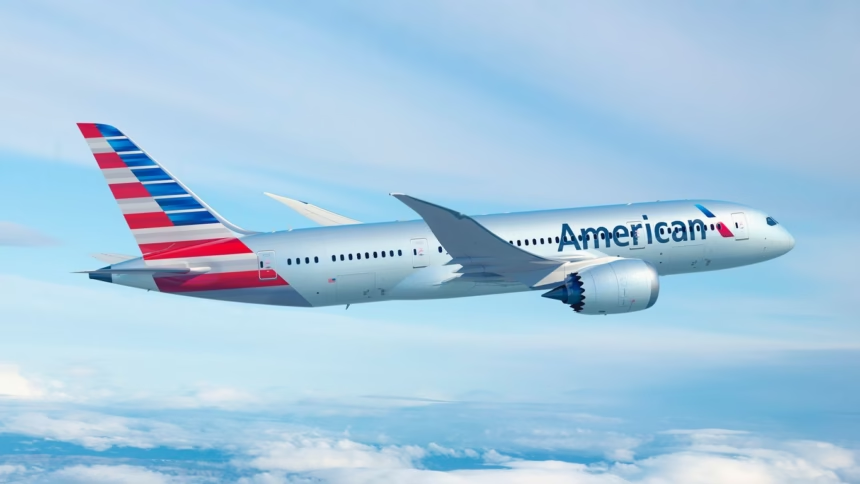
On Sunday, November 1, 2026, Haitian skies regained a major international commercial connection. After a suspension of operations lasting nearly two years, the American airline American Airlines has officially returned to the country’s airspace. The inaugural flight, a Boeing 737 arriving directly from Miami, landed safely on the runways of Cap-Haïtien International Airport.
This long-awaited return comes with a highly symbolic touch: the cabin crew and pilots of this historic flight were entirely made up of Haitian nationals. A source of pride for the diaspora and proof of “local expertise” within the American aviation giant, which is thus physically reconnecting with the former pearl of the Antilles—at least through its northern side.
However, this resumption of flights remains strictly partial and highlights a deeply fractured geographic and security reality. The capital, Port-au-Prince, remains completely excluded from this air network. The reason for this exclusion is unequivocal: the grave security crisis paralyzing the city and its surroundings, where armed gangs rule.
This locking down of the capital’s airspace is directly linked to strict directives from the Federal Aviation Administration (FAA). The U.S. civil aviation regulator firmly maintains its ban on all U.S. airlines operating flights to Toussaint Louverture Airport. This decision, taken after commercial aircraft were targeted by automatic-weapon fire during approach or landing, was recently extended by the FAA. The U.S. authority considers that the ballistic risk and the threat posed by criminal groups controlling the approaches to Port-au-Prince airport are still too high to guarantee the safety of passengers and crews.

It is therefore in this context of an airspace ban over the capital that Cap-Haïtien Airport is emerging as the country’s true secure international gateway. Located more than 250 kilometers from the capital, the northern city enjoys a relative security lull that has allowed the authorities to guarantee the security of airport facilities.
For economic actors in the region, this direct connection with Miami is a breath of fresh air. It facilitates trade, stimulates the local economic fabric, and paves the way for a tentative revival of tourism, a sector once flourishing in the historic city.
On a human level, the impact is just as considerable. For travelers and the diaspora, this flight represents a vital alternative. During the long months of interruption, many Haitians wishing to reach the United States were forced to take extremely dangerous land routes, crossing areas controlled by bandits to reach the Dominican Republic and catch a flight there. The restoration of the Miami–Cap-Haïtien route considerably shortens distances and, above all, spares civilians undue risks.
Nevertheless, while the landing of this Boeing 737 is an undeniable positive signal, it painfully recalls the scale of Haiti’s crisis. As long as the FAA maintains its ban and armed gangs continue to dictate their law in the capital, the country will remain cut off from the world through its own nerve center. The reopening of Haitian skies will only be truly complete and lasting when the state manages to restore its authority and security across the entire territory, starting with Port-au-Prince. In the meantime, the North is breathing, but the rest of the country remains suffocated by isolation.