


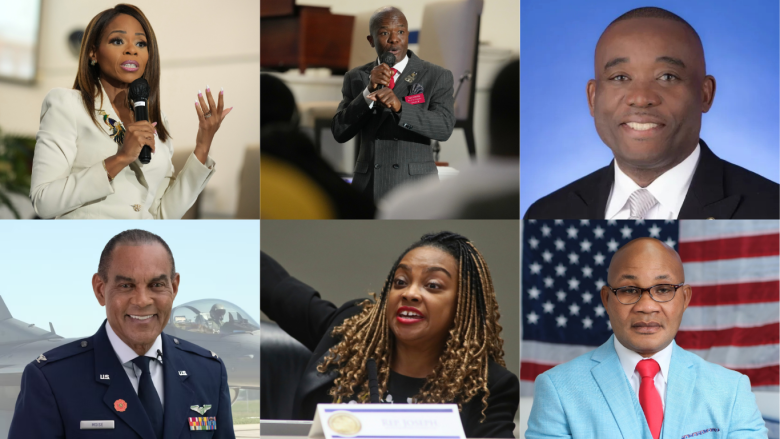
Florida is home to more residents of Haitian descent than any other state, but after Tuesday’s primary, none of them will be represented in Congress by one of their own. Every Haitian American candidate for the U.S. House lost, and the two who reached for the governor’s mansion were beaten well back.
Six candidates of Haitian origin were on the Aug. 18 ballot across Florida’s most-watched races — four for Congress, two for governor — a slate the Haitian Times tracked as the largest in recent memory. Not one advanced.
The result leaves nearly half a million Floridians of Haitian descent, clustered in Little Haiti, North Miami, Miami Gardens and Broward’s Caribbean corridor, without a Haitian voice in Washington at a moment when Temporary Protected Status and deportation policy dominate the community’s worries.
Two of the six ran for governor, a state office rather than a federal seat. But their bids were the community’s most visible statewide play in years, and they ended the same way as the congressional races: short of the nomination.
The clearest picture of the shutout is Florida’s 20th Congressional District, the Broward-based seat that has elected Black lawmakers for more than three decades.
Its former representative, Sheila Cherfilus-McCormick, Florida’s first Haitian American member of Congress, resigned the seat in April amid a federal indictment tied to the alleged misuse of roughly $5 million in federal relief funds. She has denied wrongdoing and ran again to reclaim the seat.
She finished fourth. According to results reported by the Associated Press through CBS News Miami, Cherfilus-McCormick drew 9.2% — 6,187 votes. The Democratic nomination went to longtime Rep. Debbie Wasserman Schultz with 45.3% (30,480 votes), after the Republican-drawn map dismantled her own district and she moved into the 20th. Former Broward Mayor Dale Holness and educator Elijah Manley placed second and third.
The Republican side of the same district carried the other FL-20 Haitian candidate. Rod Joseph — a Haitian immigrant, U.S. Army veteran and Purple Heart recipient, finished second with 20.5% (2,831 votes), behind Pompano Beach businessman Brent Andersen at 53.8% (7,435).
Andersen and Wasserman Schultz now advance to the November general election. Neither is Haitian.
Miami-Dade’s open seat: two Haitian veterans of local politics, both out
Florida’s 24th Congressional District — which takes in Little Haiti, North Miami and Miami Gardens — opened up when Rep. Frederica Wilson chose not to seek reelection.

Seven Democrats ran. Two are Haitian American, and both landed near the bottom.
Dr. Rudolph “Rudy” Moise, a Haitian-born physician and retired Air Force colonel making his third run for Congress, finished fourth with 7.6% (4,509 votes).
Florida Politics reported he spent more than $555,000 on the race, second only to the winner, and campaigned on lowering the Medicare eligibility age to 55.
Jean Monestime, the first Haitian American to sit on and chair the Miami-Dade County Commission, placed fifth with 5.3% (3,156 votes), running on a promise to move renters into homeownership and to extend Temporary Protected Status.
Miami-Dade Commissioner Oliver Gilbert III, endorsed by Wilson, won the nomination with 34.4% (20,390 votes), edging state Sen. Shevrin Jones, who conceded Tuesday night. Gilbert faces Republican Te Brown in November in a district that leans heavily Democratic.
The statewide bids: third place and a rounding error
Two Haitian candidates aimed higher, at the governor’s race.
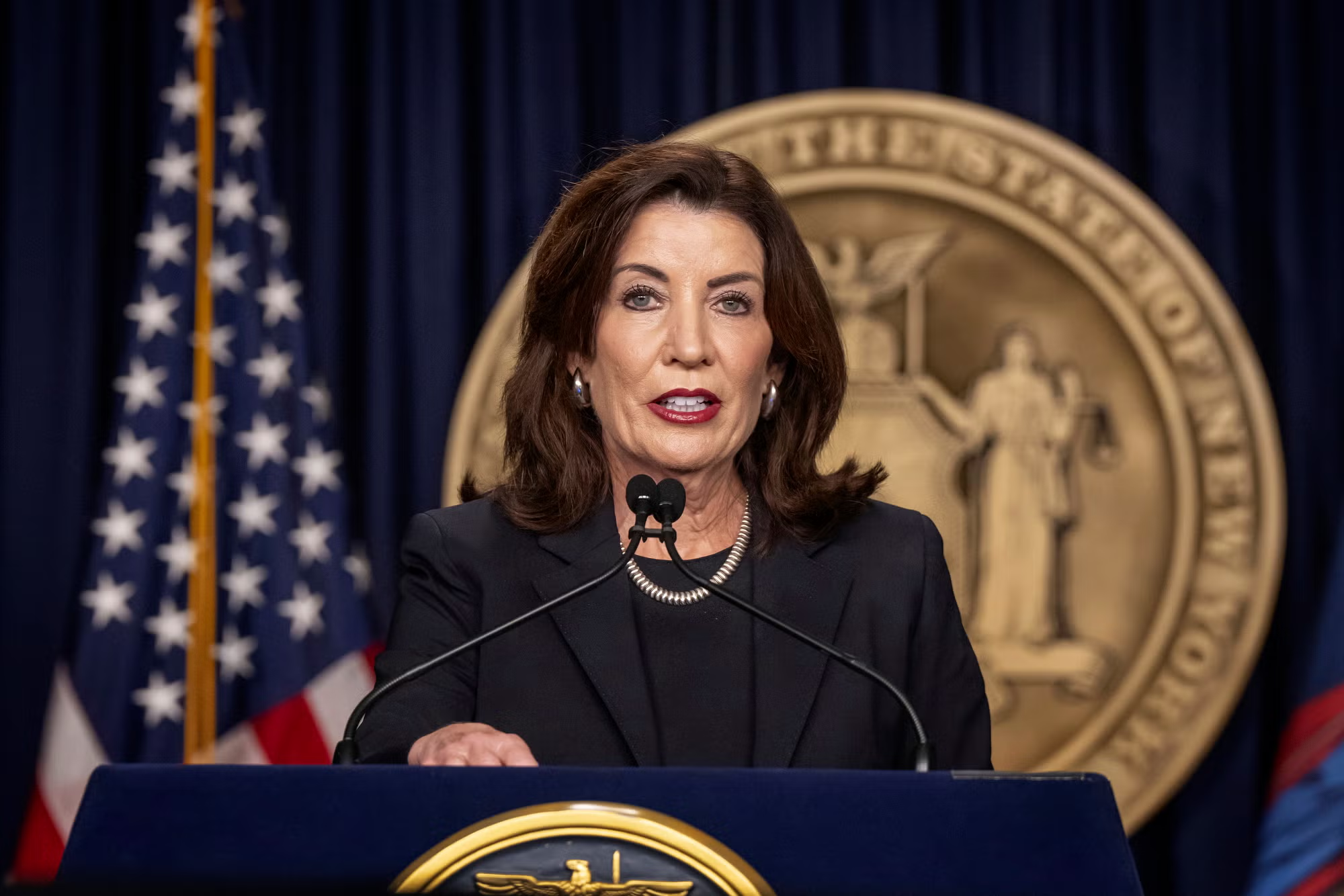
State Rep. Dotie Joseph, D-North Miami, a Haitian-born attorney and, by her own account and Wikipedia’s, the first Haitian American to hold a legislative-leadership post in any U.S. statehouse — finished third in the Democratic primary with about 10%, roughly 119,000 votes. Former Rep. David Jolly took the nomination with 61%, and former teacher Dayna Marie Foster was second with 15%.
On the Republican side, Caneste Succe, who was born in Haiti and settled in Lantana, ran in an 11-candidate field. Results posted by ClickOrlando showed him with about 6,200 votes—under 1% —folded into the “other candidates” tally, far behind the long list of Republican candidates, with Rep. Byron Donalds winning the Republican nomination with 47.8%. Jolly and Donalds will meet in November for the seat term-limited Gov. Ron DeSantis is vacating.
The shutout played out on a congressional map Florida Republicans redrew this year, after the U.S. Supreme Court’s ruling in Louisiana v. Callais gave the state more room to move district lines.
Wasserman Schultz entered the 20th only after her own seat was reshaped to favor Republicans — a decision that drew public criticism from Black leaders, as NBC News and MSNBC reported. In the run-up to the primary, several Black candidates in that district, including the Haitian former incumbent, discussed consolidating behind fewer names to avoid splitting the vote, CBS News Miami reported. No agreement was reached, and the vote split.
The numbers that did not translate into a nominee are substantial. Florida has the largest number of residents of Haitian descent, more than any state, and Haitian Creole is among the most spoken languages at home in the state, per Census-based figures cited by Axios and World Population Review. For a community that size — one facing acute federal pressure on immigration status — Tuesday’s outcome means entering the next Congress represented entirely by others.
https://www.facebook.com/CaribbeanNewsMedia
https://ctninfo.com/?p=44239&preview=true
Editor’s note: This article covers only candidates of Haitian origin who ran for governor or for federal office (the U.S. House). Other candidates of Haitian descent ran — and some won — in state legislative and municipal races that are outside its scope.
This article was originally written in English. Other language versions are produced using AI translation software, and errors are possible — the English version is authoritative. CTN also uses AI to convert text into audio.