

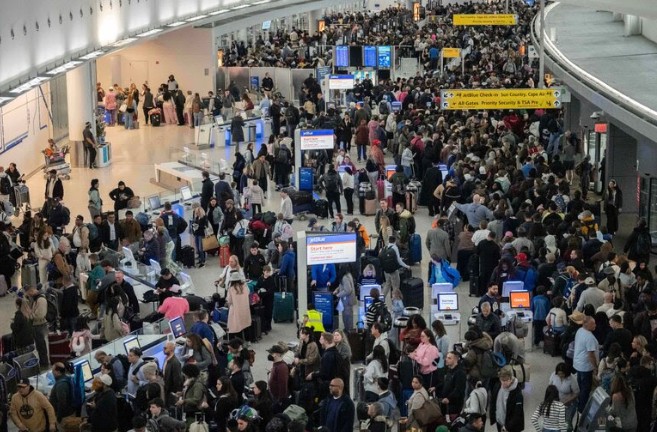
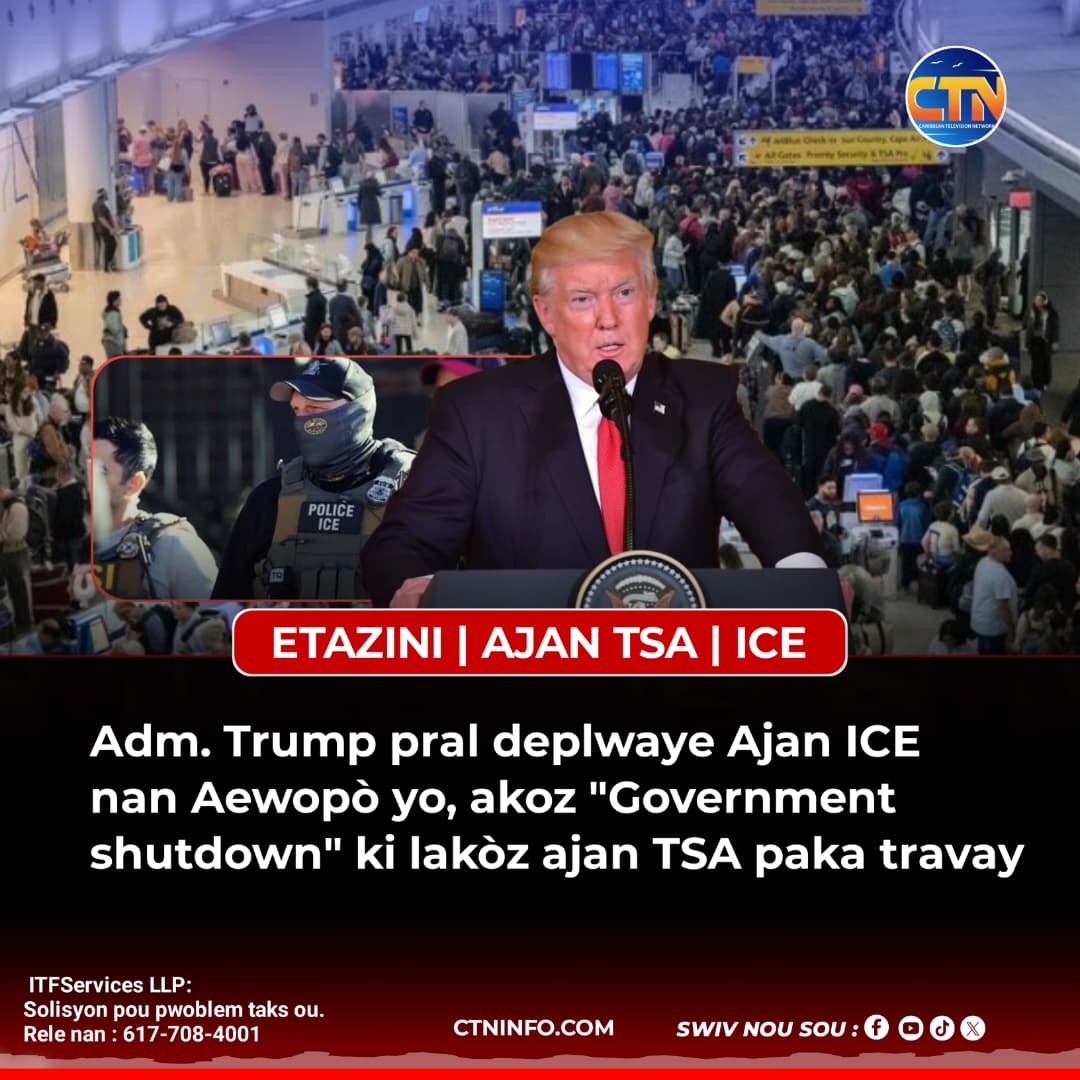
The Trump administration said ICE agents will be deployed at airports nationwide starting Monday to assist a short-staffed TSA during the partial government shutdown, according to the New York Times.
The deployment follows long security waits at airports, with TSA ranks thinned by unpaid workers during the shutdown.
Homan told CNN, “We will be at airports tomorrow, helping move those lines along,” the New York Times reported.
Trump called the operation both a remedy for airport congestion and an enforcement action, saying agents would arrest undocumented immigrants during the operations, as reported by the New York Times.
Homan said on CNN that details of the deployment—including agent numbers and airport locations—were still being finalized, but would focus on airports with the longest security delays.
“We’ll have a well-thought-out plan,” Homan told CNN, as quoted by the New York Times.
Homan emphasized that ICE agents will support TSA by handling non-specialized duties, allowing trained screeners to focus on checkpoints.
Immediate pushback from Democrats
House Minority Leader Hakeem Jeffries warned that deploying ICE agents to airports could “potentially brutalize or kill” the public, citing the fatal shooting of two American citizens during an ICE operation in January, according to the New York Times.
For immigrant communities — and particularly for Haitian diaspora families who travel frequently between the United States, Haiti, and other Caribbean nations — the deployment raises immediate practical concerns that extend well beyond airport wait times.
The presence of ICE agents in domestic airports, even in a nominally supportive role, creates an environment where immigration enforcement and routine travel intersect in ways they previously did not. Travelers with pending immigration cases, those holding Temporary Protected Status, and even lawful permanent residents may face a heightened sense of vulnerability in airports where armed immigration officers are now stationed at exits and checkpoints.
Homan’s statements, as reported by the Times, focused on logistical support for TSA. President Trump’s comments, which included promises of arrests, leave significant ambiguity about what agents will actually do once deployed.
That ambiguity is itself a source of concern. Immigration attorneys and civil liberties organizations have long warned that the expansion of immigration enforcement into spaces associated with everyday life — courthouses, hospitals, schools, and now airports — produces a deterrent effect that goes beyond any individual arrest. People avoid travel. They skip appointments. They withdraw from public life. The cumulative impact falls hardest on communities that are already navigating the immigration system under enormous stress.
What travelers should know?
As of Sunday evening, the administration had not specified which airports will see ICE deployments or what authority agents will have. Travelers with questions about their rights should consult a licensed immigration attorney or legal aid organization before traveling.
CTN will provide updates as more details become available.
Disclaimer: This article was originally written and published in English by the Caribbean Television Network (CTN). Versions in other languages have been produced through automated translation using artificial intelligence software.
While every effort is made to ensure quality, automated translations may contain inaccuracies, awkward phrasing, or errors that do not reflect the intent of the original text.
Readers are encouraged to consult the original English version for the most accurate and authoritative account.
CTN assumes no responsibility for misinterpretations arising from automated translations.