


Drawing primarily on data from the Bureau of Labor Statistics (BLS), with corroborating analysis from the National Foundation for American Policy (NFAP), the Fortune report finds that despite tough immigration restrictions, the percentage of U.S.-born adults participating in the workforce actually declined in the past year, falling from 61.4% to 61%. This unexpected dip comes as the Trump administration had promoted these policies as a solution to open more jobs for American workers. The article cites both BLS statistics and NFAP’s analysis to support this conclusion.
According to the NFAP analysis, labor force participation for U.S.-born workers aged 16 and older decreased from 61.4% in February 2025 to 61% in February 2026. This drop in the U.S.-born labor force coincided with a period of increased immigration enforcement, during which the government allocated approximately $170 billion to border control and an additional $75 billion to Immigration and Customs Enforcement (ICE) through 2029.
The Fortune article reports that these enforcement efforts led to a significant reduction in the number of foreign-born workers in the United States. The NFAP analysis found a decline of 596,000 foreign-born workers since January 2026 and a total of 1.01 million since the March 2025 peak. However, despite this decrease in the immigrant workforce, job opportunities for U.S.-born workers did not increase as expected. Notably, the decline in immigrant employment was most pronounced in industries with large numbers of low-wage or low-skill positions, such as agriculture and food services. High-skill sectors experienced much smaller reductions and often continued to face worker shortages. This uneven impact may help explain why native-born job gains failed to materialize, as many of the open positions were not easily filled by U.S.-born workers due to differences in skills, experience, or job preferences.
Labor economist and NFAP senior fellow Mark Regets is quoted in the report, stating that most economic research shows immigration actually increases employment opportunities for native-born Americans. This perspective is supported by a substantial body of scholarly literature: for example, a comprehensive review by Ottaviano and Peri (2012) finds that immigration has a generally positive or neutral effect on native-born workers’ wages and employment (Ottaviano & Peri, 2012). The article suggests that reduced immigration may be harming American workers rather than helping them.
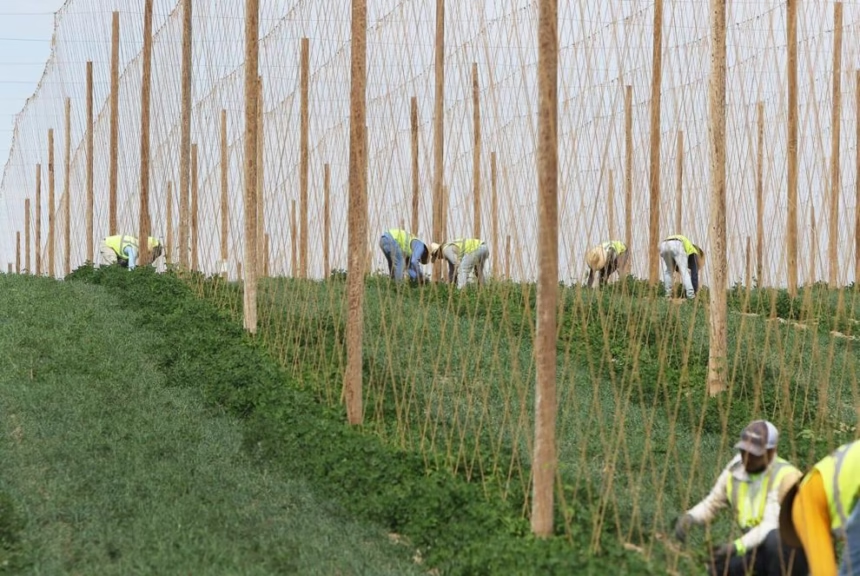
The Fortune report also highlights the potential negative impact of these policies on various industries that rely heavily on immigrant labor. Sectors such as construction, agriculture, and food services are reportedly struggling to find enough employees to maintain operations, which could lead to business closures and further job losses. In construction, tighter visa caps and increased workplace raids have sharply limited access to migrant workers, who make up a crucial part of the labor force. Agriculture has been hit especially hard by restrictions on seasonal work visas, leading to unharvested crops and lower productivity. Food services have faced difficulty recruiting staff since the expansion of E-Verify requirements has reduced many employers’ ability to hire foreign-born workers. By linking these specific enforcement measures to sector shortages, the analysis underscores how policy mechanisms contribute to ongoing labor challenges.
Furthermore, the article cites a Cato Institute study that found immigrants contributed significantly to the U.S. economy through taxes and Social Security from 1994 to 2023. According to the study, immigrants paid $14.5 trillion more in taxes than they received in federal, state, and local benefits during this period. The Fortune report suggests that without this economic contribution, public debt would exceed 200% of the U.S. GDP.
The article also mentions the potential impact of negative net migration on the U.S. economy, citing a working paper from the American Enterprise Institute (AEI). The paper estimates that negative net migration could reduce U.S. GDP growth by 0.3% to 0.4% annually, amounting to a loss of $70.5 billion to $94 billion in economic output.
While the Fortune report does not specifically focus on the Haitian immigrant community, it does mention that the Trump administration’s policies have affected immigrants from various countries. The article notes that these policies have led to family separations and forced some individuals to return to countries where they may face difficult circumstances.
The Fortune article concludes by suggesting that the data raises concerns about the effectiveness of the Trump administration’s restrictive immigration policies in achieving their stated goals. The report implies that these policies may be hindering the growth and advancement of the U.S. economy and workforce, rather than strengthening them as intended.
In summary, the Fortune article presents data and analysis from various sources to suggest that the Trump administration’s efforts to curb immigration have not resulted in increased job opportunities for U.S.-born workers. The report highlights the potential negative consequences of these policies on the economy, workforce, and immigrant communities, without offering explicit opinions or recommendations. As lawmakers and stakeholders consider the future of immigration policy, an open question remains: What reforms could reconcile border security with economic growth?