



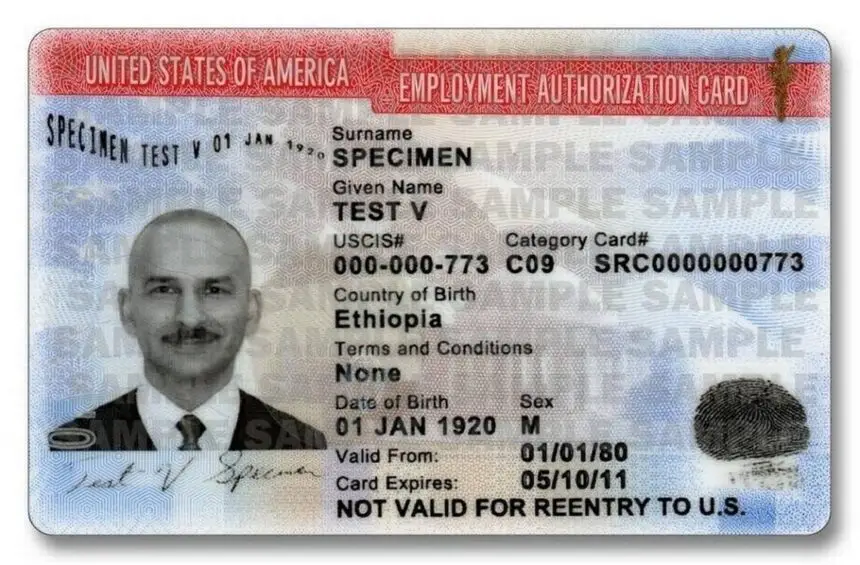
U.S. Citizenship and Immigration Services has issued a new update to its E-Verify system and Form I-9 employer guidance for Syrian Temporary Protected Status beneficiaries, directing employers to enter July 1, 2026, as the expiration date on employment verification documents.
This guidance replaces the previous March 17 update from USCIS. It arrives at a significant point: the Syria TPS case is now combined with the Haiti TPS case before the U.S. Supreme Court. The Court will hear arguments from both sides in the second week of April.
USCIS determined that Syria no longer meets TPS criteria after reviewing country conditions, and the decision was published on September 22, 2025. Syria’s TPS designation was set to end on November 21, 2025, but a U.S. District Court intervened just before this date.
On November 19, 2025, the court stayed the termination of Syria TPS in Dahlia Doe v. Noem. The stay remains in effect through ongoing appeals, keeping Employment Authorization Documents valid as per the court order.
Under the latest USCIS instructions, employers completing Form I-9 should input “as per court order” in the Expiration Date field of Section 1, and enter “July 1, 2026” in Section 2, along with a note in the additional information box. When completing a case in E-Verify, employers should enter the expiration date of July 1, 2026, from the Form I-9. USCIS also advises employers to download the alert and the TPS Syria webpages and to attach them to the Form I-9 for documentation purposes.
The shift to July 1 is a significant extension from USCIS’s recent rolling short-term dates. March 12 guidance set the E-Verify date to March 13, 2026, and the March 17 update extended it to March 24, 2026. With the Supreme Court hearing the case on an expedited timeline—oral arguments in late April and a decision expected by early summer—USCIS now appears to align employer guidance to that anticipated ruling date.
Syria and Haiti: Two Cases, One Supreme Court Showdown
The Supreme Court will consider the Syria TPS case with the Haiti case, combining both into a single session. Lower court orders keeping TPS in place for both countries remain as the Court reviews broader legal questions.
The Haiti case arrived at the Supreme Court days before the Syria case. Approximately 352,000 Haitian nationals hold TPS in the United States, compared to roughly 6,100 Syrians. Haiti first received a TPS designation in 2010 under President Obama, following a catastrophic 7.0-magnitude earthquake that killed more than 200,000 people. The designation has been extended repeatedly in response to ongoing political instability, gang violence, and natural disasters. Then-Secretary of Homeland Security Kristi Noem announced the termination of Haiti’s TPS in November 2025, effective February 3, 2026, stating that “there are no extraordinary and temporary conditions in Haiti that prevent Haitian nationals … from returning in safety.”
One day before the termination was to take effect, U.S. District Judge Ana Reyes in Washington, D.C., blocked the move, finding DHS had not adequately reviewed on-the-ground conditions or consulted required agencies. She also cited merit in the plaintiffs’ equal protection claims, referencing Trump’s 2024 campaign statements about Haitian migrants. The D.C. Circuit Court of Appeals declined to lift the block, and on March 11, Solicitor General D. John Sauer sought an emergency Supreme Court stay and expedited review.
As of this publication (8:43 p.m. ET), USCIS has not updated Haiti TPS E-Verify guidance to use the new July 1, 2026, date set for Syria. The latest Haiti-specific guidance, issued on March 13, 2026, states that employers should enter March 27, 2026, as the E-Verify expiration date. Now that both cases are combined on the same expedited court schedule, immigration attorneys expect USCIS to update the Haiti guidance soon.
What This Means — and What It Does Not Mean
It is important to know that the July 1, 2026, date set by USCIS is a guidance for employer only. It is an administrative placeholder. Employment Authorization Documents will not necessarily expire on that date. As long as the courts have not issued a final decision ending TPS, EADs covered by court orders stay valid. The date guides employers in E-Verify and Form I-9 processes—nothing more.
It is equally important to understand who this guidance covers. The E-Verify update applies specifically to individuals who already held a valid Employment Authorization Document under TPS and who timely renewed their TPS status before it was set to expire. It does not apply to individuals who never obtained a work permit under TPS. If a person submitted a TPS-based EAD application and USCIS has not yet responded, the E-Verify system update does not directly affect that pending application—but the underlying court orders protecting TPS status still apply to it.
The Supreme Court case is very important. The justices will decide if courts can review TPS terminations. They will also decide whether TPS holders have valid legal claims under the Administrative Procedure Act and whether the equal protection claims of Haitian plaintiffs have merit. The decision, expected by late June or early July, could change TPS termination rules for all countries. The Trump administration tried to end TPS for 13 of 17 countries designated under TPS when it took office. Similar lawsuits are filed in federal courts across the country.
For employers, the practical takeaway is clear: do not treat the printed expiration dates on TPS-based EADs as controlling. Follow the USCIS and E-Verify guidance, enter July 1, 2026, for Syrian TPS holders, and monitor the USCIS TPS country pages and E-Verify alerts regularly. USCIS has urged employers to subscribe to GovDelivery updates. Immigration compliance counsel should be consulted before any reverification action is taken, as premature reverification or adverse employment action based on an expired date printed on an EAD could expose employers to discrimination claims under federal law.
The Supreme Court’s April hearings will be the first time it reviews TPS termination for both Haiti and Syria together. Last year, the Court quickly ruled on two TPS cases for Venezuelans and others, siding with the administration. This time, the Court did not act quickly. It is unclear if this means the outcome will change or if the Court wants more information. More than 358,000 Haitian and Syrian nationals are now waiting for a decision.

https://ctninfo.com/?p=41295&preview=true
https://www.facebook.com/CaribbeanNewsMedia

https://ctninfo.com/?p=41295&preview=true
https://www.facebook.com/CaribbeanNewsMedia
