



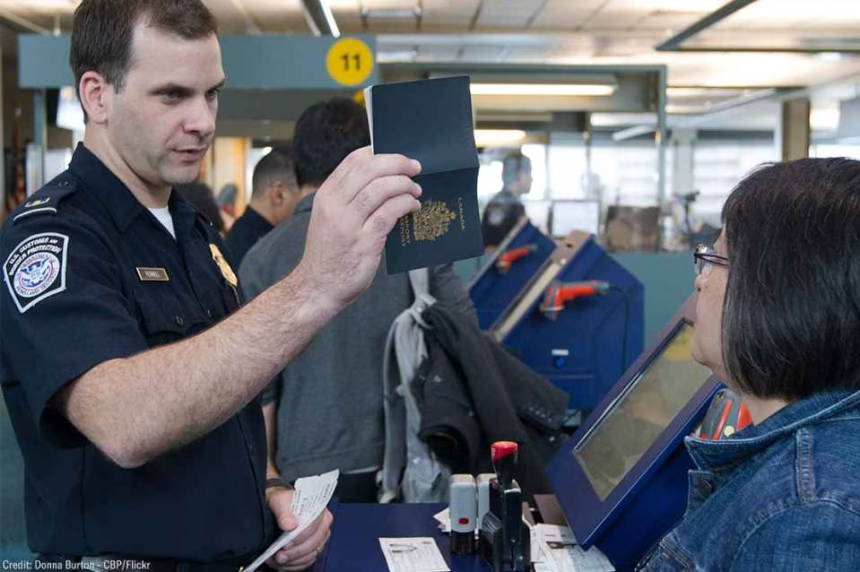
Non-citizen residents of the United States must exercise extra caution before considering travel outside the country.
This is the critical warning issued by Customs and Border Protection (CBP), highlighting the potentially permanent repercussions of departing internationally without proper authorization, especially for refugees, asylum seekers, and individuals in the process of regularizing their status.
According to a report published by NepYork, CBP emphasizes the necessity of obtaining Advance Parole, an essential document for any temporary travel abroad. This specific permission, granted by USCIS under the Trump administration, is crucial for maintaining the integrity of ongoing immigration proceedings. “Aliens with pending immigration applications must obtain Advance Parole before traveling abroad,” the federal agency firmly states.
Following recent changes in migration policy, traveling without this document can result in not only denial of entry to the United States but also complete cancellation of immigration files. “Upon return, these aliens may be found inadmissible, their applications may be denied, or both,” CBP notes, as quoted by NepYork.

The message is unambiguous: traveling without Advance Parole, even for urgent reasons, can lead to major legal consequences.
This requirement applies to individuals adjusting their status, refugees, asylum beneficiaries, and other categories involved in sensitive immigration procedures. CBP emphasizes that even temporary trips to Canada for visa interviews require this authorization.
However, certain visa holders, particularly H-1B, L-1, and V and K-3/K-4 non-immigrants, are exempt from this requirement, provided they maintain valid status during their proceedings.
Obtaining Advance Parole under the Trump administration doesn’t automatically guarantee entry into the United States. CBP emphasizes that each return is subject to thorough examination, with the final decision resting with the immigration officer at the point of entry. “Advance Parole does not guarantee admission to the United States,” the agency reminds. “Aliens holding this authorization remain subject to inspection upon arrival.”
Certain categories of non-citizens cannot benefit from Advance Parole, including those with irregular status and J-1 visa holders with home residency requirements. These restrictions affect the mobility of many individuals, even in emergency situations.

Eligible individuals must submit their application through Form I-131. Detailed guidelines are available on the USCIS portal, though some special situations require direct submission to the Department of Homeland Security in Washington.
CBP emphasizes a fundamental element: anticipation. With processing times being variable, traveling without official documentation represents a major risk.
The agency strongly advises Advance Parole applicants to allow sufficient time and wait for authorization before any departure.

