


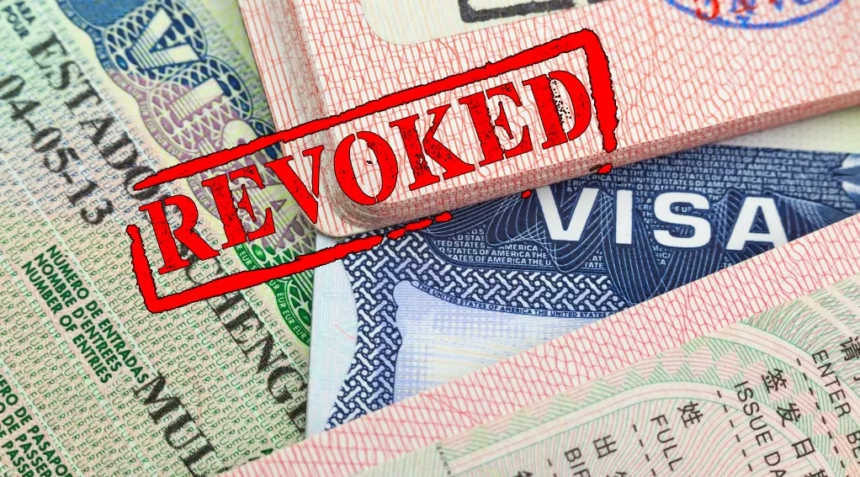
The Trump administration says it is preparing to cancel the visitor visas of as many as 200,000 people who have applied for asylum in the United States, a step that, if carried out, would be the largest single mass visa revocation in the country’s history. But immigration law makes the move less sweeping in practice than it sounds, and the administration’s deeper aim appears to be the asylum applications themselves, not the visas.
According to documents obtained by The Associated Press and two U.S. officials, the State Department expects to announce in the coming weeks the revocation of B1 and B2 visas — the temporary categories issued for business and tourism, that were granted between 2016 and 2026 to people who have since sought asylum or have asylum cases still pending.
The department did not commit to a firm number, and spokesperson Tommy Pigott said the figure “remains dynamic” and that revocations would be carried out on a rolling basis.
The screening reportedly began after the State Department received information about asylum requests from U.S. Citizenship and Immigration Services.
Pigott said the department was working with the Department of Homeland Security to identify and revoke the visas of foreigners who, in his words, came to the country claiming to be short-term visitors “but then file for asylum to stay here permanently.” Deputy Secretary of State Christopher Landau made the argument more bluntly on social media, writing that the asylum system has “long been swamped by frivolous” claims and calling asylum a loophole used to get around ordinary immigration law. He pointed to a Colombian who entered on a tourist visa in 2015 and later applied for protection.

Here’s what the announcement glosses over.
A visitor visa does not allow someone to live in the United States. It is a travel document, permission to arrive at a port of entry and ask to be let in. Once a person is admitted, a separate record, the I-94, sets how long they may lawfully stay, usually six months for a tourist. After that window closes, the visa has largely done its job; what governs the person’s presence from then on is their status inside the country, not the stamp in their passport.
That distinction matters enormously for the people in this group.
Many of them entered years ago, some as far back as 2016, which means their authorized period as visitors expired long before now. For those with a pending asylum case, it is the asylum application, not the old visitor visa, that allows them to remain while their claim is decided.
Asylum is a separate legal track under U.S. law, regardless of whether someone still holds valid visa status. In other words, for a large share of the 200,000, the visitor status the government is moving to cancel is not what is keeping them here in the first place.
That is why revoking these visas does not, by itself, make anyone instantly deportable.
The AP’s reporting reflects this: the revocations “would not necessarily result in immediate deportation,” and most people with pending asylum cases would be re-categorized, losing their designation as business or tourism travelers, rather than removed on the spot.
A visa revocation’s most concrete effect is on future travel: it can bar someone from using that visa to re-enter the country. It does not erase a pending asylum claim.

If canceling the visas has limited direct force, the strategy behind it becomes clearer through the officials’ own words.
The administration is building a case that people who entered as temporary visitors and then applied to stay permanently misrepresented their intentions at the border, a form of fraud that could be used to attack, and ultimately deny, their asylum claims. The new practice of asking current B1 and B2 applicants to affirm that they will not seek asylum, and to show they intend to return home, points in the same direction: toward treating the visitor-then-asylum sequence as evidence of bad faith.
The legal problem is that intent is judged at the moment of entry, case by case. U.S. asylum law expressly allows people who arrived lawfully to apply for protection, and someone who entered as a genuine visitor and later came to fear returning home because conditions changed, or a government fell, has misrepresented nothing.
Sweeping 200,000 people into a single category of presumed fraud collides with that individualized standard, which is a large part of why legal experts expect the plan, once announced, to draw immediate court challenges.
The rollout itself suggests the administration has not settled on a clean mechanism.
Officials describe a “dynamic,” rolling process rather than a single order, and the practical path from a revoked visa to a denied asylum claim to an actual removal remains undefined.
The effort fits a broader pattern: last month the administration began cutting off some asylum seekers’ access to the interviews used to weigh their claims, funneling them instead toward immigration court and possible deportation.
The State Department has said it has already revoked more than 175,000 visas since the start of the administration, on grounds ranging from criminal arrests to political speech.
What It Means for Immigrant Communities
For immigrant communities, including many Caribbean and Haitian nationals who arrived on visitor visas and are now pursuing asylum, the announcement is likely to generate fear well beyond the number of visas that are ultimately canceled. Rights groups have said the wider crackdown has already strained free-speech and due-process protections and fostered an atmosphere of anxiety, particularly for minority communities that report concerns about racial profiling.
Nothing about the plan changes the underlying law today: applying for asylum remains a right under U.S. and international law, and only an immigration judge can order someone removed. But the message the administration is sending —that seeking protection after entering on a visitor visa will now be treated as a mark against you—is unmistakable, even as the legal machinery to enforce that message remains, for now, unfinished.
This article explains immigration policy for general informational purposes and is not legal advice. Anyone with a pending asylum case or visa concern should consult a licensed immigration attorney or a DOJ-accredited representative about their specific situation.
This article was originally written in English. Other language versions are produced using AI translation software, and errors are possible — the English version is authoritative. CTN also uses AI to convert text into audio.
https://ctninfo.com/the-trump-admini…s-asylum-seekers/
Source: The Guardian