



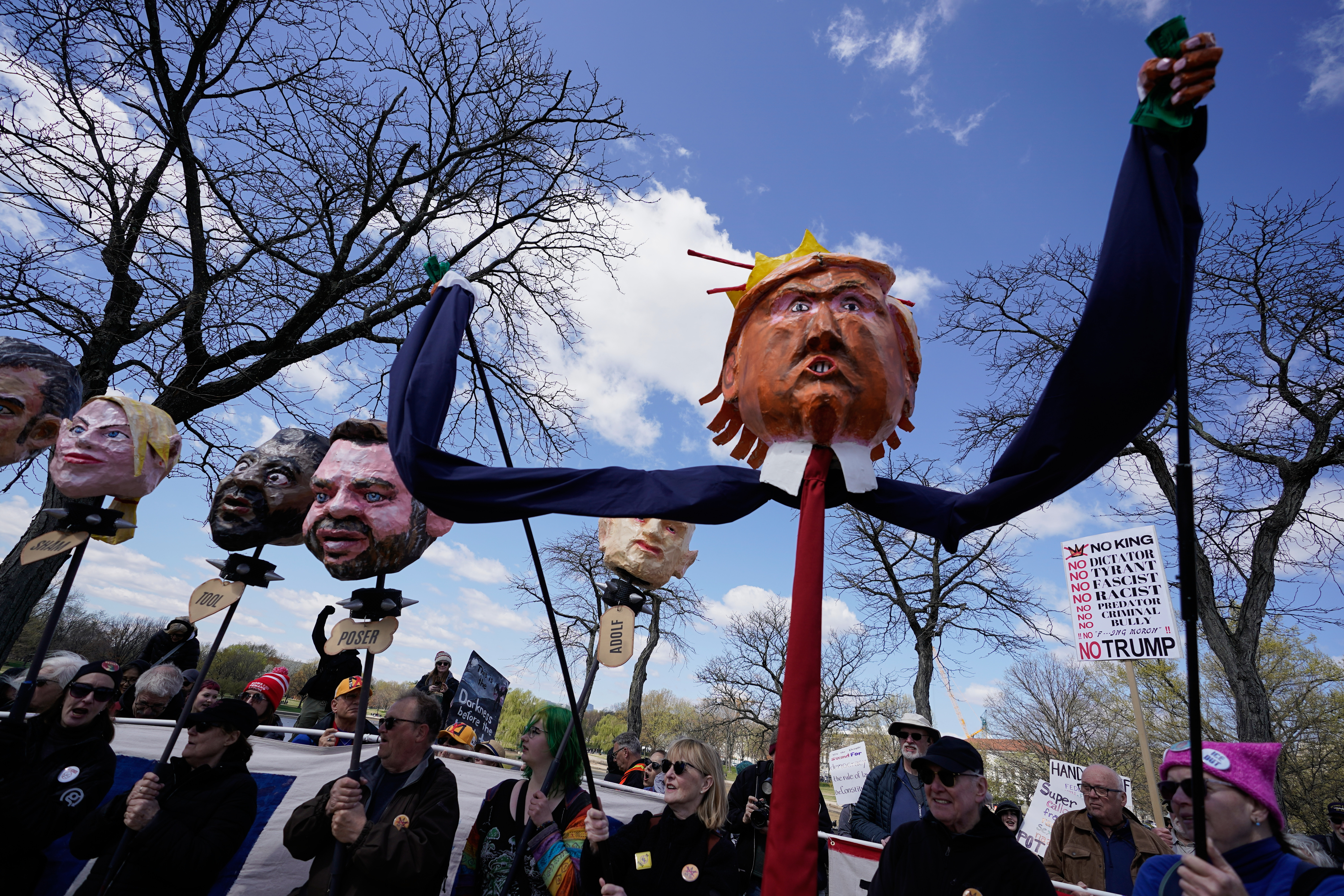
The third nationwide wave of “No Kings” demonstrations drew millions of people into the streets on Saturday, with organizers estimating roughly eight million participants at thousands of rallies held from Maine to Southern California, according to reporting by the New York Times.
The protests unfolded at a moment when three forces are pressing simultaneously on American politics: the military conflict with Iran that President Trump initiated on February 28, the administration’s ongoing immigration enforcement campaign, and a midterm election season that is rapidly taking shape in competitive states across the country.
The war with Iran, now one month old, appeared to be the single largest factor drawing new participants to the protests, particularly younger Americans. At a rally held near the University of Iowa, organizers from the youth group Voters of Tomorrow reported a noticeably younger and more diverse crowd than at previous “No Kings” events, the New York Times reported.

The conflict has produced tangible economic consequences, with gasoline prices rising sharply since the strikes began, and it has created political problems for Republican incumbents heading into the November elections.
Dana R. Fisher, a professor at American University who studies civic engagement, surveyed protesters in Washington and found that the share of demonstrators who identified war and peace as their primary motivation increased dramatically compared with earlier rounds of protests, according to the Times report. However, concern over the administration’s immigration enforcement was roughly equal as a motivating factor.
Immigration Enforcement Remains a Central Grievance
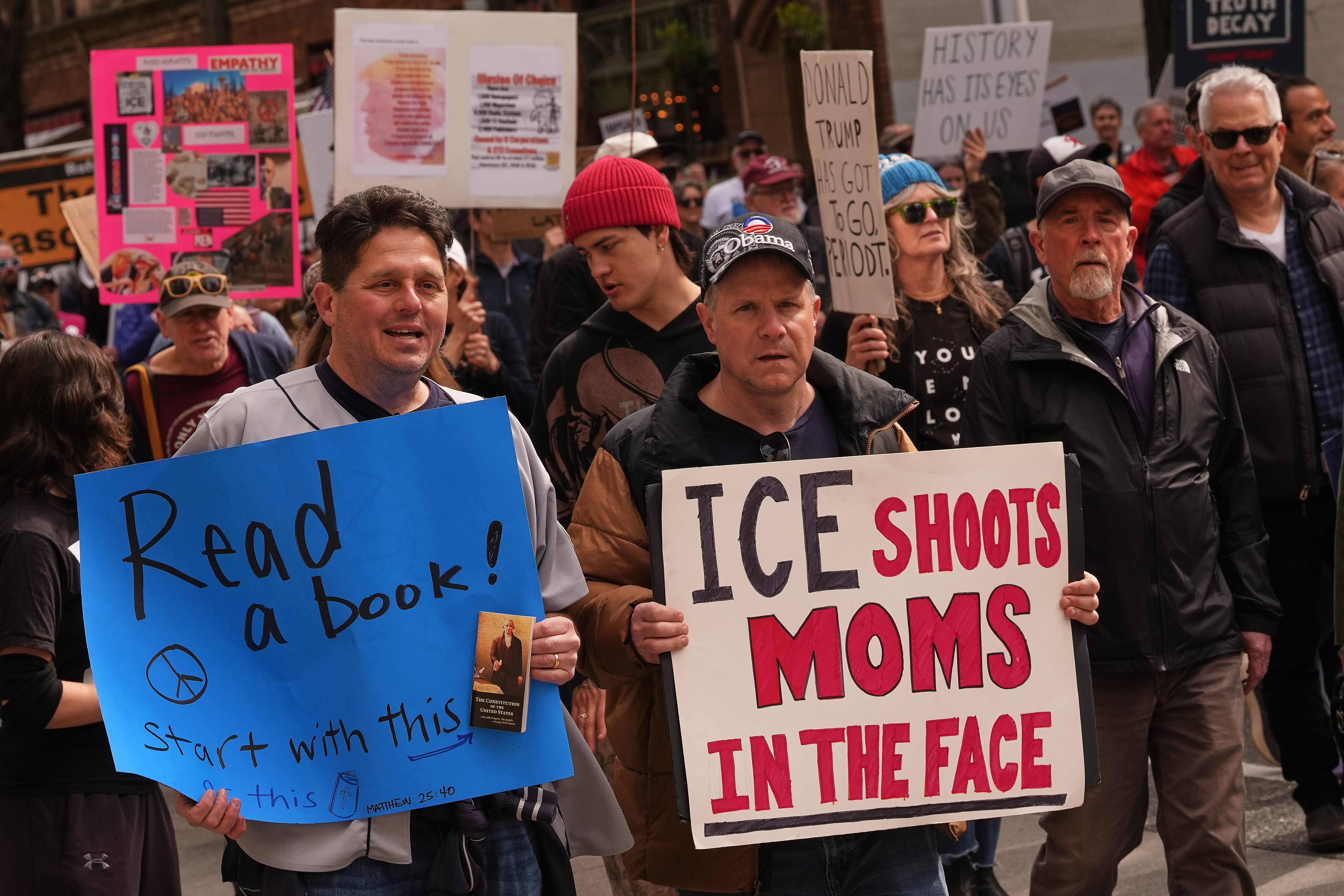
Despite the dominance of the Iran conflict in national headlines, opposition to the Trump administration’s immigration crackdown and to Immigration and Customs Enforcement operations remained a defining theme at Saturday’s rallies.
The largest single demonstration took place in St. Paul, Minnesota — a state where two U.S. citizens were killed by federal agents during unrest connected to the administration’s immigration operations earlier this year. The administration subsequently withdrew its surge of federal agents from Minnesota following sustained public criticism, the Times reported.
Governor Tim Walz of Minnesota and Senator Bernie Sanders of Vermont both addressed the St. Paul crowd at the State Capitol. Bruce Springsteen also performed, dedicating a song to the two citizens who died during the federal operations.

What distinguished this third round of protests from the previous two was the visible presence of Democratic candidates running in competitive 2026 midterm races. The rallies have become a venue where candidates can connect directly with an energized Democratic base in advance of primary elections and general election contests this fall.
In Maine, Governor Janet Mills, who is running for a Senate seat in one of the year’s most closely watched races, attended three separate protests in the Portland area. Her Democratic primary opponent, Graham Platner, spoke at a rally in the state’s rural, heavily Republican northernmost county, according to the Times.
Both are seeking the Democratic nomination to challenge Senator Susan Collins, widely considered one of the most vulnerable Republican incumbents in the current cycle.
In Michigan, two leading Democratic Senate primary candidates — state legislator Mallory McMorrow and Representative Haley Stevens — attended separate rallies in the Detroit metropolitan area. In Massachusetts, Senator Ed Markey, facing a primary challenge from Representative Seth Moulton, joined protests in the Boston area, as did Moulton at a separate event.
Several Democrats considered potential 2028 presidential candidates were also present at rallies across the country. Former Transportation Secretary Pete Buttigieg attended a demonstration in Traverse City, Michigan, where he resides. Senator Cory Booker of New Jersey appeared at a protest in St. Louis while on a book tour.
Counterprotests and White House Response
The demonstrations were not without opposition. Near President Trump’s Mar-a-Lago estate in Palm Beach County, Florida, counterprotesters gathered to show support for the president while thousands of “No Kings” demonstrators rallied at a public space roughly 15 minutes away, the Times reported.
The area has taken on additional political significance after Democrat Emily Gregory won an upset victory in a Florida state legislative race in a district that Trump carried by 11 points in 2024. Gregory attended Saturday’s rally, where she was met with enthusiasm from supporters.
The White House dismissed the protests. Spokeswoman Abigail Jackson told reporters on Thursday that the demonstrations were of interest only to the journalists assigned to cover them, characterizing them as political therapy sessions, according to the Times.
Two days before the rallies, the Treasury Department announced that U.S. currency would begin bearing President Trump’s signature — making him the first sitting president to have his name appear on American money while still in office, the New York Times reported. The decision fed directly into the “No Kings” messaging that has defined the protest movement since its inception.
Senator Kirsten Gillibrand of New York, who chairs Senate Democrats’ campaign committee, announced on Saturday that she would introduce legislation to prohibit presidents from placing their name, likeness, or signature on federal property or currency.
The Treasury decision is the latest in a series of moves by the administration and its allies to attach the president’s name to federal institutions, a pattern that critics have cited as evidence of authoritarian tendencies.
What the Protests Signal
Saturday’s demonstrations were the first “No Kings” rallies since October and the largest since the movement began. The combination of an active military conflict, an aggressive domestic enforcement campaign, and an approaching midterm election has created conditions that are drawing participants who did not attend earlier rounds.
Whether that energy translates into electoral results in November remains an open question that will be tested in primary races and general elections across the country over the coming months.
https://ctninfo.com/?p=41515&preview=true
Source: New York Times