


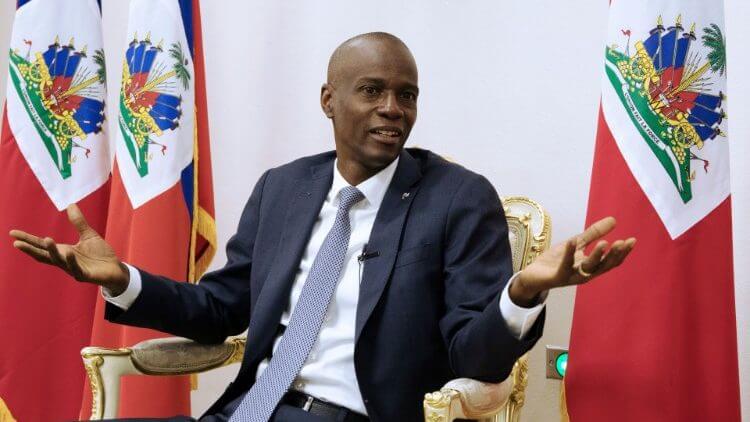
More than five years after Haitian President Jovenel Moïse was gunned down in his home above Port-au-Prince, federal prosecutors in Miami have added another name to the roster of South Florida defendants accused of helping plan the plot — even as the central question of who ordered the killing, and why, remains unanswered.
The new defendant is Rafael Guerrero, a Pembroke Pines resident who first appeared in federal court in Miami and pleaded not guilty, according to the Miami Herald, which first reported the charge. Prosecutors accuse him of conspiring to commit offenses against the United States in violation of the Neutrality Act, the federal law barring the launch of armed expeditions against nations at peace with the U.S. He was released on a $150,000 bond and faces up to five years in prison. A trial date has been set for early November, but the Herald reported it is not expected to proceed, with court records suggesting Guerrero may negotiate a plea.
Prosecutors describe Guerrero as a figure on the financial and logistical side of the conspiracy rather than its leadership, the Herald reported.
They say he witnessed a $175,000 line of credit extended by a Broward County businessman to a Doral security company to bankroll the effort, kept a ledger tracking the operation’s spending, and sat in on meetings where participants allegedly discussed toppling Moïse’s government, acquiring weapons, and smuggling body armor from Florida to the Colombian commandos hired for the job. After the assassination, prosecutors say, he joined a gathering where the group weighed how to “conceal their involvement.”
Guerrero’s case is the latest turn in a sprawling U.S. prosecution that has produced roughly a dozen arrests and traced a conspiracy running from South Florida to Colombia to Haiti. On the night of July 7, 2021, a squad of former Colombian soldiers, accompanied by two Haitian Americans from South Florida, stormed the president’s residence and killed him. His wife, Martine Moïse, was shot and wounded; testimony at an earlier trial recounted how the couple’s children hid in a first-floor bathroom during the attack.

That earlier trial ended in May 2026, when a federal jury in Miami convicted four South Florida men — Arcángel Pretel Ortiz and Antonio “Tony” Intriago, who ran a Doral security firm, along with James Solages and Broward mortgage broker Walter Veintemilla — of conspiring to kidnap or kill Moïse after 39 days of testimony, according to The Associated Press. All four face possible life sentences. Announcing the verdict, the Justice Department framed the case as a warning; the FBI’s Miami chief, Brett Skiles, said the United States “will not serve as a staging ground” for those seeking to destabilize other nations through violence.
Several other defendants have already been sentenced.
Court records cited by the Herald show a Coral Springs man, Keegan Harricharan, received 20 years in July for a money-laundering scheme that prosecutors say funneled fraudulently obtained COVID-19 relief funds into the plot, while a Tampa businessman, Frederick Bergmann Jr., got nine years for his role in shipping ballistic vests to Haiti. Five men who pleaded guilty earlier, including a former Haitian senator, were sentenced to life and are cooperating with prosecutors.
The prosecution’s next and most closely watched chapter begins Sept. 28, when Christian Emmanuel Sanon — a 67-year-old Haitian-American pastor and doctor whom prosecutors cast as an aspiring replacement for Moïse — goes on trial before U.S. District Judge Jacqueline Becerra, who also presided over the earlier case. His trial, severed from the others because of his health, is expected to last six to eight weeks, the AP reported. Sanon, who, like his co-defendants, is charged with conspiring to kidnap or kill the president and faces the possibility of life in prison, has maintained his innocence; his attorney, Zeljka Bozanic, told the AP the defense looked forward to “proving our client’s innocence.”
Prosecutors say the South Florida group initially backed Sanon to succeed Moïse, then abandoned him in the weeks before the killing in favor of a sitting Haitian judge, Windelle Coq Thélot. What has never been established, in five years of U.S. and Haitian investigations, is who at the top ordered the president’s death — or what they stood to gain. The parallel criminal case in Haiti remains unresolved, hampered by threats against judges and a justice system straining under the country’s collapse.
This article was originally written in English. Other language versions were produced using AI translation software, and errors are possible—the English version is authoritative. CTN also uses AI to convert text into audio.

https://ctninfo.com/miami-prosecutor…se-assassination/
https://www.facebook.com/CaribbeanNewsMedia