



One of the most common misunderstandings about driving in the United States is what a learner’s permit actually allows. Many people — new arrivals and longtime residents alike — believe that once they have a permit in hand, they are cleared to drive on their own. It is an easy assumption to make: the permit is an official document, it has your photo on it, and you passed a test to get it. But a learner’s permit, sometimes called a temporary permit or instruction permit, is not a driver’s license, and treating it like one can carry consequences well beyond a traffic ticket.
This guide explains one rule that is the same everywhere, and several that differ by state. Because our community is spread across the country, find your state below — the answer is not the same in Florida as it is in New York.
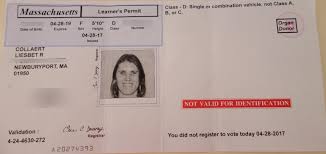
A learner’s permit is exactly what its name says: a document that lets you learn to drive. It is not a driver’s license. In every state covered here, holding a permit means you may drive only when a properly licensed adult is seated beside you in the front passenger seat. That adult must generally be at least 21 years old and hold a valid license.
That means, in every state:
- You cannot drive alone on a permit. Not for a short trip, not to work, not to bring your children to school — no matter how carefully you drive or how long you have been driving.
- A permit is not a substitute for a license. It is the practice step before the road test, not a license itself.
- Driving alone on a permit is a violation that can bring a citation — and, more importantly, a police encounter.
Driving alone on a permit is a traffic violation. On its own, it may mean a ticket. But the greater risk is what a stop can lead to. A stop puts you in direct contact with law enforcement, your information is checked, and in today’s enforcement environment, that contact can escalate for anyone without secure immigration status.

What begins as a minor driving mistake can become the moment a person is brought to the attention of immigration authorities. This does not happen in every case, but the risk is real and avoidable.
The safest course is the same everywhere: do not drive unless you are properly licensed, or unless a qualified licensed driver is beside you.
The part that changes by state: can you get a real license?
This is where our community must be careful, because the single most important question — whether you can get a driver’s license at all without immigration status — has opposite answers depending on where you live.
Massachusetts — Yes, regardless of status
Since July 1, 2023, under the Work and Family Mobility Act, all qualified Massachusetts residents can apply for a standard Class D or M driver’s license regardless of immigration status. You do not have to prove lawful presence. The standard license looks the same as any other, and under the law, the RMV is barred from sharing your information with immigration authorities, and that information is not public record. You still must get a permit first, pass the written exam, practice with a qualified licensed driver, and pass the road test.
It is worth noting that while undocumented immigrants can have a standard driver’s license without proper legal immigration status, the situation is different for the “State ID”. To get this document, everyone needs to have some form of documentation proving lawful immigration status.
New York — Yes, regardless of status
Under the Green Light Law, in effect since December 2019, New York residents 16 and older can apply for a standard, non-commercial driver’s license or learner permit regardless of immigration status. The law includes privacy protections that limit the sharing of DMV data with agencies primarily responsible for enforcing immigration law. A federal court upheld the law in late 2025. You must still pass the written test, complete the required pre-licensing course, practice under supervision, and pass the road test. This standard license cannot be used for federal purposes such as boarding a flight.

Florida — No license for undocumented immigrants, and extra risks
Florida is different and stricter. Under Florida law, the state does not issue driver’s licenses to undocumented immigrants — you must prove lawful presence. People with lawful status, including many asylees and work-permit holders, can qualify, though those with temporary status may receive a limited-term license that must be renewed. Two additional cautions specific to Florida: driving without a valid license is treated as a criminal offense, not just a traffic matter; and Florida has moved to treat certain out-of-state licenses issued only to undocumented immigrants as invalid within Florida. As of early 2026, Florida also administers driver-license exams only in English. If you are in Florida and unsure whether you qualify, speak with an immigration attorney before driving.
Ohio — License only with lawful presence
Ohio does not issue driver’s licenses to undocumented immigrants. Before issuing any permit, license, or ID, the Ohio BMV verifies immigration status through the federal SAVE system. People with lawful presence — including asylees and holders of a valid work permit (Employment Authorization Document) or qualifying I-94 — are eligible, usually for a Limited Term License valid for the length of their authorized stay. Temporary residents and drivers under 21 must complete driver training and 50 hours of supervised practice before the road test. Ohio does not have blanket state protections against workplace immigration enforcement, so driving legally is especially important there.
What to do, wherever you live
- Never drive alone on a permit. Practice only with a qualified licensed adult beside you. This is true in all four states.
- If your state allows it (Massachusetts, New York), complete the path to a full license. The permit is the beginning, not the destination.
- If your state requires lawful presence (Florida, Ohio) and you have status — for example, a valid work permit or asylee documentation — bring your documents and apply for the license or limited-term license you qualify for.
- If you are unsure whether you qualify, or you do not have status, do not guess. Speak with a licensed immigration attorney or a DOJ-accredited representative before you drive. Guessing wrong can turn a car ride into a criminal charge or an immigration encounter.
- Verify the current rules with your state agency — the Massachusetts RMV, New York DMV, Florida FLHSMV, or Ohio BMV — since requirements change.
Driving legally is one of the clearest, most controllable steps you can take to protect yourself and your family. A learner’s permit is a beginning. Where the law allows, finish the path — and where it does not, know that before you get behind the wheel, not after a traffic stop.
This guide is for informational purposes and is not legal advice. Licensing and immigration rules vary by state and change over time; verify current requirements with your state motor vehicle agency (Mass.gov/RMV, dmv.ny.gov, flhsmv.gov, bmv.ohio.gov). Anyone with questions about their immigration status should consult a licensed immigration attorney or a representative accredited by the U.S. Department of Justice.
https://ctninfo.com/know-before-you-…-change-by-state/
https://www.facebook.com/CaribbeanNewsMedia
This article was originally written in English. Other language versions are produced using AI translation software, and errors are possible — the English version is authoritative. CTN also uses AI to convert text into audio.