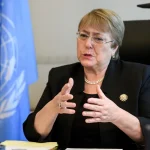



When it is not U.S. senators, it is the United Nations High Commissioner for Human Rights, Michelle Bachelet, who expressed concern about the serious impact on human rights and the resurgence of violence involving heavily armed gangs in Port-au-Prince.
In a statement posted on the UN human rights body’s website, Ms. Bachelet “urged the Haitian authorities, with the support of the international community, to quickly restore the rule of law and protect the population from armed violence.
Citing figures from UN officials, the statement said that between April 24 and May 16, at least 92 non-gang members and some 96 suspected gang members were killed in coordinated armed attacks in Port-au-Prince. The actual number of people killed could be much higher, the statement said.
In the statement, the former president of Chile laments that “extreme violence has been reported, including beheadings, mutilations and burning of bodies, as well as the murder of minors accused of being informers for a rival gang. Sexual violence, including the gang rape of children as young as 10, was also used by armed gang members to terrorize and punish people living in areas controlled by rival gangs. ”Armed violence has reached unimaginable and intolerable levels in Haiti,” Bachelet said in the statement reiterating the need for “…urgent action to restore the rule of law, protect the population from armed violence and hold the political and economic sponsors of these gangs accountable.”

Further on, the UN agency deplores that “thousands of people, including children, have been forced to abandon their places of residence (Plaine du cul-de-sac and Pernier, editor’s note) during the last three weeks, in order to find refuge in temporary places or in host families in other parts of the country”. High Commissioner Michelle Bachelet drew attention to gang violence and its severe impact on the most basic human rights of people.
She said she regrets that dozens of schools, medical centers, businesses and markets have remained closed, and many people are having difficulty finding basic goods, including food, water and medicine.
She also points out the difficulty of citizens to circulate on the national roads (1 and 2, editor’s note) imposing ”restrictions to the movement of people and goods” with devastating effects for the national economy already on its knees notes Ms. Bachelet while deploring the weakness and fragility of the institutions of the state including the police and justice.
With this bleak picture of the country’s situation, Michelle Bachelet urges the international community to make Haiti a priority to prevent the situation from getting even more out of control.
In the context of the possible renewal of the mandate of the UN presence in Haiti, Michelle Bachelet said she believes it is necessary that the human rights of Haitians be at the heart of the international response, especially on issues related to sexual and gender-based violence.