


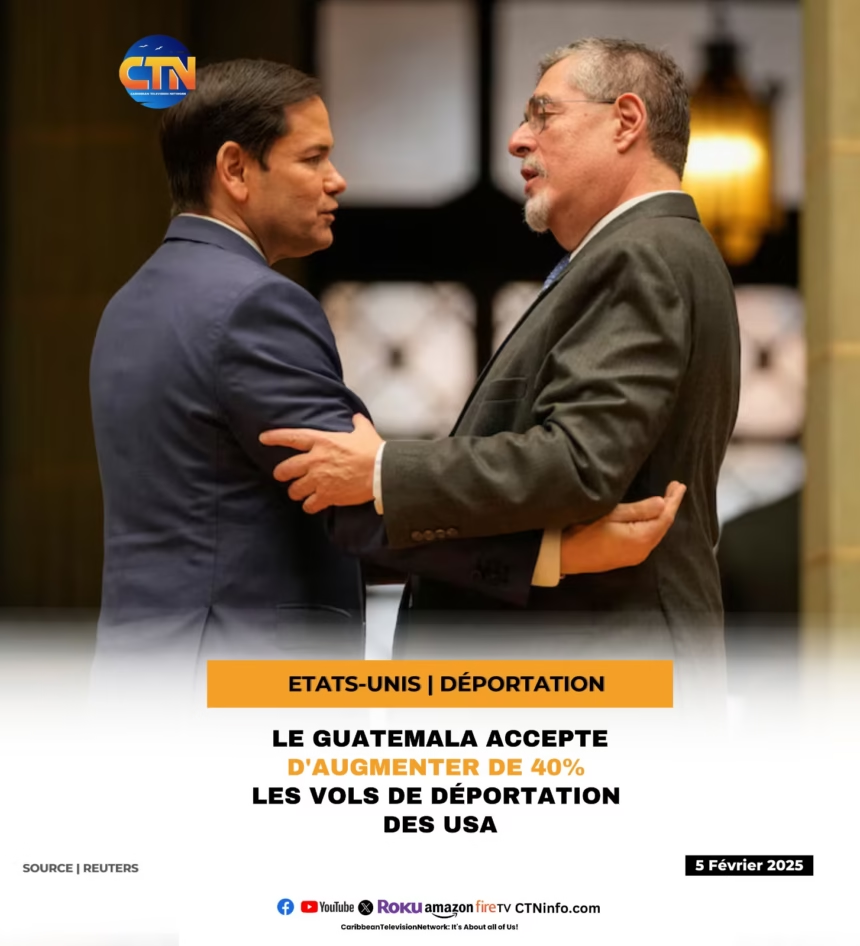
The diplomatic visit of the U.S. Secretary of State is starting to bear fruit.
While several countries in the region remain reluctant to accept migrants deported from the United States, Guatemala has asserted its position as a loyal partner of the U.S. administration.
Following his meeting with the U.S. Secretary of State, who was on a visit to the Western Hemisphere, the Guatemalan president agreed to a 40% increase in repatriation flights from the United States.
Bernardo Arévalo has demonstrated his loyalty to the leader of the American far-right movement, Donald Trump, by agreeing to receive not only Guatemalan citizens but also migrants from other nationalities, as confirmed by the Guatemalan president on Wednesday after his meeting with U.S. Secretary of State Marco Rubio.

During a press conference in Guatemala City, Marco Rubio emphasized the importance of Arévalo’s commitment to addressing migration issues. “His agreement to welcome his own nationals as well as people from other countries who wish to return to their home countries is crucial, and we are committed to supporting these initiatives,” Rubio stated, according to Reuters.
Arévalo indicated that the details of the increased repatriation flights would be clarified in future working group meetings. However, he emphasized that the issue of accepting deported criminals had not been discussed during Wednesday’s talks. This clarification comes after El Salvador recently proposed accepting “dangerous criminals” deported by the U.S., an option that was not raised during negotiations with Guatemala, according to Reuters.
Beyond facilitating the return of nationals to their countries of origin, Rubio’s diplomatic mission in Central America also aimed to establish so-called “third-country” agreements. These arrangements would allow certain nations to accept migrants deported from other countries when their countries of origin refuse to readmit them. According to Reuters, several countries, including Cuba and Venezuela, have historically shown resistance to readmitting their expelled citizens, although the Trump administration recently announced that Venezuelan President Nicolás Maduro had agreed to take back his nationals.
Since his re-election on January 20, President Donald Trump has significantly strengthened deportation operations across Latin America, even deploying military planes for repatriations. This week, his administration removed protections that had prevented the deportation of hundreds of thousands of Venezuelans living in the U.S.
In this same context, Trump unveiled a project to expand the U.S. detention center at Guantanamo Bay, Cuba, aiming to increase its capacity to 30,000 detainees. This initiative further highlights the hardening of his immigration policy, as reported by Reuters.

In light of this intensification of U.S. measures, Guatemala’s decision to increase its deportation flights reflects a strengthened collaboration with Washington in managing migration flows. The precise scope of these changes will be determined through ongoing working group discussions. Nevertheless, this has not prevented the new U.S. Secretary of State from presenting a positive assessment of his tour through several countries in the region.
The decision of the Guatemalan government to accept migrants from other countries thus represents a significant diplomatic victory for Marco Rubio, who is an expert in the Western Hemisphere, a region he is also originally from.