



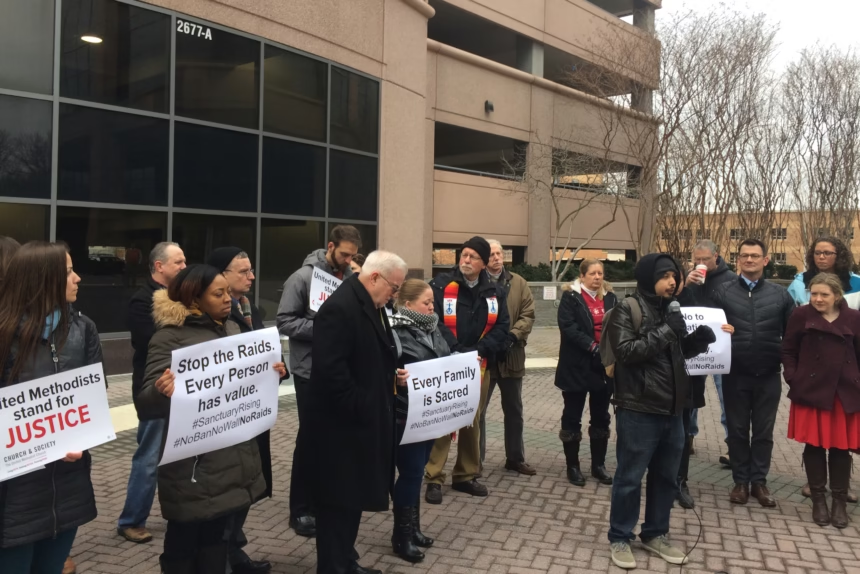
U.S. immigration agents will no longer be able to conduct operations in places of worship. At least for now!
A federal judge has issued an injunction ordering the government to halt all operations in sacred spaces.
This decision, welcomed by several religious groups, affirms that such interventions infringe on the religious freedoms of worshippers.
In a 59-page ruling, District Judge Theodore Chang sided with a coalition of Sikhs, Quakers, and Baptists, who denounced these raids as a violation of their fundamental rights. According to the lawsuit filed by Democracy Forward against the Department of Homeland Security (DHS), the policy recently reinstated by the Trump administration allowed federal agents to target migrants “indiscriminately” in places of worship, violating principles of “religious freedom and expression,” Mediaite reported.
“Armed law enforcement officers operating in or near places of worship under the 2025 policy will negatively impact the ability of Quakers and Sikhs to follow their religious beliefs or worship freely.”

The judge also noted that the plaintiffs shared religious beliefs that compelled them to welcome and assist immigrants, regardless of their legal status. As a result, DHS was highly likely to direct immigration enforcement actions against these groups.
Skye Perryman, president of Democracy Forward, criticized the Trump administration’s policy, calling it “unlawful and harmful.” “For decades, the government has recognized that everyone—regardless of their immigration status—should be able to attend a place of worship without fearing a warrantless law enforcement raid,” she told Mediaite. “Religious institutions should not have to go to court to defend a fundamental right enshrined in our Constitution,” added the immigrant rights advocate.
This policy was implemented after DHS rescinded, on January 21, a directive from the Biden administration that protected places of worship from immigration enforcement actions.
A Department of Homeland Security official attempted to justify the decision, stating, “Criminals will no longer be able to hide in America’s schools and churches to avoid arrest. The Trump Administration will not tie the hands of our brave law enforcement officers and instead trusts them to use common sense.”
Mediaite, the first to report on the judge’s ruling, noted that the decision marks a significant victory for advocates of religious freedom and immigrant rights.