Fears and Trump-era policy changes cut Boston’s 12th Citizenship Day turnout to under 200 immigrants, the lowest ever for the region’s largest citizenship event.
Record-low turnout at New England’s largest free naturalization clinic reflects a community in retreat — as Trump-era obstacles stack up against a 12-year effort to bring immigrant Boston into full civic life.
By Emmanuel Paul
Caribbean Television Network (CTN)
May 3, 2026
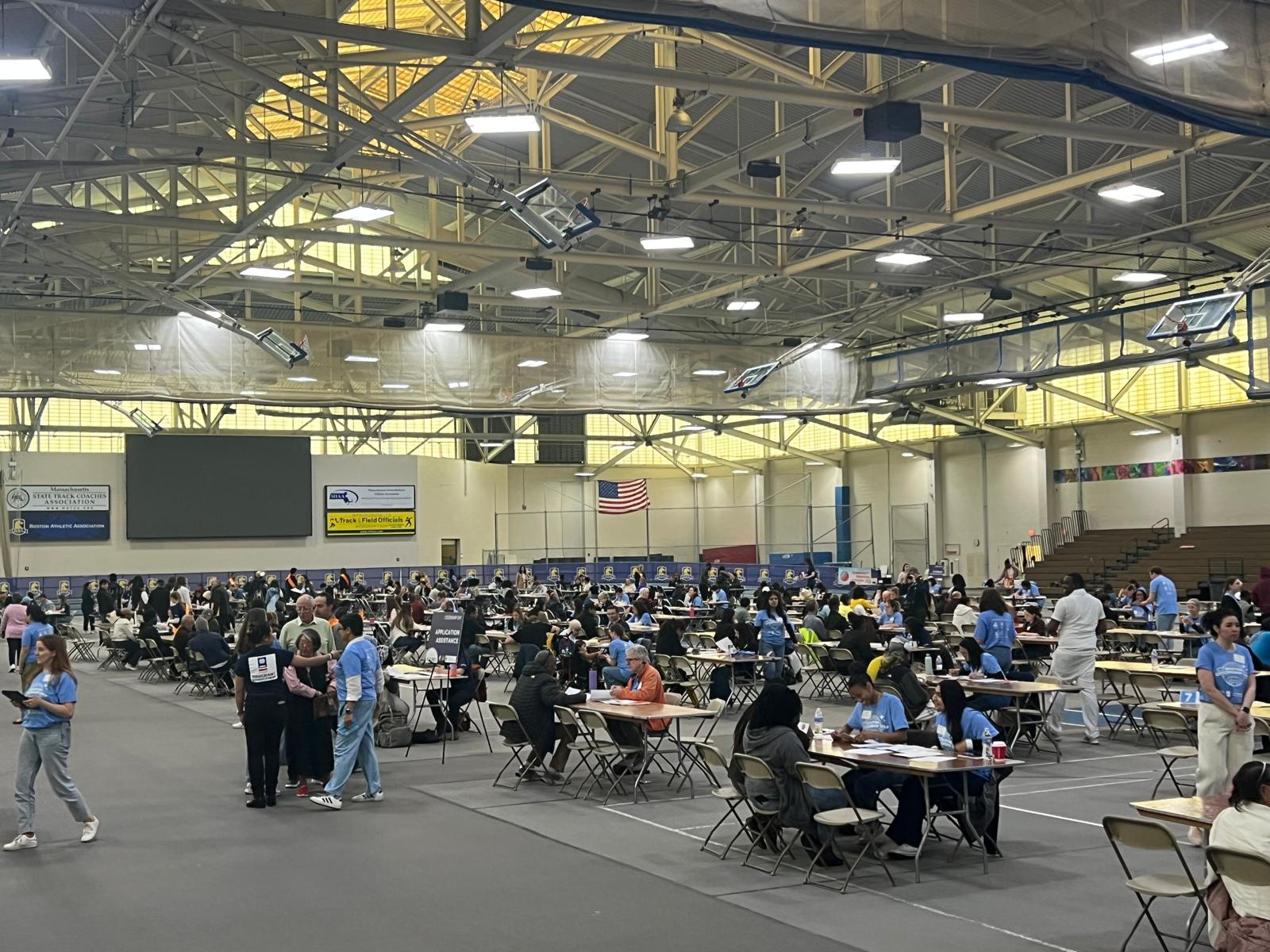
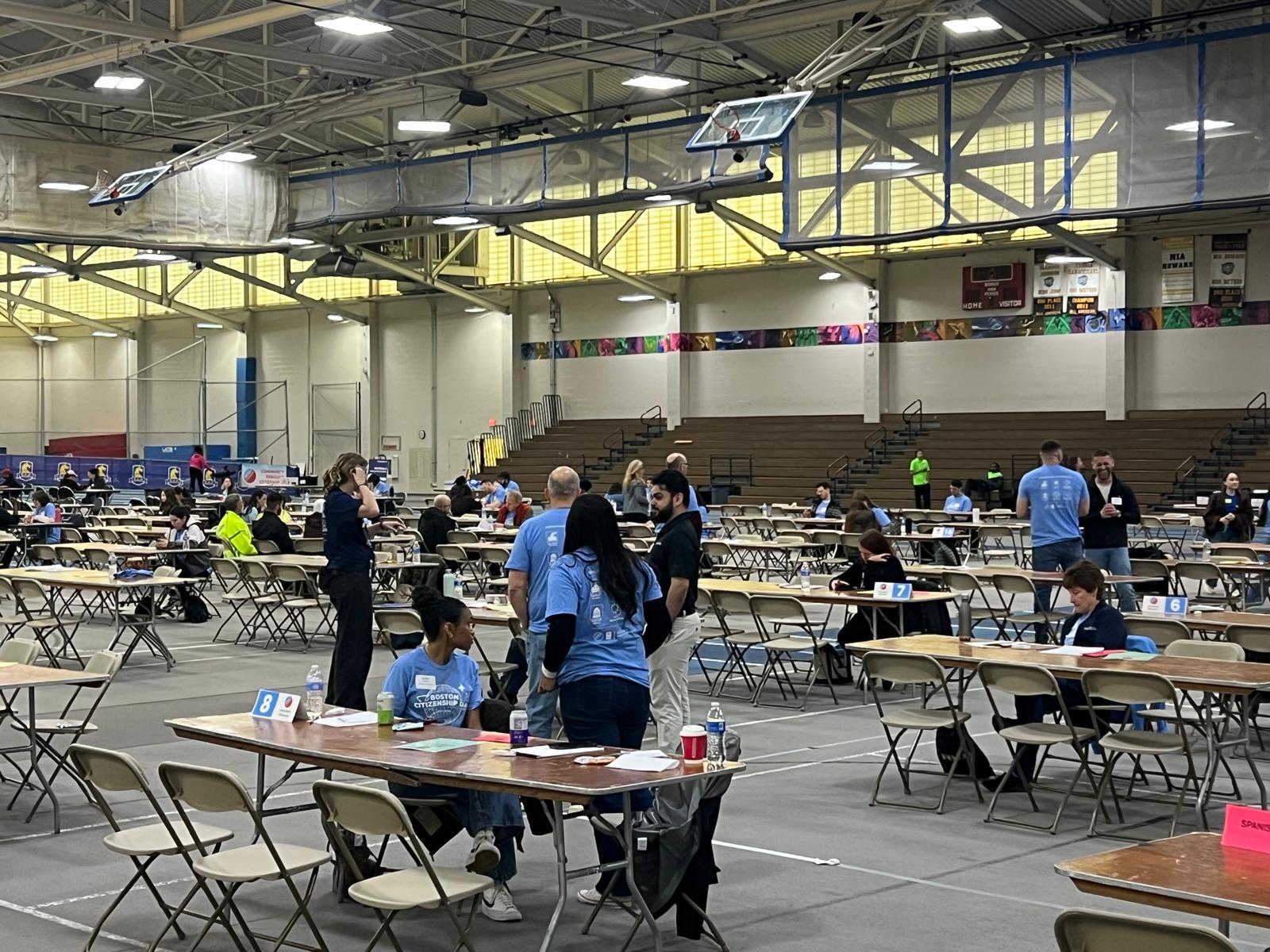
On Saturday, May 2, fewer than 200 green card holders attended Boston’s 12th annual Citizenship Day at the Reggie Lewis State Track Athletic Center. According to organizers, this is the lowest turnout in the event’s history, sharply down from the typical attendance of more than 300 applicants, who usually fill the gymnasium each year.
The free legal clinic, a partnership between the Mayor’s Office for Immigrant Advancement and Project Citizenship, has supported thousands of lawful permanent residents in preparing for U.S. naturalization since 2014, resulting in over 1,900 new citizens, making Saturday’s low attendance all the more notable.
This shift in numbers, organizers noted, tells a story beyond what any press release can capture: a community pulling back—not from the process itself, but from the perceived risks of participation.
“Usually, over 300 are registered, and we have a wait list,” said Monique Tú Nguyen, Executive Director of the Mayor’s Office for Immigrant Advancement. “But this year, we only had 200 registered — 200.”
A federal squeeze on naturalization
The decline did not occur in isolation. Instead, it reflects broader shifts, as federal immigration policy under the Trump administration’s second term has systematically narrowed the path to citizenship at nearly every stage. The impacts are now evident in the data.
Data from U.S. Citizenship and Immigration Services, as analyzed by NPR in April, show that monthly naturalization approvals fell sharply—from a peak of 88,488 in April 2025 to just 32,862 in January 2026. This is the lowest monthly figure since the agency began publishing month-by-month data in 2022.
“In April of last year, USCIS approved 88,000 applications for naturalization. In January of this year, it was down to 33,000,” said Gail Breslow, Executive Director of Project Citizenship. “It just shows all of the efforts they are making to discourage people from making the United States their home.”
The policy changes extend well beyond processing slowdowns. The federal agency has lengthened the civics exam and made it more difficult. It has reduced the payment methods available for the $760 application fee. It has revived a 1991-era practice of neighborhood checks, in which USCIS officers visit applicants’ homes. It has paused processing of immigration benefits — including naturalization — for nationals of 39 countries. And it has introduced a new screening framework requiring applicants to demonstrate “good moral character” through written testimony from landlords, employers, or religious leaders.
“Now they are asking each applicant to get a letter from a landlord, an employer, or a religious leader that can attest to the contributions they make to society,” Breslow said.
Each of these changes, taken individually, represents an added burden. Together, they have produced something harder to quantify: a pervasive sense of dread among communities that once viewed naturalization as a straightforward path forward.
“People are just scared about putting themselves at risk,” Nguyen said. “They are scared about coming here and being targeted, and also wondering, ‘What’s the point anymore,’ if they are hearing that the federal administration is deporting citizens.”
“First of all, the deportation of citizens is illegal.”
That last fear — that citizenship itself may no longer offer protection — has become one of the most common concerns the clinic’s staff now faces. Both Breslow and Nguyen said they hear it constantly, and both addressed it directly on Saturday.
“First of all, the deportation of citizens is illegal,” Nguyen said. “So I remind them that even though it is happening, it is not right. You are even more protected as a citizen from deportation than as a green card holder.”
The reassurance carries weight. In Boston, one in ten residents is a naturalized citizen. About 30,000 Boston residents are currently eligible to apply for U.S. citizenship, according to the Mayor’s Office for Immigrant Advancement — a number that dwarfs the turnout at Saturday’s clinic and underscores how many people are quietly calculating not to proceed.
“For more than a decade, Citizenship Day has helped Boston residents apply for U.S. citizenship at no cost. Now more than ever, naturalization offers an important pathway to stability, opportunity, and a more secure future,” Mayor Wu said in a statement released Monday. “I’m grateful to the Mayor’s Office for Immigrant Advancement, Project Citizenship, and the hundreds of volunteers who help make Boston a welcoming home for everyone, no matter where you come from”, she added.
Breslow was equally direct about what citizenship delivers beyond deportation protection. “The right to vote, the right to travel freely, and the right to petition for other family members to join you here in this country,” she said — rights that a green card alone does not provide.
A clinic 12 years in the making
Saturday’s low turnout stands in stark contrast to the scale of the clinic’s achievements over the past 12 years.
Launched in 2014 by the City of Boston and Project Citizenship, Citizenship Day has become New England’s largest one-day naturalization clinic, annually bringing together hundreds of volunteers and attorneys to help applicants complete Form N-400, the Application for Naturalization.
The model is comprehensive. Applicants are paired with individual volunteers who walk them through each section of the form. Pro bono attorneys review every completed application for legal accuracy. Eligible applicants are screened for a USCIS fee waiver — a process that has resulted in over 2,000 fee waiver submissions since the event’s founding. Project Citizenship then assumes the role of attorney of record, following each case through to the oath ceremony.
“They follow through, making sure they get to the finish line of getting the application and getting their citizenship,” Nguyen said.
Since 2014, Project Citizenship has helped over 14,000 people naturalize, extending beyond the one-day clinic. Citizenship boosts family reunification and civic engagement. “We are proud to have sponsored this event for over 12 years,” Nguyen said.
For Breslow, the philosophy behind the clinic is as important as the logistics. “At a time when many who weren’t born in this country feel especially vulnerable, Boston Citizenship Day honors the important role that immigrants play in our communities,” she said. “By providing free legal help, we make sure everyone eligible has access to the benefits and protections of citizenship, as well as the opportunity to participate fully in our democracy.”
#image_title
A diverse turnout, even at lower numbers
Yet even with fewer registered applicants, Saturday’s room remained linguistically and culturally vibrant—a testament to the event’s enduring significance, even at reduced scale.
In past years, Citizenship Day has drawn applicants from more than 50 countries in a single day. This year, Haitians were among the largest immigrant groups served, reflecting Boston’s significant Haitian diaspora, concentrated in neighborhoods across Dorchester, Mattapan, and Hyde Park.
Application assistants were on hand in Haitian Creole, Spanish, and Russian. More than 200 volunteers filled the floor.
“It is so inspiring to see so many people — volunteers, staff both from my organization, Project Citizenship, as well as the Mayor’s Office for Immigrant Advancement — come together to help people,” Breslow said.
For Nguyen, the group setting itself carries meaning that gets lost when people go through the process alone. “Typically, this process for becoming a citizen is very isolating, very solitary,” she said. “You do it by yourself with your lawyer. But doing it this way really creates a sense that many people share a desire to become citizens. So it makes it more heartwarming and more exciting.”
#image_title
Cost remains a major barrier
Even for those willing to come forward, the financial obstacle is real. The USCIS application fee currently stands at $760 to file Form N-400 by paper, or $710 online — a sum that is prohibitive for many of the low-income immigrants the clinic serves.
Breslow said a significant number of applicants do not realize they may already qualify for a fee waiver. “We help people who might not know, for example, that they are eligible for a fee waiver if they are on MassHealth or food stamps,” she said. The clinic’s fee-waiver screenings have resulted in more than 2,000 submissions since 2014 — totaling millions of dollars in relief for qualifying applicants.
The filing cost, like the civics test and the moral character review, is not a new obstacle. But in combination with a federal climate that discourages applicants at every turn, even modest financial barriers have taken on new weight.
A unique model under pressure
Project Citizenship’s focus is narrow by design. The organization does not handle green card renewals, asylum claims, or other immigration matters. It does one thing: help permanent residents become citizens.
“We are singularly focused on citizenship services,” Breslow said. “We are truly experts at it.”
That focus has come under financial strain. The organization lost a $150,000 federal grant earlier this year — roughly five percent of its annual budget. And last week, Project Citizenship took the step of joining a federal lawsuit on behalf of 14 of its clients — 11 from Haiti, two from Venezuela, and one from Côte d’Ivoire — who allege that the Trump administration unlawfully paused their citizenship applications based on their countries of origin.
“It is a mark of courage but also frustration and disappointment to be treated like this by the country they love and call home,” Breslow said in a statement to the Boston Globe.
The lawsuit reflects a broader shift in how the organization operates. Project Citizenship, which spent more than a decade building a model of quiet, steady service, is now also a litigant — defending the rights of clients whose applications have been frozen not because of anything they did, but because of where they were born.
What organizers want immigrants to know
For organizers, Saturday’s smaller, quieter event carried the same message as every year — but with more urgency.
Breslow said the personal nature of the decision to apply for citizenship has not changed. “We advise people: ‘You know what — this might not be the right time for you to apply,'” she said. Common reasons for waiting include unresolved criminal records or unpaid back taxes that require a payment plan before applying. “We are happy to have those conversations with people, and it is completely free of charge with no obligation. You can at any point along the way decide, ‘You know what — this isn’t for me.'”
But for those who are eligible and afraid, both directors had the same message: the protection citizenship offers is real, and the path to it does not end with one annual clinic.
“I would encourage them to call Project Citizenship,” Breslow said. “Our phone number is 617-694-5949, or go to our website, www.projectcitizenship.org. We have smaller events like this all throughout the year. So it is not the case that if you miss today, you have to wait another year. We are serving clients all year round.”
Nguyen offered the same encouragement directly to Boston’s immigrant communities. “If you know people who are eligible, please encourage them to work with us to get their citizenship,” she said.
Boston’s next annual Citizenship Day is expected in spring 2027. In the meantime, Project Citizenship, with the support of the City of Boston, continues to take applications, conduct eligibility screenings, and carry cases through to the oath — one applicant at a time, week after week, through whatever the federal climate brings next.
Be keep up! Get the latest breaking news delivered straight to your inbox.
📰 Never Miss a Story
Stay informed with breaking news from Haiti, the Caribbean, the United States,
Canada, and around the world. Join thousands of readers who trust CTN every day.