



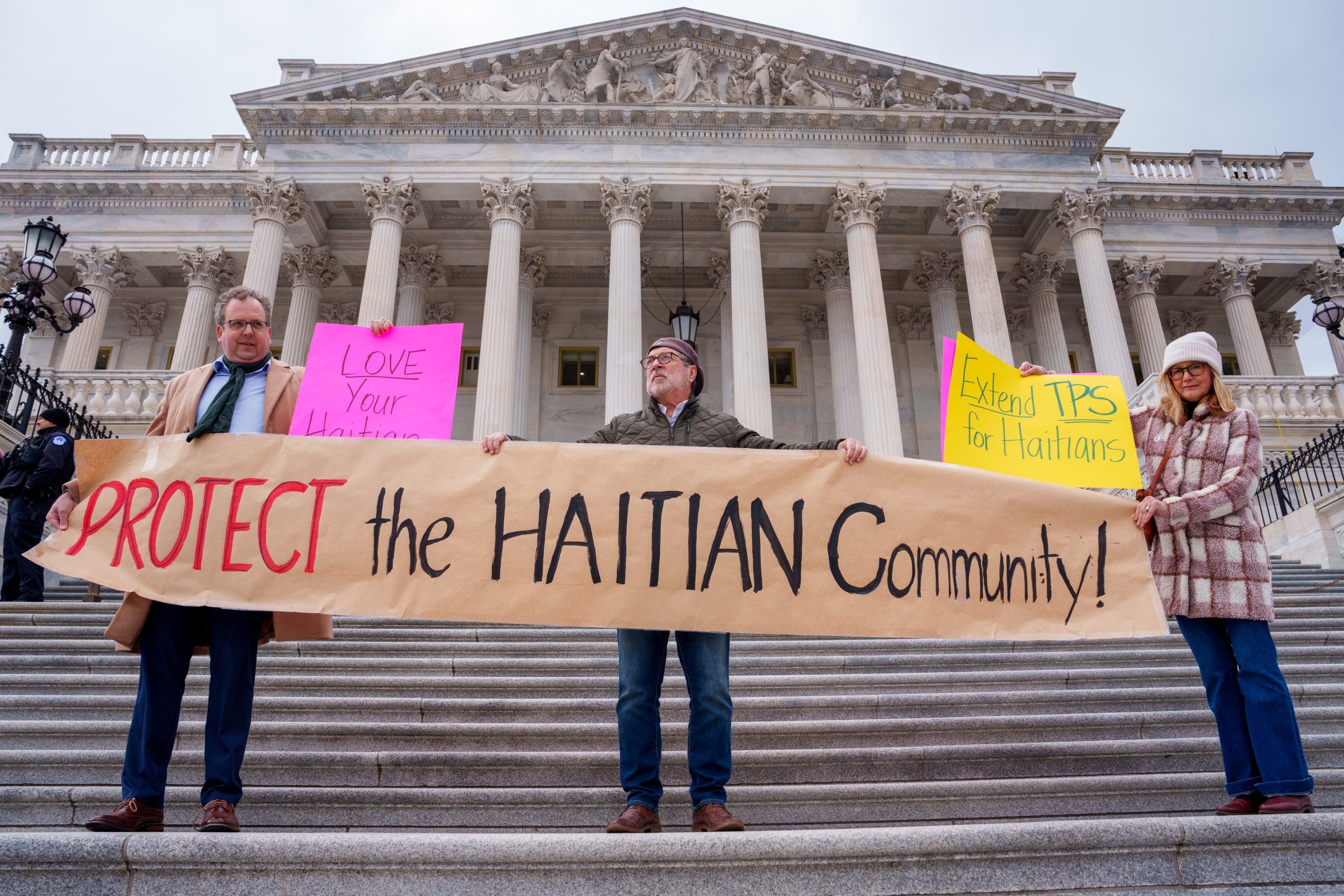
The discharge petition seeking to force a House vote on legislation that would extend Temporary Protected Status for Haitian nationals has gained a fourth Republican co-signer, bringing the total number of signatures to 209, according to information received by CTN.
The petition now stands nine signatures short of the 218 required to bypass the House Rules Committee and bring the bill directly to the floor for a vote.
The news marks a continued, if slow, expansion of bipartisan support for protecting more than 350,000 Haitian TPS holders from deportation — at a moment when the Supreme Court is preparing to hear oral arguments on the legality of the Trump administration’s termination of Haiti’s TPS designation, with a final ruling expected by late June or early July 2026.
Discharge Petition No. 119-15 was filed on January 22, 2026 by Representative Ayanna Pressley of Massachusetts, Co-Chair of the House Haiti Caucus. It targets H.R. 1689, a bipartisan bill introduced by Representative Mike Lawler of New York alongside Representative Laura Gillen, which would require the Secretary of Homeland Security to maintain Haiti’s TPS designation for three years.
The bill was referred to the House Rules Committee after its introduction in December 2025. The Republican majority on that committee refused to bring it up for consideration. The discharge petition is a procedural mechanism that allows lawmakers to override that decision — but only if a majority of the full House, 218 of 435 members, agrees to sign.

A discharge petition forces the House leadership’s hand. Once the threshold is reached, the bill must be brought to the floor for a vote within a set period, regardless of whether the committee or party leadership wants it to proceed. It is a tool rarely used successfully, but its value as a political pressure instrument is significant even when it falls short of the threshold.
A Growing but Still Narrow Republican Flank
When the petition was filed in January 2026, its success depended almost entirely on whether a handful of Republicans would be willing to break with their party leadership to sign it.
The first Republican to do so was Representative Maria Elvira Salazar of Florida, who signed on February 2, 2026 — the same day a federal judge in Washington blocked the TPS termination from taking effect. Representative Brian K. Fitzpatrick of Pennsylvania followed on February 10. Representative Mike Lawler of New York, who co-authored the underlying bill, signed on March 4, 2026 — making him the third Republican and underscoring his personal stake in the legislation.
The addition of a fourth Republican signer, as reported to CTN, extends that bipartisan thread, though the petition still faces a steep climb. Getting Republican members to sign means asking them to publicly defy their own House leadership, which has shown no interest in advancing the bill through normal channels.
With 209 signatures on the petition and 218 needed, the math is straightforward: nine more members of Congress must sign. Given that the overwhelming majority of Democrats are already expected to be on board, the remaining signatures will almost certainly have to come from Republicans.

The current composition of the House complicates the math further. Four seats have been vacant since early 2026 following the deaths and resignations of several members. That reduces the effective membership, though the 218 threshold is calculated based on the full 435-seat House and does not adjust for vacancies.
Advocates have noted that even a petition count of 209 represents substantial political weight. It signals to the administration and to the courts that a near-majority of the House of Representatives believes the Haiti TPS termination was wrong — a fact that may carry weight as the Supreme Court weighs its decision this summer.
The Larger Fight
The discharge petition runs parallel to — and complements — the ongoing legal battle in the federal courts. A federal judge in Washington has blocked the TPS termination since February 2, 2026. The Supreme Court agreed on March 16 to hear the cases on Haiti and Syria TPS and set oral arguments for late April, with a ruling expected before the end of the current term.
If the Supreme Court rules against Haitian TPS holders, a successful discharge petition and a subsequent House vote passing H.R. 1689 could provide a legislative override — though it would still need to clear the Senate and survive a potential presidential veto. That is a long path. But advocates point out that the petition is not only about its immediate legislative outcome. Every Republican who signs is publicly stating that Haiti does not meet the standard for deportation and that the Trump administration’s decision was wrong.
“Our Haitian neighbors are integral members of our communities, and they deserve safe homes here,” Representative Pressley said in a statement earlier this year. “We’ll continue to use every tool available to protect our Haitian families.”
The petition remains open. Members of the public who want their representative to sign can contact their congressional office directly or visit the House of Representatives website to check whether their member has already signed.
https://ctninfo.com/?p=41400&preview=true
https://www.facebook.com/CaribbeanNewsMedia