


Haiti will turn to a Salvadoran company to build its next prisons, Justice and Public Security Minister Patrick Pélissier announced Friday, days after touring the mega-prison that has come to symbolize President Nayib Bukele’s crackdown on gangs.
Construction on the first facility is expected to begin soon, Pélissier said, after Prime Minister Alix Didier Fils-Aimé ordered the project fast-tracked. It is the first of three prisons that a Salvadoran contractor will build with a Haitian partner, according to The Independent, which published The Associated Press report on the announcement.
The minister left the central questions open. He gave no price, did not say whether El Salvador would help pay for the work, and did not say whether Salvadoran officials would play any role in running the prisons once they open. Neither company was named.
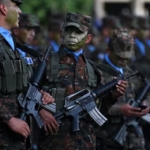
The announcement came on the same day El Salvador’s armed forces reported that two of its soldiers had been killed and two others wounded in an explosion at one of their camps in Haiti. They are the first deaths among the roughly 2,500 troops Bukele has sent to the country since late October, Al Jazeera reported.

A second three-prison plan
Friday’s plan is not the first time Pélissier’s ministry has promised Haiti three new prisons.
In March, Le Nouvelliste reported that Haiti’s Superior Court of Auditors and Administrative Disputes (CSCCA) had issued seven unfavorable opinions on a concession Pélissier signed with a consortium led by Metric Correctional Facility S.A. That agreement called for the group to design, build, operate and maintain penitentiaries at Source Matelas in Arcahaie, Morne Casse near Fort-Liberté, and Pasquette near Jacmel.
The Haitian Times, drawing on a report by the human rights organization Fondasyon Je Klere (FJKL), put the deal at $85.4 million over 50 years. Under its terms, the state would pay the operator to run the prisons and guarantee they stay at least 75% full. FJKL director Samuel Madistin estimated that payments could exceed $6 billion over the life of the contract. The Haitian Times said it had not independently verified the terms, and the government has kept the agreements confidential.
The ministry has not said publicly whether the Salvadoran-built prisons replace that concession, run alongside it or are connected to it.
Inside CECOT
Pélissier visited the Terrorism Confinement Center, known as CECOT, in Tecoluca on Tuesday, Nov. 17, while in El Salvador for the Second International Conference on State and Democracy, Salvadoran outlets El Diario de Hoy and elsalvador.com reported. Photos released by Bukele’s government showed the Haitian minister standing with Salvadoran officials in front of a cell crowded with alleged gang members.

He returned full of praise for the facility. “Once you enter, there is no hope of ever seeing the outside world again,” Pélissier said, as quoted by the AP.
His Salvadoran counterpart, Justice and Security Minister Gustavo Villatoro, said after their meeting that his country was “fully willing to support other countries in the fight against crime,” according to El Diario de Hoy.
CECOT is the centerpiece of a state of exception El Salvador has kept in place since 2022, under which more than 90,000 people have been jailed and cut off from family visits, the AP reported. The prison drew international attention after the United States deported Venezuelan and Salvadoran men there; some have since said they were tortured inside. Supporters credit Bukele’s approach with driving homicides to historic lows, while critics accuse his government of arbitrary detention and abandoning due process, Fox News noted in its coverage of the Haiti deployment.
Haiti’s jails at breaking point
The pressure on Haiti’s prisons is severe. In March 2024, gangs overran the National Penitentiary in Port-au-Prince and the civil prison in Croix-des-Bouquets, the country’s two largest, freeing thousands of detainees.
What remains is badly overcrowded. The prison system had an official capacity of about 3,900 in early 2024 and was running at roughly 302% of that figure, according to the World Prison Brief. By the end of September 2025, more than 7,200 men, women and children were behind bars, the United Nations reported. UN human rights officials blame the crowding mainly on pretrial detention, with people held for long periods before ever seeing a judge. AP journalists who toured a Haitian prison in 2023 found inmates going without adequate food and water.
Pélissier has spoken to that toll before. In March 2025, after reports that inmates were dying of malnutrition, he reorganized how food is delivered to prisons. “Inmates remain human beings,” he said at the time, HaitiLibre reported.
First Salvadoran deaths
In a post on X Friday, El Salvador’s armed forces said four service members were caught in a detonation while working with explosive material at one of their camps. Two died. The two survivors were receiving medical treatment, but the military did not describe their condition, name the dead, give the camp’s location or say what set off the blast.
Accounts differed on the soldiers’ assignment. The AP said they belonged to Bukele’s 2,500-strong contingent, which operates outside the U.N.-backed Gang Suppression Force. Al Jazeera reported that they were working with the Gang Suppression Force at the time.
The Salvadoran buildup began as a rescue mission. On Oct. 18, gunmen fired on and bombed an armored vehicle carrying four Salvadoran Air Force aviation technicians, assigned to medical evacuation duty with the Gang Suppression Force, as they returned to camp from a supermarket in Santo, a section of Croix-des-Bouquets northeast of the capital. The men escaped the burning vehicle and have not been seen since. The Caribbean Media Corporation reported that members of the 400 Mawozo and Chèn Méchan gangs carried out the ambush.
On Oct. 24, a nongovernmental organization handed four badly burned bodies to Salvadoran troops at the Port-au-Prince airport. Bukele denied they were his men, saying the remains included a child, the AP reported. Haitian police later found the charred vehicle in Santo, with no sign of the technicians.
Within two weeks, the first wave of about 100 Salvadoran special forces had grown to more than 2,000 troops, and the operation expanded into strikes on gang targets, including the demolition of what Bukele described as a 400 Mawozo headquarters.
Cheers in the streets, questions from analysts
Many Haitians have welcomed the Salvadorans. On Tuesday, thousands marched through Port-au-Prince thanking Bukele, AFP reported, the same day Haiti’s Council of Ministers ratified a cooperation agreement with El Salvador whose terms have not been released. “We are asking President Bukele to ignore the detractors and to continue supporting Haiti,” one marcher told the news agency.
Speaking in San Salvador on Monday, Pélissier said, “The Haitian people applaud the decision of Nayib Bukele to send troops,” according to Reuters. Fils-Aimé, for his part, has insisted that Haiti directs every foreign force on its territory. “With reinforcement, the gangs won’t have time to sleep,” he said earlier this month, the AP reported.
Others are more cautious. Experts interviewed by the AP called the deployment a political gamble for Bukele, who is seeking a third term, and warned of the danger to civilians. Reuters reported that Washington and the Dominican Republic have raised concerns about how the Salvadoran troops coordinate with other forces.
The Gang Suppression Force, authorized by the U.N. Security Council in September 2025 with a ceiling of 5,500 personnel and the power to arrest suspects, had about 1,560 uniformed members on the ground in mid-October, according to The Rio Times. It replaced the Kenya-led Multinational Security Support mission, whose officers lacked arrest powers.
The United Nations recorded 4,595 people killed and 2,050 injured in armed violence in Haiti during the first 10 months of 2026, Euronews reported. Gangs control an estimated 70% of Port-au-Prince, along with large stretches of the central region.
Haiti has had no elected government since President Jovenel Moïse was assassinated in 2021. Elections are scheduled for next year.
https://ctninfo.com/?p=45435&preview=true
Source: The Independent
AI Use Policy
Some of CTN’s journalists are not native English speakers and draft their work in French or Haitian Creole. We then use AI-assisted translation software to produce the English versions, and traces of machine-generated phrasing may occasionally remain. Every article — in any language — is written, reviewed, and edited by CTN’s staff writers and editors, who remain responsible for its accuracy. CTN also uses AI to convert text into audio.