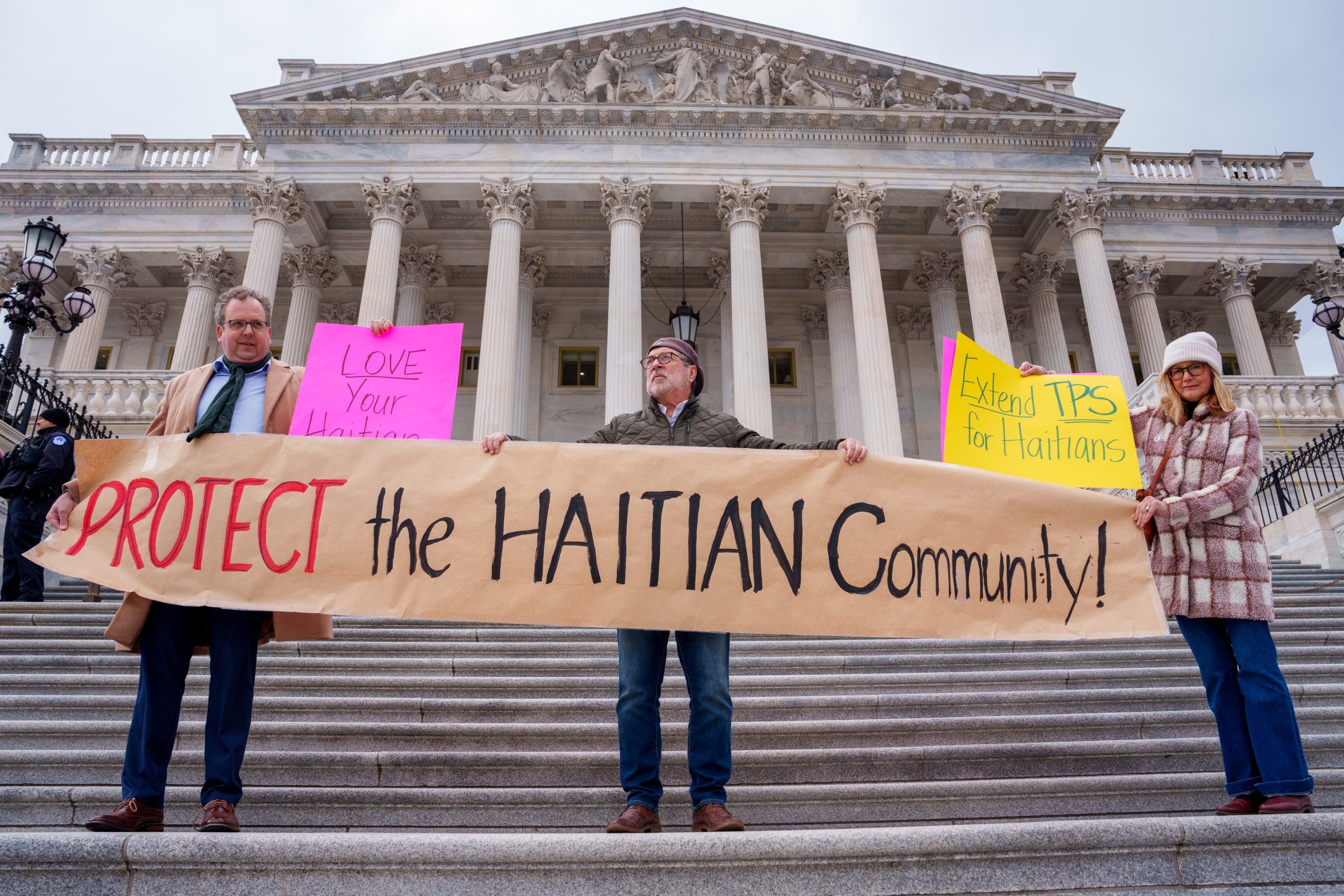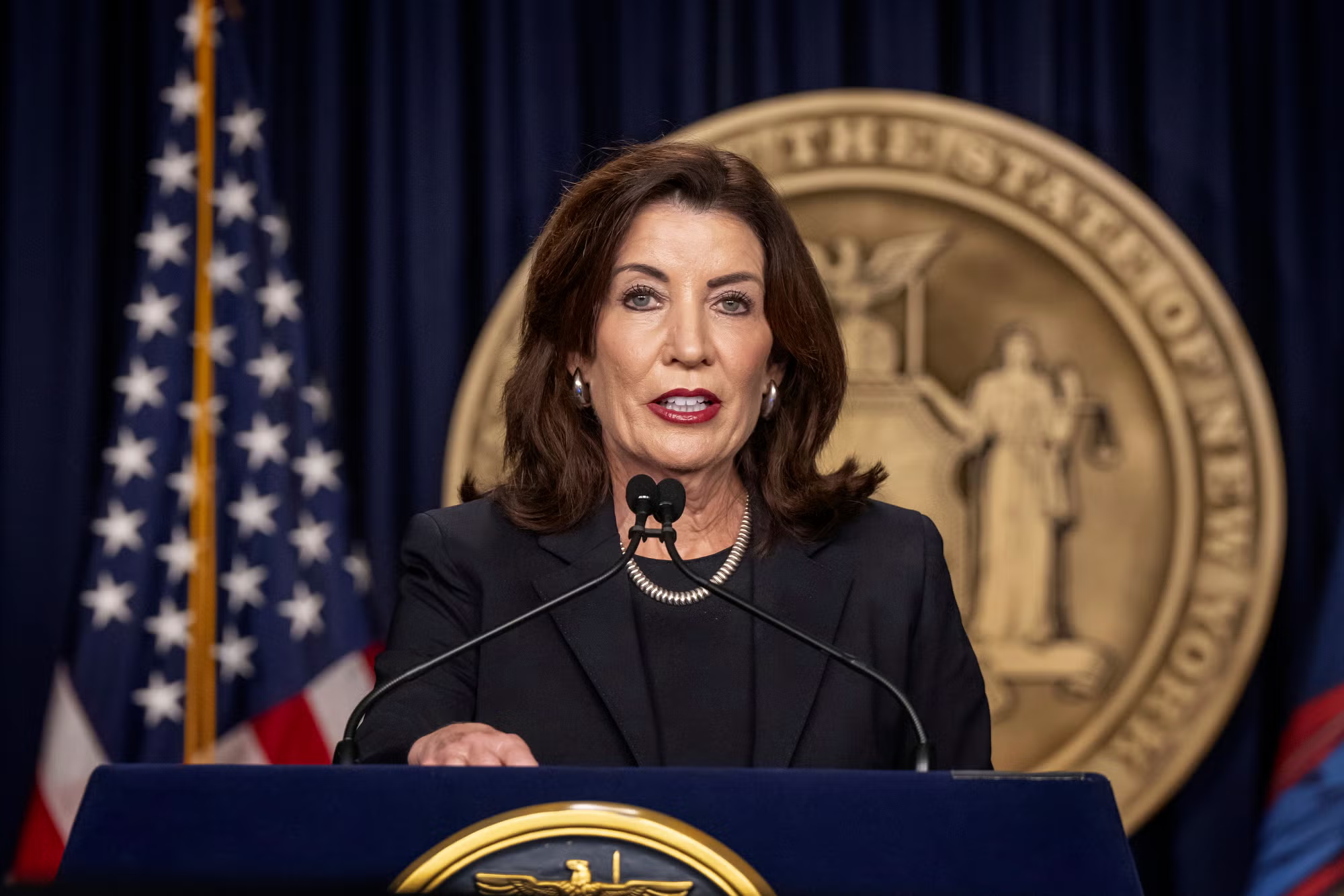
New York Governor Kathy Hochul has asked the federal government to reverse its decision to end Temporary Protected Status for hundreds of thousands of immigrants, warning that stripping those workers of their legal status will damage the state’s economy and put patients at risk.
In a letter dated Aug. 14 to Homeland Security Secretary Markwayne Mullin, the Democratic governor said New York State and local governments will be forced to dismiss hundreds of essential employees within days.
TPS grants people from countries deemed unsafe temporary permission to live and work in the United States. The Trump administration began issuing termination notices in late 2025, and they took effect after the Supreme Court ruled on June 25 that federal courts cannot review most challenges to how the Department of Homeland Security makes those designations. That decision cleared the way to end protections for Haitians and Syrians, whose terminations took effect July 27. New York City is home to about 158,000 affected TPS holders, according to reporting by Nexstar’s News10, part of a national Haitian TPS population of roughly 350,000.
In her letter, Hochul described the move as abrupt and cruel, writing that forcing families back to countries facing ongoing or worsening humanitarian crises amounts to “a reckless and inhumane act.”
She urged Mullin to restore the program, arguing that the affected residents have contributed to the state’s economy and communities and that the law exists to keep people from being returned to danger. “But it is not too late to reverse course,” she wrote. Hochul said her administration, through its Office for New Americans, has helped thousands of New Yorkers with TPS applications and legal representation, and that the state will keep working to shield immigrant residents from harm.
The stakes are tied most directly to health care.
By Hochul’s account, state and municipal employers will have to sever the jobs of essential workers by Aug. 24, disrupting government services and hitting hospitals that depend on immigrant staff. Republican U.S. Rep. Mike Lawler of New York has said that about a third of the roughly 350,000 Haitians with TPS work in health care as nurses, home health aides and direct support professionals. Nancy Hagans, president of the New York State Nurses Association, called the terminations an attack on public health. “When healthcare workers live in fear of going to work, patient care suffers,” she said.
The hospitality industry has raised similar concerns.
The Hotel Association of New York City, whose president, Vijay Dandapani, said immigrants make up roughly 85 percent of the city’s hotel workforce, estimated that about 1,200 Haitian-born workers are employed in New York-area hotels. “Haitian New Yorkers are a vital part of our hotel and hospitality workforce,” Dandapani said.
Efforts to preserve the program have drawn support from both parties in Congress.
In April, the House passed H.R. 1689, a bipartisan bill that would require the Homeland Security Department to designate Haiti for TPS through April 20, 2029. Introduced by Democratic Rep. Laura Gillen with Lawler among its backers, the measure cleared the chamber 224-204 after supporters used a rare discharge petition, co-led by Rep. Ayanna Pressley, to force it to the floor over leadership objections; ten Republicans joined Democrats in favor. The bill now sits in the Senate, where it faces a White House veto threat, and Lawler wrote to Senate Majority Leader John Thune in July urging him to take it up. Lawler has said gang violence and kidnappings make Haiti as dangerous as ever.
The White House has defended ending TPS, saying conditions in the affected countries have improved enough for people to return safely. The rollback is broad. A Pew Research Center report published Aug. 12 found that the administration has ended or moved to end protections for 13 countries, including Haiti, Syria, Venezuela, Honduras, Nicaragua, Somalia, South Sudan, Yemen, Afghanistan, Cameroon, Ethiopia, Myanmar and Nepal. Of the roughly 1.3 million TPS holders nationwide, about one million could lose the right to live and work in the country. Terminations took effect July 27 for Haiti and Syria and Aug. 14 for Somalia, with Venezuela, Ukraine and Sudan set for October and El Salvador by year’s end; Venezuelans are the largest group, with more than 615,000 facing expiration. On Aug. 14, U.S. Citizenship and Immigration Services announced extensions for Ukrainians and Sudanese with pending renewal applications.

State officials have also warned immigrants about fraud tied to the upheaval.
Attorney General Letitia James issued a consumer alert about scammers who impersonate government officials or pose as legal representatives, sometimes called “notarios,” and who pressure people into urgent online payments. She advised New Yorkers never to sign blank documents and to seek help through the state’s Office for New Americans hotline at (800) 566-7636. Separately, a state law taking effect Aug. 25 bars local governments from holding people in jail solely to transfer them to federal immigration authorities under 287(g) agreements.
For now, the terminations are proceeding while H.R. 1689 awaits action in the Senate.