


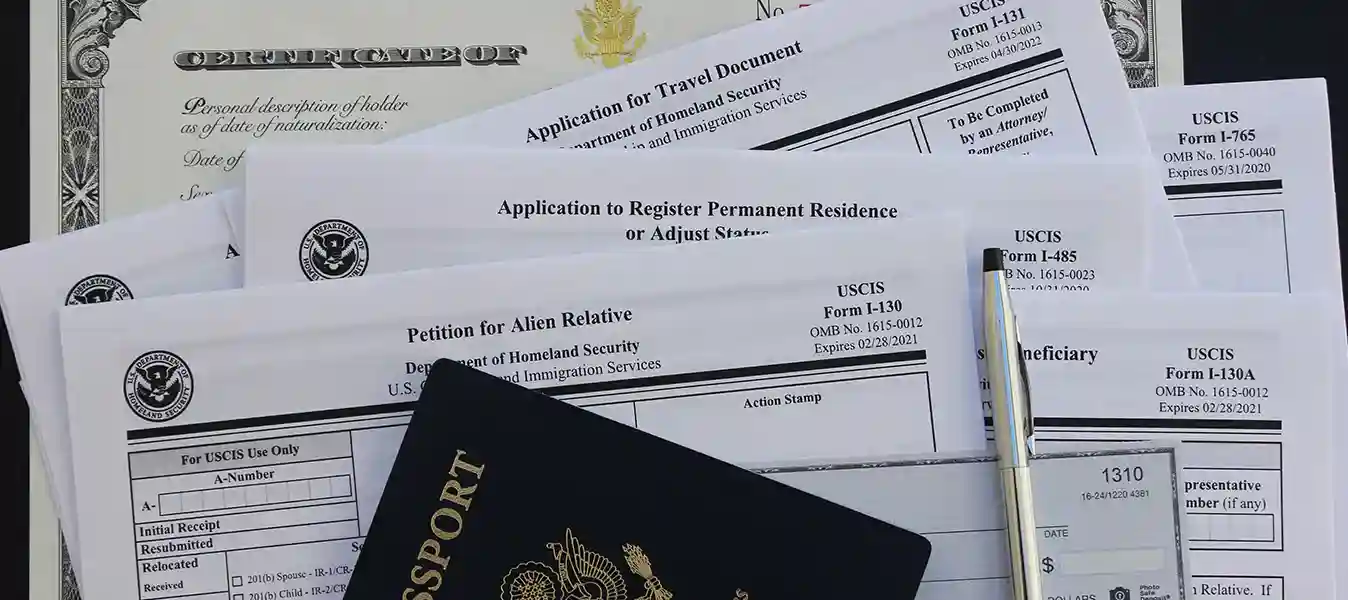
The way immigrants file paperwork with the U.S. government is moving decisively online.
Under an interim rule that takes effect Aug. 11, U.S. Citizenship and Immigration Services has decided to require that immigration forms be submitted electronically rather than on paper, ending the mailed-in application that generations of filers have depended on.
The rule does not require every form to go digital at once. Instead, it creates a switch that the agency can flip one form at a time. Once a form has been available for online filing for at least 180 days, USCIS may declare that version mandatory, and it says it will post notice on its website at least 60 days before a form’s paper option is retired. To file, applicants will need a USCIS online account, through which they can either complete a form on the agency’s platform or upload a finished PDF with their supporting documents.
USCIS has framed the change chiefly in terms of efficiency and security.
Announcing it under the banner of strengthening national security, the agency said that moving off paper would let it end its reliance on the Treasury Department’s physical “lockbox” facilities, speed the shift to electronic fee payments, and lower government costs. It also argued that digital records are easier to store and search than paper, which, it said, sharpens fraud detection, strengthens identity management, and improves security screening, while reducing errors and shortening decision times.
Immigration attorneys and advocates have been more guarded. Because the measure was issued as an interim final rule, it becomes enforceable on its effective date without the usual round of public comment first. However, USCIS will accept written comments through Oct. 13.
Practitioners have also pointed to recurring trouble with the agency’s online systems — failed document uploads, login problems, and other glitches — and questioned whether the platform is ready to carry the full weight of the country’s immigration filings. The concern drawing the most attention is access: applicants who lack reliable internet, who are not comfortable navigating government websites in English, or who cannot easily set up and manage an online account may find a digital-only system harder to use.
The rule does leave them a door. People who are unable to file electronically may ask USCIS for a waiver, which the agency says it will grant, at its discretion, in cases of undue hardship. How freely that discretion will be used is not yet clear.
The change also arrives amid a broader tightening of USCIS filing rules this year, including a separate rule that took effect in July, permitting the agency to deny an application outright and retain the fee for a defective signature. Together, they send filers one message: the room for procedural error is shrinking.
For now, nothing demands an immediate change.
E-filing is already routine for many USCIS forms, and the agency must give 60 days’ notice before requiring it for any particular one. Applicants and those who help them can get ready by creating a USCIS online account, watching the USCIS website for announcements about which forms are going digital and when, and — for anyone who truly cannot file online — being prepared to request a hardship waiver. Anyone with questions about a specific case should consult a licensed immigration attorney or a U.S. Department of Justice–accredited representative. Members of the public who want to weigh in on the rule can submit comments to USCIS through Oct. 13.
The paper immigration form is not gone. But the government has set a clear course toward an all-digital filing system — and, in doing so, has placed the burden on applicants and their advocates to ensure no one is stranded on the wrong side of the digital divide.
This article is for general information and is not legal advice. Anyone with questions about filing a specific immigration form should consult a licensed immigration attorney or a U.S. Department of Justice–accredited representative.
 https://ctninfo.com/?p=44076&preview=true
https://www.facebook.com/CaribbeanNewsMedia
This article was originally written in English. Other language versions are produced using AI translation software, and errors are possible — the English version is authoritative. CTN also uses AI to convert text into audio.
 https://ctninfo.com/?p=44076&preview=true
https://www.facebook.com/CaribbeanNewsMedia
This article was originally written in English. Other language versions are produced using AI translation software, and errors are possible — the English version is authoritative. CTN also uses AI to convert text into audio.