


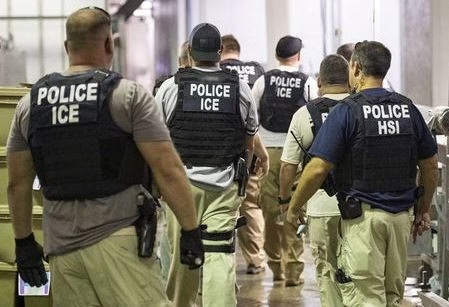
Two sources tell Newsweek that officers were advised not to detain Haitians whose status has lapsed. But the reported pause is unofficial, unconfirmed by DHS, excludes those with removal orders, and could be reversed at any time; it is not a green light.
Caribbean Television Network (CTN)
Immigration and Customs Enforcement officers have been advised not to arrest Haitians whose Temporary Protected Status has expired, at least for now, Newsweek reported Thursday, citing two people familiar with the agency’s operations.
According to Newsweek, the guidance was confirmed by a current ICE official and a former agency official, both of whom spoke anonymously because they were not authorized to discuss internal instructions.
One of the sources told the outlet that Haitians with final orders of removal could still be arrested as part of routine operations. It is not clear, Newsweek reported, “how long the guidance will last or whether it applies nationwide”, and the outlet noted it may relate specifically to Haitians who were part of the class-action lawsuit behind the Supreme Court’s TPS ruling.

Asked about it, the Department of Homeland Security told Newsweek it does not discuss ongoing or future operations.
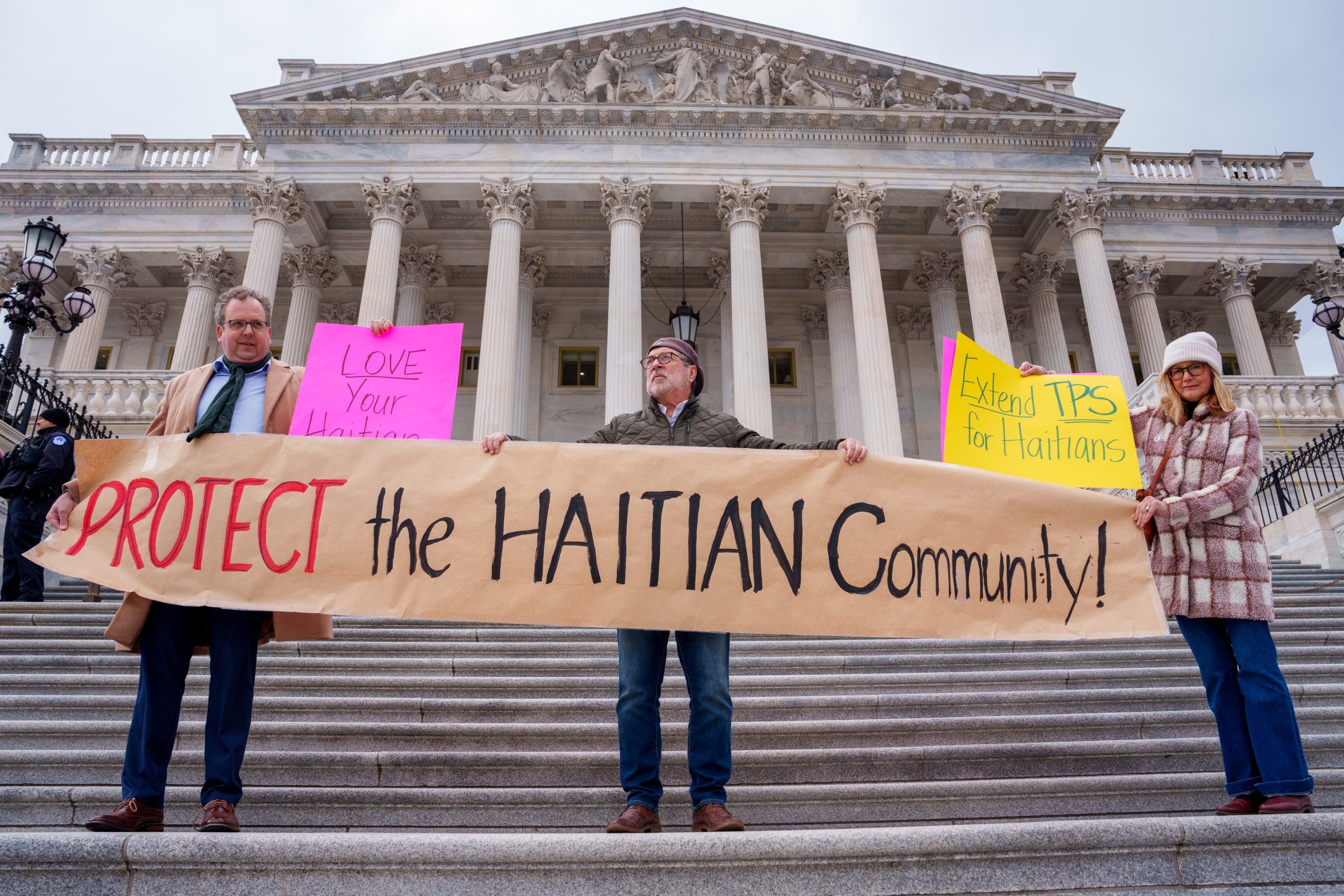
For Haitian families, the report may bring a moment of relief. It should not bring a false sense of safety, and CTN urges the community to treat it with real caution.
It is unofficial and unconfirmed. The account rests on anonymous sources, and DHS has not confirmed it. It is also narrow — by one source’s account, Haitians with final removal orders may still be arrested, and its scope and duration are unknown.
Most importantly, it can reverse at any moment. Only days earlier, CBS News and Fox News reported, also citing unnamed sources, that ICE was preparing to ramp up arrests of Haitians, with operations expected in places such as Springfield, Ohio, and in Florida, home to the country’s largest Haitian population. Guidance given quietly can be withdrawn just as quietly. This is not a change in the law and not a policy announcement.
No one should assume they are safe or drop their guard because of it.
What families can do now: speak with a licensed immigration attorney or a U.S. Department of Justice–accredited representative about your individual situation, because some people may have other options; know your rights, including the right to remain silent, the right not to open your door without a judicial warrant signed by a judge, and the right to speak to a lawyer; keep your identity and immigration documents and a family emergency plan ready; and verify your status and any official guidance through USCIS directly rather than through rumor or social media. Be wary of anyone who promises guaranteed protection or charges fees for it.
The reported pause comes at the end of a hard month. On June 25, the U.S. Supreme Court ruled 6-3 for the Trump administration in Mullin v. Doe, holding that federal judges generally cannot review Homeland Security’s decisions to terminate a TPS designation — a ruling advocates warned could reach well beyond Haiti and Syria. That decision cleared the way to end protections for roughly 350,000 Haitians, according to the government’s estimation. But these figures can be as high as 564,000 based on documents filed with the DC Circuit Court.

On Wednesday, Aug. 5, a federal district judge lifted the order that had temporarily blocked the termination, making the end of Haiti’s TPS official.
From that point, Haitians whose status lapsed lost their work authorization and became subject to detention and removal unless they hold another form of protection. In the days since the Supreme Court ruled, fear has spread through Haitian communities: churches from Maryland’s Eastern Shore to elsewhere have seen attendance fall and events canceled, NBC News and The Associated Press reported. Guerline Jozef of the Haitian Bridge Alliance told CBS News the community was living in “extreme trauma, fear, and terror.”
Geoff Pipoly, lead counsel for the Haitian plaintiffs in the Supreme Court case, told Newsweek he does not believe ICE should be detaining his clients at all.
He said they had “followed all of the rules,” registering for TPS, turning over their names, addresses, and biometrics, and undergoing background checks — in exchange, he argued, for the government’s promise to return them only when it was safe, which he said is plainly not the case in Haiti today. The litigation is not over, Pipoly told the outlet; while the Supreme Court answered one question, he said, it opened hundreds of thousands of new ones about each person’s individual status.
Krish O’Mara Vignarajah, president and CEO of Global Refuge, told Newsweek that if ICE is holding off, it suggests uprooting 350,000 law-abiding people was never sensible — but cautioned that “a temporary reprieve doesn’t undo the harm” of stripping status from people who followed the rules.
DHS has welcomed the Supreme Court’s decision and maintains that Haiti no longer qualifies for TPS. In a statement to Newsweek, a spokesperson said the department does not discuss operations and argued that “Temporary Protected Status is exactly that—temporary,” describing the program as one that had been allowed to function as a de facto amnesty Congress never intended to be permanent. Separately, DHS has encouraged Haitians who lost status to leave the country on their own.
The reported guidance could change without notice, and litigation over individual cases continues. For now, the safest course for Haitian TPS holders is to assume nothing about their protection from a single, unconfirmed report — and to get individualized legal advice, keep documents in order, and stay informed through official and trusted channels.
https://ctninfo.com/?p=44046&preview=true
https://www.facebook.com/CaribbeanNewsMedia
This article was originally written in English. Other language versions are produced using AI translation software, and errors are possible — the English version is authoritative. CTN also uses AI to convert text into audio.