



As Haitian families across Massachusetts wait to learn what becomes of the legal status they have held for more than 16 years, the state has sent employers a message about the workers in question: they belong here and remain authorized to work.
The Healey-Driscoll administration this week issued guidance to Massachusetts employers on immigration and work authorization, aimed at helping businesses navigate the shifting federal rules around Temporary Protected Status — and at making sure no worker loses a job to confusion before the law actually requires it.
Governor Maura Healey put the state’s position plainly.
“TPS holders are essential members of our communities, workforce, and economy. They fill critical roles in health care, elder care, hospitality, education, and other key industries.”
Healey said the decision to upend more than 16 years of legal protections would have devastating consequences for these families, for the people they serve, and for the state’s economy. She said the administration would continue providing guidance to affected individuals, employers, and community organizations, calling it an incredibly challenging time that the state intends to work through together.

The guidance is a practical document, and its central point is one Haitian worker should hear clearly: right now, Haitian TPS work permits remain valid, and employers are required to honor them.
Employment Authorization Documents issued under Haiti’s TPS designation are extended under a federal court order. When completing Form I-9, employers enter “as per court order” in Section 1 and the current federal date in Section 2. The state’s full guidance is posted on mass.gov, and employers with workers from other TPS countries are directed to the federal SAVE website.
For a workforce that has spent months hearing that its status is ending, that instruction matters. Massachusetts is telling employers not to act before the law does.
The dates, and what they mean
The state also gave employers a candid picture of the federal calendar, and Haitian workers deserve the same candor.
U.S. Citizenship and Immigration Services has listed July 24, 2026, as the date employment authorization ends for Haitian TPS holders, and July 17 for Syrians. But as the state explained to employers, these are placeholder dates. They remain in effect until the Supreme Court issues its opinion or a lower court lifts the stay that has kept the program in place. The state’s current expectation is that this occurs by July 27.

That is not a deadline that has arrived. It is a date to watch — and, for now, the reason Haitian workers should keep checking official sources rather than rumors.
Haiti was first designated for TPS after the January 2010 earthquake. In November, then-Homeland Security Secretary Kristi Noem determined the country no longer met the criteria and set the designation to end February 3. A federal judge in Washington blocked that termination on February 2 in Miot v. Trump.
On June 25, the Supreme Court ruled 6–3 in Mullin v. Doe that federal courts cannot review a Homeland Security secretary’s decision to end a country’s TPS designation. Justice Samuel Alito wrote for the majority. The Court also rejected the Haitian plaintiffs’ claim that the termination was driven by race, finding the evidence insufficient. Justice Elena Kagan dissented, joined by Justices Sonia Sotomayor and Ketanji Brown Jackson.
Since that ruling, work authorization has continued because the lower courts have not yet formally implemented the decision. USCIS has extended the date roughly every two weeks — July 1, then July 10, then July 24 — and has described each as limited relief.
What TPS holders can do
- Keep your current EAD. It is valid under the court order, and your employer must accept it.
- Check the USCIS TPS Haiti webpage rather than social media for date changes.
- Seek help only from a licensed attorney or a DOJ-accredited representative. Do not pay anyone else to file immigration paperwork on your behalf.
- If your employer questions your authorization, the state’s guidance on mass.gov is written for them.
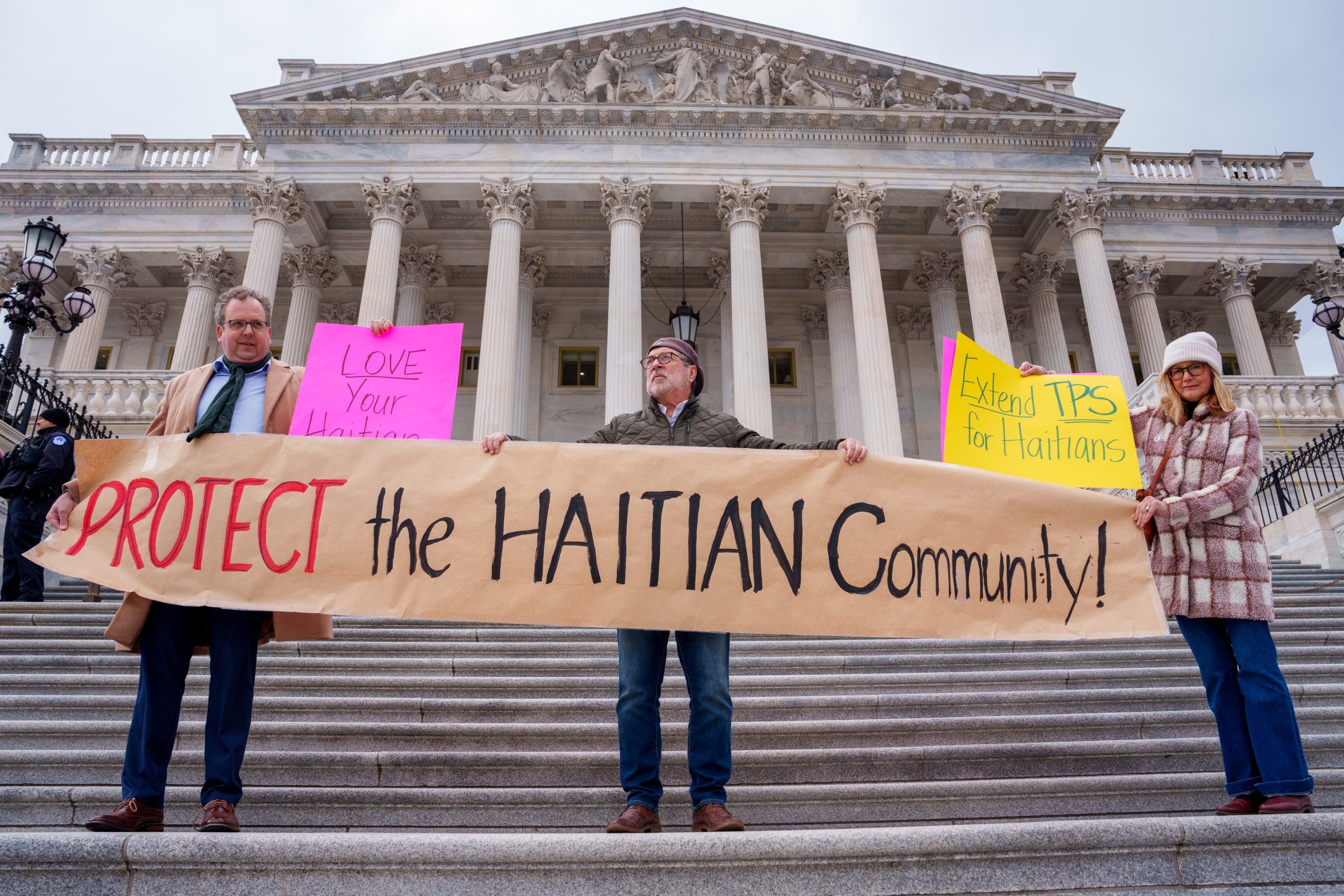
Advocates continue to press Congress, the one branch the Supreme Court’s ruling left untouched. H.R. 1689, which would require a new TPS designation for Haiti, passed the House in April and awaits Senate action. Rallies for a permanent legislative solution were held in at least eight U.S. cities on July 9.
For now, in Massachusetts, the state’s message to the people who staff its nursing homes, hotels, classrooms, and hospitals is that they are not being written off — and that whatever the federal courts decide, the guidance will keep coming.
https://ctninfo.com/?p=43779&preview=true
https://www.facebook.com/CaribbeanNewsMedia
This article was originally written in English. Other language versions are produced using AI translation software, and errors are possible — the English version is authoritative. CTN also uses AI to convert text into audio.