


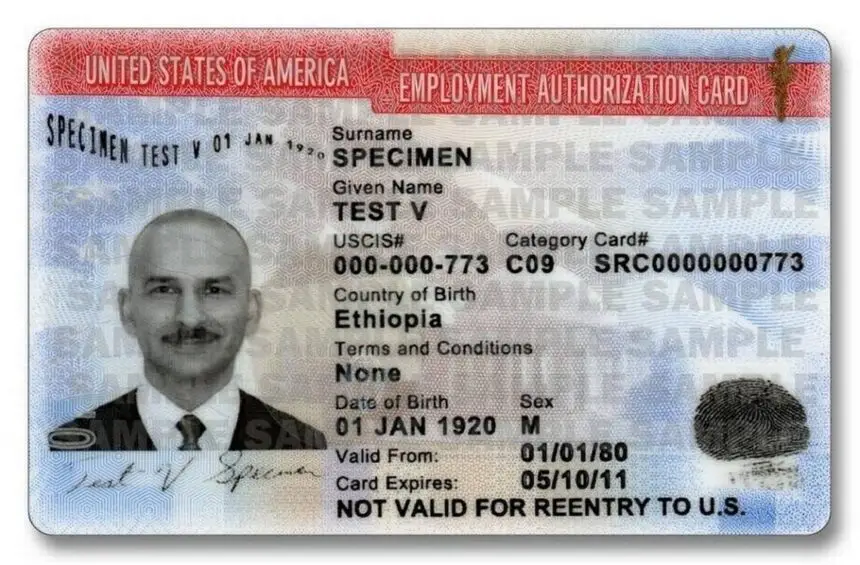
A new federal notice issued July 10 keeps work authorization intact for hundreds of thousands of Haitians living under Temporary Protected Status — but only through July 24, the latest in a string of short extensions that now stand between them and the loss of their legal right to work.
The guidance, posted to the government’s E-Verify system, supersedes a notice issued July 1 and pushes the date employers must record on federal employment paperwork from July 10 to July 24. For Haitian TPS holders, the practical effect is two more weeks of protected employment — and continued uncertainty about what comes after.
Federal officials describe the extension as limited relief, one that will last only until the lower courts fall in line with the U.S. Supreme Court’s June 25 ruling in Mullin v. Doe — the decision that cleared the way to end TPS for Haiti and Syria.
In that 6–3 ruling, split along ideological lines, the Court held that federal law bars judges from reviewing most challenges to a Homeland Security secretary’s decision to end a country’s TPS designation. It also found that Haitian plaintiffs were unlikely to prove the termination was driven by racial bias — a conclusion the dissenting justices rejected.
Justice Samuel Alito wrote for the majority; Justice Elena Kagan dissented, joined by Justices Sonia Sotomayor and Ketanji Brown Jackson. The decision placed the legal status of roughly 350,000 Haitians at risk.

Haiti’s TPS was slated to end February 3 under a termination signed in November by former Homeland Security Secretary Kristi Noem.
A federal judge in Washington, Ana C. Reyes, blocked that termination on February 2 — and it is her order, still in force as the case returns to the lower courts, that keeps work permits alive today. Markwayne Mullin now leads the department and is the named government official in the Supreme Court case.
Even after the high court’s ruling, that district-court stay has not been lifted, leaving Haitian families in a rolling, two-week-at-a-time limbo while the government and courts sort out next steps. The Department of Homeland Security has said publicly that it disagrees with the order and is weighing its options with the Justice Department.
For now, Employment Authorization Documents tied to Haiti’s TPS designation — including cards carrying a range of past expiration dates — remain valid under the court order. Employers are required to honor them. Workers and employers completing Form I-9 are instructed to enter “as per court order” in Section 1 and the July 24 date in Section 2, and to check the USCIS TPS Haiti page for updates, which have been arriving every few weeks.
Immigration officials continue to warn TPS holders to seek help only from licensed attorneys or accredited representatives, and to avoid unauthorized practitioners who charge fees to file forms they are not permitted to handle.
The longer-term fate of Haitian TPS may ultimately rest with Congress. The House passed H.R. 1689 in April, a measure that would require a new TPS designation for Haiti, but it still awaits Senate action. Until then, protection for Haitian workers depends on court orders that are renewed in increments of weeks.

https://ctninfo.com/?p=43581&preview=true
https://www.facebook.com/CaribbeanNewsMedia
This article was originally written in English. French and Haitian Creole versions were produced using AI translation software; errors are possible, and the English version is authoritative. CTN also uses AI to convert text to audio.