


The United States is preparing a major overhaul of the international response to gang violence crippling Haiti, proposing to double the size of the security force and shift strategic leadership away from Kenya to another country, according to official statements and diplomatic sources.
The announcement came Wednesday during a meeting of the Organization of American States (OAS) in Washington, where diplomats were also briefed on an ambitious three-year, $2.6 billion roadmap to stabilize the hemisphere’s poorest nation.
Kimberly J. Penland, the U.S. Deputy Chief of Mission, told attendees—remarks later detailed in a report by journalist Jacqueline Charles of the Miami Herald—that Washington is drafting a resolution for the United Nations Security Council to “adequately fund” efforts against gangs that control much of Port-au-Prince. The proposal follows recommendations from UN Secretary-General António Guterres, who has urged the use of peacekeeping funds.
“If the UN Security Council pursues this model, we will also seek strong regional participation to ensure the force’s strategic leadership,” Penland said, without elaborating. A source familiar with UN discussions later confirmed to the Herald that this signaled a shift away from Kenya’s current leadership role.

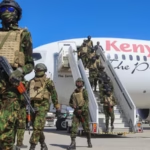
The move comes as the long-delayed deployment of Kenyan police, which began in June, continues to struggle with shortages of equipment and limited capacity to expand its footprint on the ground. Penland nonetheless thanked Kenya “for its dedication, leadership, and support over the past year,” praising the country’s courage in answering Haiti’s call “at a critical moment.”
The U.S.-Panama initiative was outlined during OAS Secretary General Albert Ramdin’s presentation of a revised roadmap for Haiti, which includes $1.33 billion in investments to rebuild the national police, reform the justice system, and dismantle transnational criminal networks.
“This spans a period of 34 to 36 months,” Ramdin explained. “We hope that after 36 months, the security situation will be reasonably under control.” He stressed that the plan is not about imposing dictates but about creating a logical framework that requires broad collaboration. “No single actor or donor can resolve this crisis alone,” he said.
Still, the U.S. proposal faces daunting obstacles. Even if the Security Council approves a new mandate, Washington will need to assemble 5,000 personnel—an ambitious goal given that the current mission has struggled to reach its original cap of 2,500.
Funding remains another major challenge. The UN trust fund for the existing mission has collected just $112.5 million. While the U.S. has provided more than $835 million in various forms of support, no Latin American or Caribbean nation has contributed to the UN fund.

Regional commitments are also weakening: Jamaica has only about 20 personnel deployed, the Bahamas and Belize have reduced their numbers, and Barbados canceled its planned contribution.
The urgency of the crisis was underscored repeatedly at the OAS meeting. Haiti’s interim representative, Jean Josué Pierre, quoted transitional council president Laurent Saint-Cyr as saying that security is the one expectation of Haiti’s 12 million people.
“Without it, everything else collapses—constitutional reform, economic reconstruction, elections,” he warned.
Penland echoed that point, stressing that retaking territory and securing transportation corridors are “essential prerequisites” for both elections and humanitarian aid. “The next international force must have the resources to control territory, secure infrastructure, and complement the Haitian National Police,” she said.
As the OAS seeks to position itself as a central actor without “infringing on Haiti’s sovereignty,” the success of these new initiatives will depend on overcoming the very obstacles—funding shortfalls, recruitment hurdles, and coordination gaps—that have plagued past efforts.