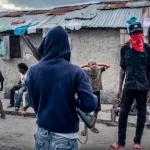



Everything happened between April 24 and May 6 of this year, reveals the 15-page report of the National Human Rights Defense Network (RNDDH). During these twelve days of terror and intense fighting between the “400 Mawozo” and “Chen Mechan” gangs, people were murdered by bullets, machetes, axes, or knives, and others were burned inside their burned houses, in the streets, or with tires, the report says.
Women and girls have been repeatedly gang raped, and people have been shot and wounded in the conflict between the two groups.

The human toll is staggering. At least 148 people were murdered, including 7 bandits who were members of the Chen Mechan base, executed by their leader, Claudy CELESTIN alias Chen Mechan, also known as Stevenson PIERRE.
The victims were recorded in several neighborhoods, including 48 in
Butte Boyer among them, seventeen (17) young women who were in a motel in Nan Galèt, extended Butte Boyer zone, 47 in Corridor Djo and in Santo 2. Among these murdered people, 17 of them were burned. 30 others were buried in mass graves dug by the base of the Chen Mechan, reads the report.
In Carrefour Marassa, 23 people were killed and 15 others in Cité Ti Baka, a locality located between Butte Boyer and Lakou Mapou.
Six people were murdered and decapitated in Cité Doudoune. The heads were taken away by the armed bandits and two others were killed in Lillavois.
In this investigation report entitled Violent clashes between armed gangs: RNDDH demands the protection of the Haitian population. It is also reported that 81 houses were burned in Butte Boyer, Marécage Corridor Djo and Santo 2.
A massacre with multiple consequences
During the 12 days of this gang terror, many families were barricaded in their homes without the possibility of leaving, lacking water, food, electricity and without the possibility of recharging their cell phones to contact their loved ones.
Without citing numbers, RNDDH reports that many families abandoned their homes to take shelter with relatives in the West Department, in the Place de Clercine and in Kay Castor, a school located next to the Place de Clercine. Others have gone to the commune of Arcahaie in the north of Port-au-Prince.
A precarious calm, families return to the neighborhoods
It must be said that since May 6, 2022, an apparent calm has been recorded in certain areas of the Cul-de-Sac Plain where the attacks have ceased, writes RNDDH, specifying that families who had abandoned their homes have returned to them.
However, fear still reigns in the minds of citizens in the Cul-de-Sac Plain, given that neither of the two rival armed gangs has been disarmed or dismantled, pointing out that the gangs have strong political and economic support. This makes it difficult to dismantle them, says the entity.
What can be done to avoid the repetition of this unprecedented massacre? To achieve this, the human rights organization calls on the authorities to end the protection of armed gangs. Provisions must also be adopted to ban the illegal trafficking of arms and ammunition to feed the groups.

From an institutional point of view, the organization led by Pierre Espérance advocates what it calls the depoliticization of the national police and the end of any practice of support and protection of armed gangs in the pay of the “executive power.
Police officers who collude with armed bandits, especially those who provide the Grupo de la Gobernación with
Those police officers who collude with the armed criminals, particularly those who make materials and equipment available to G-9 an Fanmi and Alye, must be punished, without forgetting that measures are necessary to facilitate the resumption of control of the territory handed over to the armed gangs in order to put an end to the reign of impunity and to guarantee the protection of the Haitian population.