


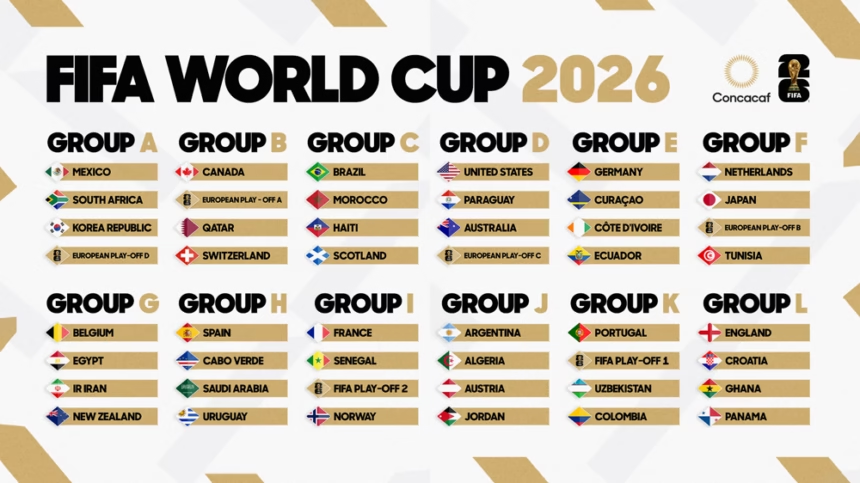
The draw for the 2026 FIFA World Cup, held on Friday in Washington, officially placed Haiti in Group C alongside three formidable opponents: Brazil, Morocco, and Scotland. It is a challenging lineup — and a historic opportunity — for the Grenadiers.
Haiti will open the tournament against Morocco. In their second match, the Grenadiers will square off with Brazil, five-time world champions. The group stage ends for Haiti with a contest against Scotland. After decades away from the global stage, the Grenadiers face significant stakes: meeting world football’s most established powers and proving their qualification was deserved.
Haiti Returns to the World Cup After 51 Years
For Haitian football, the draw marks a monumental moment: after more than half a century, the Grenadiers are set to return to the World Cup. Their first appearance since 1974 feels both historic and triumphant.
Haiti’s last appearance, at the 1974 tournament in Germany, is a memory cherished and recounted with pride and nostalgia. Emmanuel Sanon’s unforgettable goal against Italy shattered not just their rivals’ defenses but also a barrier in the Haitian spirit, bringing a nation to its feet. Though the team left without a win, their bravery shaped the soul of Haiti’s sporting identity.
In the decades since, Haiti’s qualification efforts have been repeatedly hindered by political turmoil, economic instability, and limited football infrastructure. But today’s generation — composed largely of players competing in professional leagues across Europe, North America, and the Caribbean — has accomplished what once felt impossible: returning the nation to football’s biggest stage.
A Daunting Challenge, but a Historic Opportunity
Haiti enters the tournament as a clear underdog. Facing three contrasting styles — Brazil’s attacking flair, Morocco’s tactical discipline, and Scotland’s physical intensity — will test the breadth and depth of the squad.
Still, Haiti showed remarkable resilience during the qualifiers, propelled by:
- renewed team cohesion,
- strong engagement from a passionate diaspora,
- growing technical stability,
- and, above all, the joy—and burden—of lifting a 51-year shadow from Haitian hearts.
Analysts believe Haiti could surprise, provided the team leverages its speed, pressing ability, and attacking potential.
Across Port-au-Prince and throughout the diaspora — from Miami to Montreal, New York, and Boston — the announcement of Group C has sparked a mix of excitement, pride, and cautious optimism.
Yet for many, no matter how daunting the draw, the moment’s magnitude is undiminished. Haiti has finally returned to the world’s biggest sporting stage.