

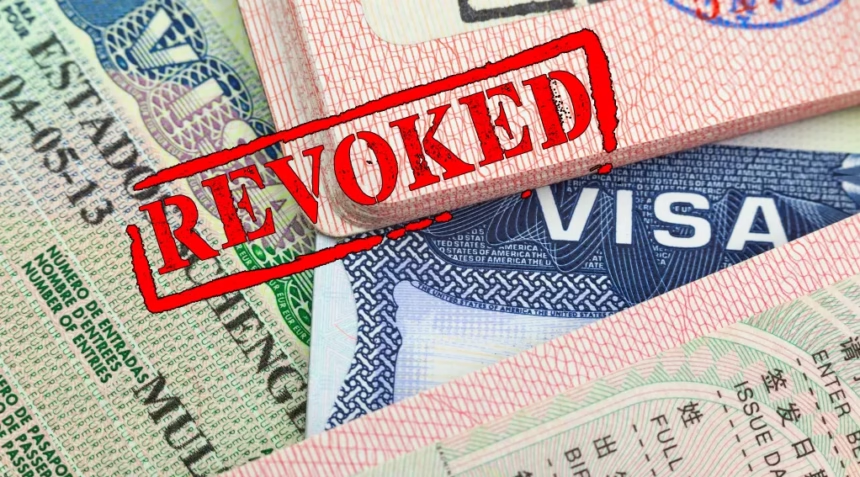
In less than a year, the Trump administration has revoked approximately 80,000 non-immigrant visas, as reported by Reuters and confirmed by a senior State Department official. This unprecedented number, the highest in over two decades, demonstrates the administration’s firm commitment to implementing more rigorous oversight of foreign nationals’ entry and residence in the United States.
Most cancelled visas belong to temporary visa holders, such as students, tourists, workers, and business visitors. Those affected have faced charges ranging from driving under the influence to violent conduct and theft. According to a senior State Department official, speaking anonymously, these three categories make up about half of this year’s incidents.
Since his latest tenure in the White House began, President Donald Trump has enacted numerous policies to strengthen the legal and temporary immigration framework. His first term mainly focused on combating illegal immigration. Now, his administration is shifting its attention to legal visa holders.
“The United States cannot afford to grant privileges to those who abuse their status or who represent a threat to national security,” said a senior State Department official, quoted by Reuters.
Statistics provided to the news agency reveal that 16,000 revocations stem from drunk driving incidents, 12,000 from assault cases, and 8,000 from theft charges. Additionally, more than 6,000 student visas were terminated in August due to expired stays, legal violations, or conduct deemed inconsistent with U.S. regulations.
The State Department’s new guidelines now extend beyond criminal and administrative violations. A new criterion directs American diplomatic staff to assess visa applicants’ public positions and political involvement. According to Reuters, internal guidance instructs diplomatic missions to deny applications from those described as “hostile to the United States” or who have presented views diverging from official U.S. foreign policy.
The Washington Examiner reports that many foreign students and green card holders have faced status challenges for supporting Palestinian causes or criticizing Israeli policies on Gaza. Some have been called ‘pro-Hamas,’ a controversial label that concerns civil rights advocates.
Cases Linked to Social Media Activity
Digital presence is now a crucial factor in visa decisions. The State Department has revoked at least six visas for individuals based on their social media posts about the assassination of conservative activist Charlie Kirk. This reflects an enhanced digital monitoring strategy. Since 2024, visa applications require disclosure of social media handles, phone numbers, and email addresses used over the previous five years. These developments suggest a shift in policy toward evaluating visa eligibility based on applicants’ online activity and digital footprints.
Secretary of State Marco Rubio fully supports this direction. In May, he confirmed that he had personally authorized the revocation of hundreds, or possibly thousands, of visas. He cites activities he sees as incompatible with U.S. foreign policy priorities.
“We must ensure that every person benefiting from a U.S. visa respects our values, our security, and our international interests,” he said during a press conference in Washington, quoted by Reuters.
Rubio emphasized that these actions were not meant to penalize political viewpoints but rather to safeguard against potential interference, radicalization, or disinformation.
Growing Criticism from NGOs and Human Rights Defenders
Several organizations, including the American Civil Liberties Union (ACLU), condemn what they call ‘ideological profiling.’ They argue this threatens freedom of expression and could lead to disguised political censorship.
“These massive visa revocations send a worrying message: it is no longer just about controlling borders, but about controlling ideas,” said a representative of the ACLU in a statement relayed by several media outlets.
Immigration law specialists warn that this approach could lead to numerous legal challenges. International students and foreign skilled workers may be especially affected. These groups are vital to America’s economic prosperity.
Political analysts in Washington see this as a message to Donald Trump’s conservative base, less than a year before the midterm elections. By addressing illegal immigration and specific behaviors among legal visa holders, the president aims to reinforce his stance as a leader focused on migration control.