

The Trump administration’s simultaneous pursuit of peace negotiations and ongoing military action against Iran highlights the deep and unresolved contradictions driving the current conflict.
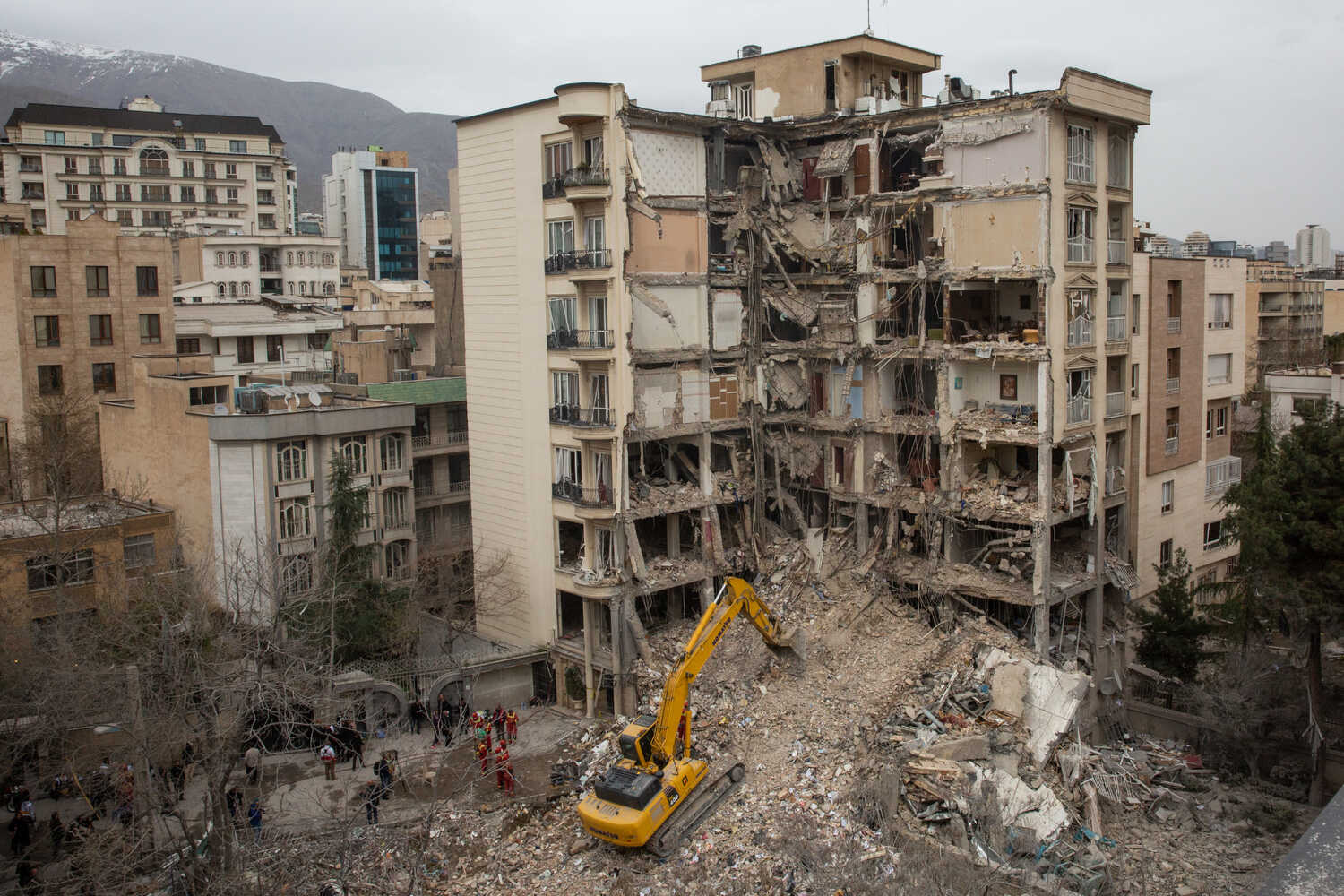
On Monday, President Trump told the public that Washington and Tehran were working toward a “total resolution of our hostilities in the Middle East,” according to the New York Times. Just hours before this statement, American and Israeli warplanes had bombed targets across Iran. Residents of the Iranian capital woke up to blackouts following those strikes.
That contradiction — diplomacy by press conference, warfare by air power — has become the defining rhythm of a conflict that is remaking the Middle East and punishing the global economy simultaneously, as The New York Times notes.
What Trump actually said, and what Iran heard
The president’s Monday statement came with a concrete gesture: a five-day postponement of threatened strikes against Iranian power generation facilities, the Times reported. This threat had been issued only two days earlier, on Saturday, when Trump gave Tehran a 48-hour window to fully reopen the Strait of Hormuz or face American bombs.
Tehran read the reversal its own way. Iranian government media declared that the president was retreating under pressure, the New York Times reported, after Iranian officials pledged massive retaliation for any attack on energy infrastructure.
Iran also flatly denied that any diplomatic contact had occurred between the two sides.
Oman stepped into the gap. The Gulf sultanate, which has spent decades quietly shuttling messages between Washington and Tehran, signaled Monday that it was attempting to broker safe transit through the strait. Foreign Minister Badr al-Busaidi did not mince words about the stakes. “Whatever your view of Iran, this war is not of their making,” he wrote on social media, as quoted by the New York Times. “This is already causing widespread economic problems, and I fear they promise to get much worse if the war continues.”
One-fifth of the planet’s oil supply normally moves through that waterway. Since conflict erupted on February 28 with a joint American-Israeli military operation against Iran, Tehran has blocked most Western and Arab tanker traffic through the passage since that day, causing an energy price explosion. The head of the International Energy Agency told the New York Times that this surge is now more severe than the oil crises of 1973 and 1979 combined.
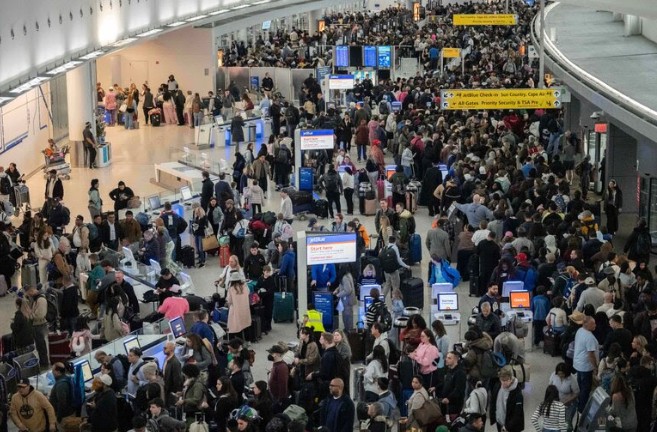
Fuel prices worldwide have jumped more than 50 percent in less than a month. For families in the Haitian diaspora and across the Caribbean, that statistic translates directly into higher costs for gasoline, cooking gas, electricity, food, and shipping. Every dollar added to a barrel of oil shows up at the grocery store, at the gas pump, and on the utility bill. When the Strait is closed, those costs do not stay in the Persian Gulf. They arrive in Dorchester, Little Haiti, Flatbush, and Port-au-Prince.
Trump’s suggestion Monday that talks were possible sent oil prices down about 10 percent almost immediately, the Times reported. But some financial analysts quoted by the paper raised the possibility that the president’s periodic hints about diplomacy are partly designed to keep markets from spiraling further — a theory that, if accurate, suggests those price drops may be temporary.
A president who contradicts himself by the hour
As the New York Times noted, Trump has repeatedly issued conflicting statements about his military strategy, sometimes on the same day. Saturday’s 48-hour ultimatum to bomb became Monday’s five-day delay and negotiations, leaving observers unclear whether the war is escalating or winding down.
That unpredictability affects not only the markets but also governments, military leaders, and civilians, who struggle to predict the next moves of an administration whose public stance changes daily.
Even as Trump spoke of resolution, war raged on. Overnight Monday, American and Israeli jets battered Iran. Iran’s response: salvos of missiles and drones at Israel and Persian Gulf targets. Tehran plunged into darkness—airstrikes crippled power for millions, after Israel vowed attacks on infrastructure.
Admiral Brad Cooper, who leads U.S. Central Command, told reporters Monday that American forces were “largely ahead of or on plan for our main military objectives,” as quoted by the Times. But the paper noted that analysts and officials have struggled to identify how this war will actually end. Trump has called for the fall of Iran’s government. That government remains standing. Iran’s nuclear program, one of the original concerns driving the confrontation, remains largely functional.
Lebanon becomes a second front.
At the same time, Israel has unleashed a broader assault on Hezbollah in Lebanon. Its top military officer announced Sunday, per the Times, that major operations are only beginning. Forces now prepare to drive deeper into Lebanon, while Defense Minister Israel Katz has demanded accelerating the demolition of bridges and homes, fueling fears of a prolonged, devastating occupation.
For Caribbean communities with roots in Lebanon — and the historical ties between Lebanon and Haiti run deep — the expansion of fighting there adds another dimension of concern to an already overwhelming crisis.
Israel’s own defenses came under question over the weekend after Iranian missiles hit the city of Dimona, just eight miles from the country’s main nuclear site, as well as the nearby city of Arad, the Times reported. More than ten people were seriously injured. Military observers cited by the paper have raised the possibility that Israel is deliberately holding back its most advanced missile defense technology to avoid exhausting it during a prolonged war.
According to the New York Times, more than 2,000 people are dead, the vast majority of them in Iran and Lebanon.
Iran’s representative at the United Nations put the civilian toll inside Iran at a minimum of 1,348, though the New York Times noted that figure had not been updated in over a week.
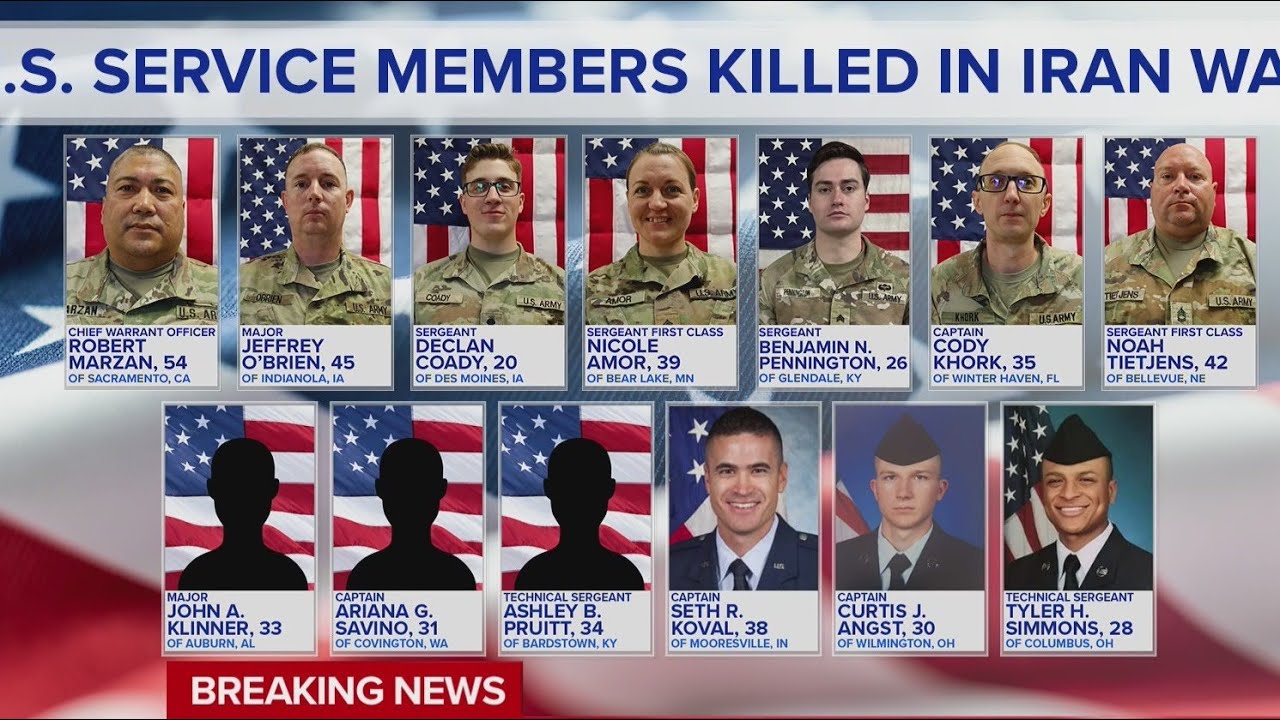
An independent Washington-based monitoring group, the Human Rights Activists News Agency, counted at least 1,398 Iranian civilian deaths. Lebanese authorities reported more than 1,000 killed. Fifteen people have died inside Israel from Iranian attacks. Thirteen American military personnel have been killed since the war began, according to the The New York Times.
https://ctninfo.com/?p=41204&preview=true
Disclaimer: This article was originally written and published in English by the Caribbean Television Network (CTN). Versions in other languages have been produced through automated translation using artificial intelligence software.
While every effort is made to ensure quality, automated translations may contain inaccuracies, awkward phrasing, or errors that do not reflect the intent of the original text.
Readers are encouraged to consult the original English version for the most accurate and authoritative account.
CTN assumes no responsibility for misinterpretations arising from automated translations.

https://ctninfo.com/?p=41204&preview=true
Disclaimer: This article was originally written and published in English by the Caribbean Television Network (CTN). Versions in other languages have been produced through automated translation using artificial intelligence software.
While every effort is made to ensure quality, automated translations may contain inaccuracies, awkward phrasing, or errors that do not reflect the intent of the original text.
Readers are encouraged to consult the original English version for the most accurate and authoritative account.
CTN assumes no responsibility for misinterpretations arising from automated translations.