



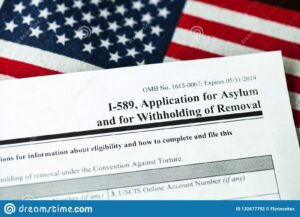
The Trump administration intends to cancel virtually all asylum applications from immigrants who arrived in the United States through the southern border. This policy specifically targets applications from individuals falling under certain legal categories, notably affecting those who have crossed since November 19, 2019. To further clarify, this measure is grounded in provisions of the Immigration and Nationality Act (INA), specifically sections 208 (8 U.S.C. § 1158) and 241(b)(3) (8 U.S.C. § 1231), which affect eligibility and procedures for asylum seekers.
USCIS officers have received directives from DHS to cancel all applications for undocumented individuals who arrived by land. However, it is crucial to note that while DHS issues these policy directives, operational discretion rests with USCIS, the agency tasked with implementing them. This distinction illuminates the separate roles each agency plays in the asylum process, providing clarity on how actions are taken and where legal challenges might be directed.
In court, government representatives have made similar requests, according to immigration attorney Nadine Gédéon, citing cases involving several of her clients.
Not all asylum applications are affected by the Trump administration’s restrictive measures—only those filed by individuals who crossed the southern border after November 19, 2019, the university professor clarified in response to CTN’s questions on the matter.
The attorney explains that the government is attempting, through judicial means, to strip certain rights from asylum seekers.
It is reportedly working on an agreement signed with Uganda and Ecuador, which stipulates that certain nationalities who crossed the border irregularly after November 19, 2019, are no longer eligible for asylum. However, the safety of these third countries is a topic of significant concern. An international-law report questions whether Uganda or Ecuador meet the non-refoulement standards, which are crucial for ensuring the safety of asylum seekers and preventing them from being returned to a place where they face serious threats to their life or freedom. This raises questions about the realism and ethical implications of these agreements.
Under “withholding of removal” procedures or protection against torture (CAT), these individuals could be deported to these third countries. It’s important to clarify the distinct standards for each: withholding of removal requires proof that the applicant would likely face persecution based on race, religion, nationality, membership in a particular social group, or political opinion if returned to their home country, whereas CAT protection requires evidence that the individual is more likely than not to be tortured if removed to the designated third country. Unlike withholding of removal, CAT does not necessitate a connection to a specific type of persecution.
“This is the first time I have found myself in a situation where the government is doing everything possible to circumvent established norms,” lamented the former president of the Haitian-American Lawyers Association of Florida.
She adds that when a case is handled by immigration services (USCIS), mounting a defense becomes extremely difficult.
USCIS can remove the case from its records entirely. Sometimes the matter is referred to a judge, sometimes not, Gédéon added.
As a last resort, if the attorney fails to convince the judge that the agreement with these third countries does not apply to their client, the judge can issue a deportation order, paving the way for removal.
Trump Rejects Asylum Claims Through Third-Country Agreements
The Trump administration has launched a sweeping national initiative aimed at rejecting the asylum claims of thousands of migrants with cases pending before immigration courts, arguing that they can be deported to third countries, according to internal data obtained by CBS News.
This strategy, which has intensified in recent weeks, targets asylum seekers in cities such as Atlanta, New York, Miami, Los Angeles, and San Francisco, as well as in Texas and other states.
Specifically, ICE prosecutors are submitting “pre-removal motions” to judges, asking them to reject asylum claims without even examining the merits. They argue that certain applicants, although in danger in their home countries, can be deported to third-party states such as Guatemala, Honduras, Ecuador, or Uganda, which have signed agreements with the United States to accept foreign nationals.
According to court documents and attorney testimony, if these motions are granted, they effectively nullify the asylum application and authorize the migrant’s deportation with no further recourse.
Internal government data shows that by early December, more than 8,000 of these motions had been filed, underscoring the scale of the Trump administration’s campaign.
Meanwhile, in September 2025, U.S. Border Patrol detected approximately 8,400 illegal crossings at the southern border between the United States and Mexico, which is a historically low level compared to previous years. This figure raises questions about possible factors influencing this decrease. Could recent policy changes be deterring potential crossings? Alternatively, might the lingering effects of the global pandemic still be contributing to reduced migration? These possibilities invite a deeper examination of whether these numbers reflect a genuine trend or data anomalies.

https://ctninfo.com/?p=39014&preview=true
https://www.facebook.com/CaribbeanNewsMedia
https://ctninfo.com/?p=39014&preview=true
https://www.facebook.com/CaribbeanNewsMedia
Sources: CTN (Nadine Gédéon interview), CBS News