

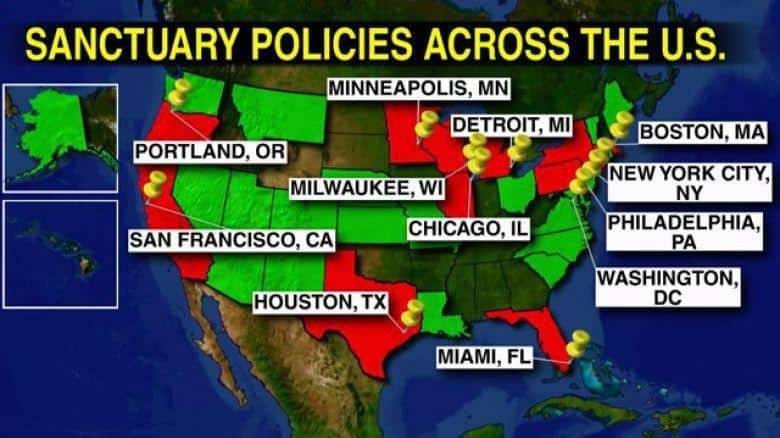
The Trump administration announced it will terminate approximately $16 billion in federal funding to ‘sanctuary cities’ and the states that host them, effective February 1, affecting key programs in public safety, housing, and infrastructure. This decision has raised concerns about significant impacts on local government budgets and services.
This action represents a further escalation of the White House’s restrictive immigration policy agenda.
In Washington, President Donald Trump stated the decision is necessary to strengthen enforcement of federal immigration laws. He accused sanctuary jurisdictions of obstructing federal authorities, claiming they seek to “protect criminals at the expense of American citizens.”
According to Western Mass News (WGGB/WSHM), the suspension of federal payments will apply to both sanctuary cities and the states where they are located. No official list of affected programs or funding amounts has been released.
In Massachusetts, Boston is the only city officially recognized as a sanctuary city. The state of Massachusetts itself, however, is not classified as a sanctuary state, unlike neighboring Connecticut, which has adopted statewide policies limiting cooperation with federal immigration authorities.
This distinction may have significant budgetary implications for certain municipalities, especially regarding federal grants for public safety, housing, infrastructure, and social programs. Local officials have not indicated how they will address potential funding losses.
A Politically and Legally Sensitive Decision
The announcement is part of broader Trump administration efforts to pressure local governments to cooperate more closely with Immigration and Customs Enforcement (ICE). In previous cases, several cities and states filed lawsuits, arguing the executive branch lacks authority to condition federal funding without congressional approval.
The administration has not disclosed the specific legal basis for suspending these payments in February. However, constitutional law experts anticipate that legal challenges in federal courts will likely focus on several key constitutional arguments. Among these are the Spending Power clause, which governs the conditions under which Congress can attach conditions to federal funding, and the Tenth Amendment, which establishes the balance of power between federal and state governments. The anti-commandeering principle, which prohibits the federal government from forcing states to enforce federal regulations, is also expected to be a critical point of contention. These issues are anticipated to shape the lawsuits if the policy is implemented.
Leaders of sanctuary cities have defended their policies by stating they help build trust between local law enforcement and immigrant communities, including undocumented residents. They contend these approaches enhance public safety rather than undermine it.
Neither Boston city officials nor Massachusetts state authorities have issued an official response to the president’s announcement.
According to the White House, the funding changes will take effect on February 1, setting the stage for renewed confrontation between the Trump administration and multiple local governments across the United States.