


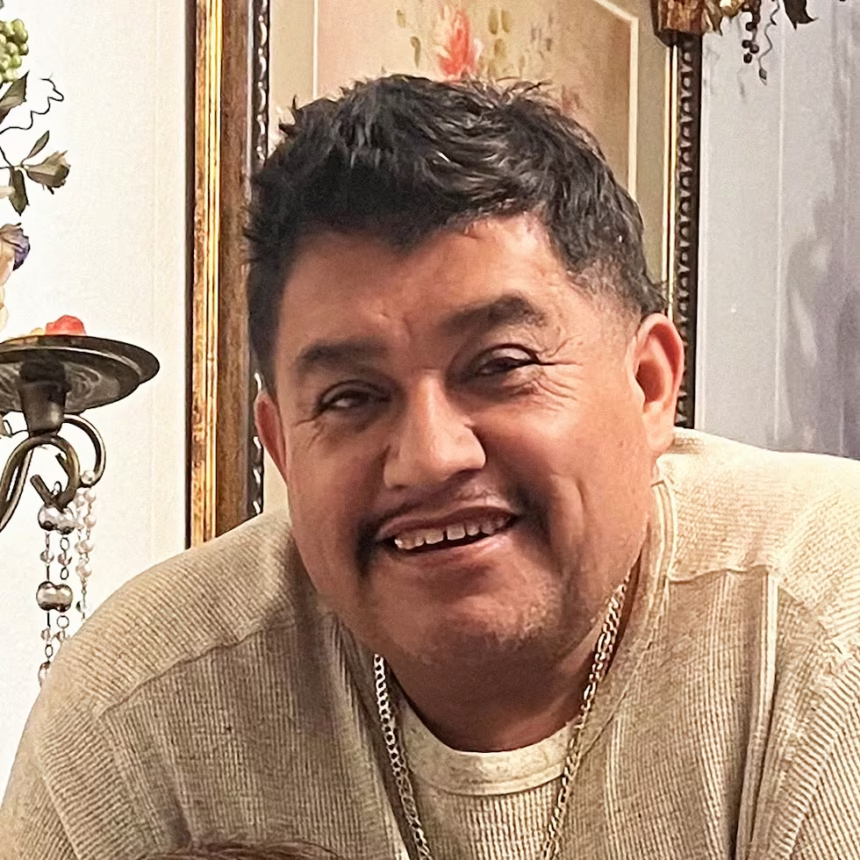
New information has come to light about the man who died in immigration custody in South Texas last weekend. Emiliano Andrade-Covarrubias was a green-card holder, a lawful permanent resident who had lived in the state for decades, not an undocumented immigrant. And in a statement issued this week, Immigration and Customs Enforcement laid out its own version of how he died and why he was being held, a version his family disputes on the points that matter most.
Andrade-Covarrubias, 56, a Mexican national, died on October 17 at the Rio Grande Processing Center in Laredo. His death was first reported by The Texas Tribune on October 18, through his daughter and Representative Henry Cuellar. What was not known then was the full picture the government and the family would each put forward in the days that followed.
In a statement released October 20, ICE said staff found Andrade-Covarrubias unresponsive in his bed, “declared a medical emergency and immediately began lifesaving measures.”
Laredo Fire Department paramedics responded, and he was pronounced dead at 10:10 a.m., the agency said. ICE described him as a man with documented medical conditions — diabetes, hypertension and anxiety — who “received medical care while in custody.” It said the cause of death is unknown until an autopsy is completed.
The agency also offered an explanation for why a permanent resident was locked up at all. Andrade-Covarrubias, ICE said, “was determined to have obtained status through fraudulent means by failing to disclose his previous arrest during the review process.” He was placed in removal proceedings before an immigration judge, the statement said, and “was receiving due process.” According to ICE, he had been in custody since late June, after Customs and Border Protection officers stopped him at the Juárez-Lincoln International Bridge, a Laredo port of entry, as he came back from Mexico.
Estefani Andrade, his daughter, has contested both halves of that account. On the question of his status, she told The Texas Tribune that her father did disclose the arrest the government now points to — a 2004 theft charge — during his immigration process, and that federal officials approved his green card anyway.
On the question of his care, her account is the opposite of the agency’s. She said her father had a heart condition along with his diabetes and high blood pressure, and that he carried his medication with him when he was detained, but that staff at the Rio Grande Processing Center would not “give him his medications.” After he came down with a cough, labored breathing and chest tightness, she said, he sought help and felt he was ignored. The autopsy that might reconcile the two accounts had not been finished.

Away from the dispute is the life he led.
Andrade-Covarrubias had lived in Dallas for decades, raising three U.S.-born children while painting apartments and townhomes for a living, the Tribune reported. He traveled often to Mexico, where he was building a house, and it was on the way back from that work that he was taken into custody.
Cuellar, who represents Laredo, toured the Rio Grande Processing Center on October 18 and spoke with staff about its medical procedures, though he said that, with the death under investigation, they could not address the specifics. He then put seven written questions to ICE, asking, among other things, whether Andrade-Covarrubias requested medical attention in the 72 hours before he died, what treatment and medication he was given, whether staff followed medical and emergency protocols, and how the facility is staffed medically.
“Any death in federal custody is a serious matter, and we need to know what happened,” Cuellar said in an October 19 statement, offering condolences to the family. The death has reached beyond Texas: Mexico’s Foreign Ministry has called for an investigation into the death of its citizen, according to the Mexican broadcaster N+.
Andrade-Covarrubias is the seventh person to die in ICE custody in Texas this year and the second reported in Laredo, according to agency records cited by USA TODAY.
The first in the state this year, Geraldo Lunas Campos, a 55-year-old Cuban man, had been held nearly four months at Camp East Montana near El Paso when he died on January 3; the El Paso County Medical Examiner later ruled his death a homicide. In June, Felix Alcorta-Rodriguez, a 63-year-old Mexican man, was found unresponsive at the Webb County Detention Center in Laredo, where ICE records show medical staff detected a blood clot extending from his heart as they tried to revive him.
Nationally, at least 58 people have died in ICE detention since President Donald Trump’s second term began in January 2025, according to USA TODAY’s immigration-enforcement tracker. The American Civil Liberties Union, in a report last month, said the agency “is consistently failing to meet basic human needs, subjecting tens of thousands of people every day to systemic and dangerous medical neglect,” conditions it said had led to “preventable medical crises and fatalities.” ICE rejects that description, saying it is committed to the health and safety of those in its custody.
https://ctninfo.com/?p=45033&preview=true
https://www.facebook.com/CaribbeanNewsMedia

AI Use Policy:
Some of CTN’s journalists are not native English speakers and draft their work in French or Haitian Creole. We then use AI-assisted translation software to produce the English versions, and traces of machine-generated phrasing may occasionally remain. Every article — in any language — is written, reviewed, and edited by CTN’s staff writers and editors, who remain responsible for its accuracy. CTN also uses AI to convert text into audio.