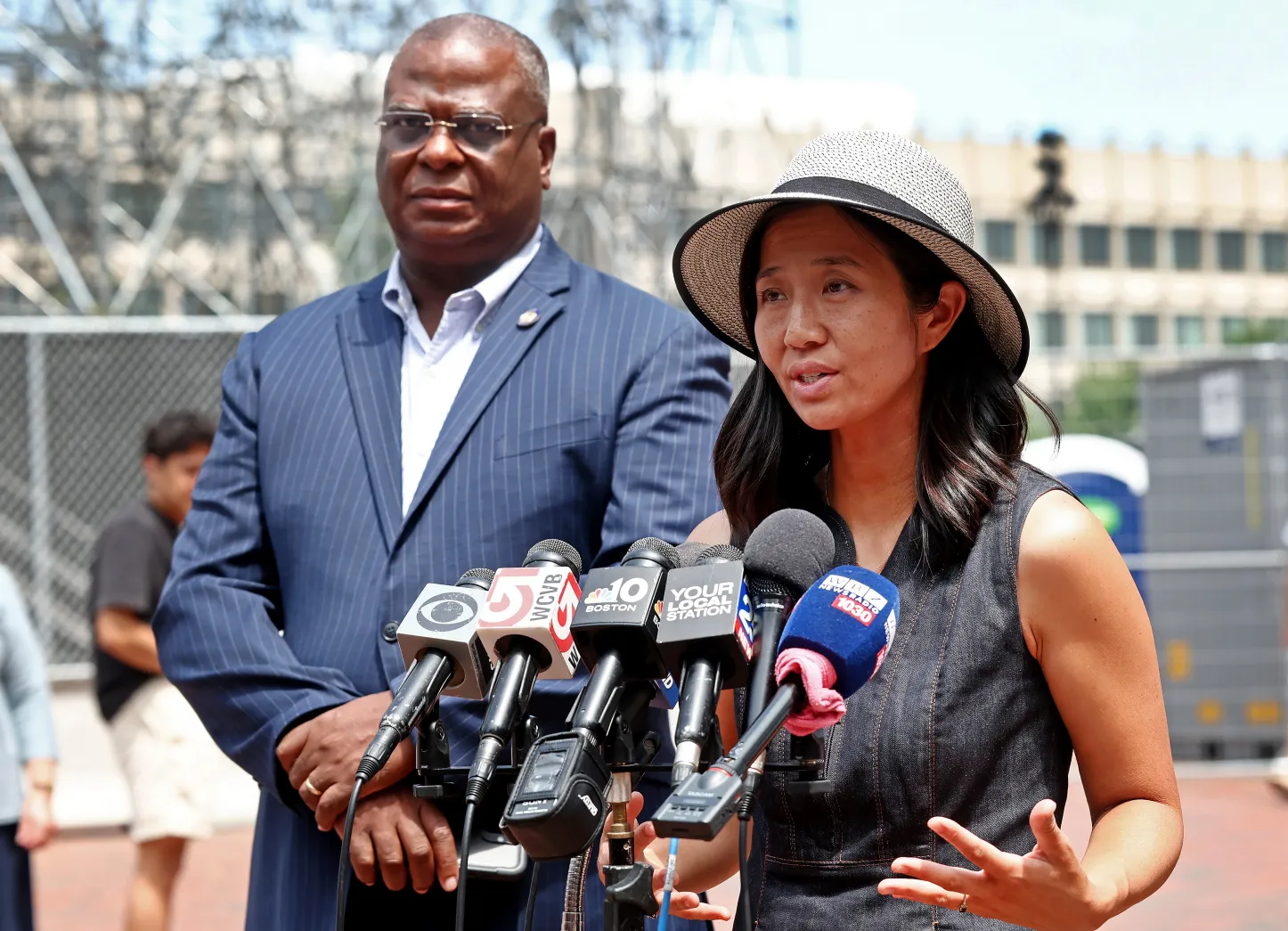
Boston residents now have a direct hand in deciding how the city spends $2 million, after Mayor Michelle Wu reopened the municipal participatory budgeting program, “Ideas in Action,” for a third year and invited people in every neighborhood to propose projects through the end of July.
The idea-collection window opened July 1 and runs through July 31. During that period, residents can put forward proposals online at participate.boston.gov, by calling a multilingual phone line at (617) 635-3059, in person at City Hall and selected Boston Centers for Youth & Families (BCYF) community centers, or by attending Idea Collection Workshops hosted by community-based organizations across the city.
The initiative gives ordinary Bostonians — not just elected officials or department heads — a say in how a portion of public money is spent. Under the model, residents submit ideas, help shape the strongest ones into formal ballot proposals, and later vote on which projects the city should fund. It is a small share of overall municipal spending, but a symbolically significant one, placing budget decisions directly in the hands of the people those decisions affect.
“Participatory Budgeting empowers community members to directly shape City investments, from strengthening youth programs and expanding access to community resources, to improving public spaces across Boston,” Wu said in announcing the new cycle. “We encourage residents to share their ideas and help shape the investments that will be made in communities across every neighborhood.”

What residents can propose
The city is casting a wide net on eligible ideas.
According to the announcement, proposals may include projects that support youth mental health, expand digital access, assist senior residents, improve public spaces, advance food access, enhance parks and recreation, strengthen local economic opportunity, promote health and well-being, and address specific neighborhood needs.
That breadth matters for Boston’s immigrant and diaspora communities, including the large Haitian population concentrated in Dorchester and Mattapan.
Neighborhood priorities that often go underfunded — from youth programming and senior support to public spaces and food access — are precisely the categories the city is inviting residents to name. Ideas in Action offers a formal channel for those communities to press their needs directly into the budget conversation, rather than waiting for City Hall to identify them.
The Office of Participatory Budgeting says it will again work with trusted community-based organizations to help residents submit ideas and take part in the process. That partnership structure, combined with a multilingual phone line, is aimed at reaching residents who may face language barriers, limited internet access, or unfamiliarity with city processes — the same barriers that frequently keep immigrant and working-class residents out of budget decisions.
“Participatory Budgeting is one of the most direct ways residents can help shape how City resources are invested in their communities,” said Renato Castelo, director of the Office of Participatory Budgeting. “Every idea submitted helps us better understand what residents are experiencing, what neighborhoods need, and where public investment can have the greatest impact.”

Castelo said the office’s aim is to keep participation “simple, accessible, and meaningful for residents of all ages, backgrounds, and neighborhoods.”
A track record and a timeline
The program has drawn steady engagement since its launch. In the previous cycle, thousands of residents took part by attending workshops, submitting ideas, and voting to fund eight projects that are now moving into implementation, the city said.
After the current collection phase closes, officials will review submissions and work with residents to develop eligible ideas into proposals for a future public vote. The city notes that even ideas that do not advance to a ballot help inform its understanding of community priorities and shape future budget investments.
Under the published timeline, idea collection runs through July 2026, proposal development follows from October to December 2026, public voting takes place in January and February 2027, and the winning projects are funded and implemented beginning in spring 2027.
Ideas in Action grew out of a grassroots community effort that led Boston voters to approve a ballot measure in the 2021 municipal election, creating the Office of Participatory Budgeting. The ordinance formally establishing the office was adopted by Mayor Wu and the City Council in the spring of 2023.
Residents seeking more information, or wishing to submit an idea, can visit boston.gov/participate or call the multilingual line at (617) 635-3059.
https://ctninfo.com/?p=43562&preview=true
https://www.facebook.com/CaribbeanNewsMedia
Editorial Disclaimer: This article was originally written in English. The French and Haitian Creole versions are produced using AI translation, and errors are possible — the English version is authoritative. CTN also uses AI to convert text into audio. Readers and listeners should rely on the English text where any discrepancy arises.