


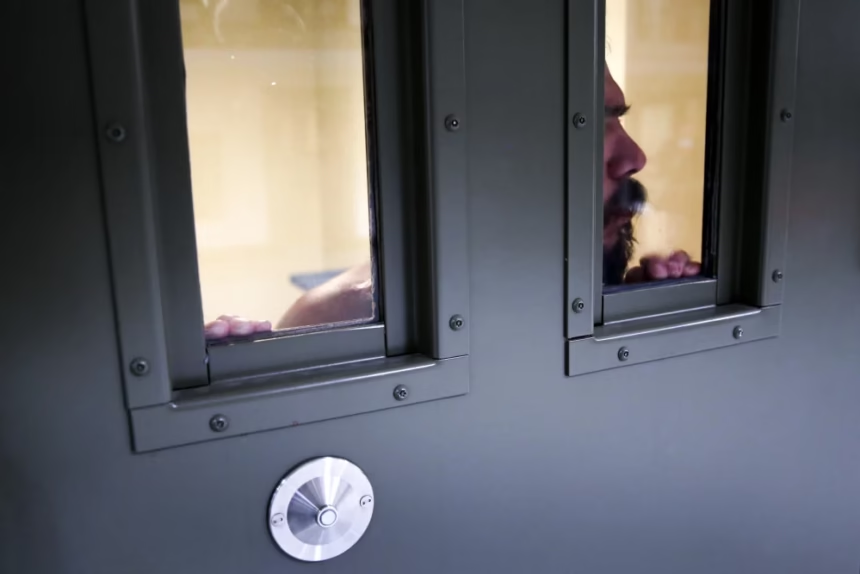
A recent investigation found immigrants detained in Massachusetts facilities have faced solitary confinement for weeks. The United Nations classifies such practices as psychological torture.
Harvard University researchers and Physicians for Human Rights (PHR) found that solitary confinement exceeding 15 days is growing more common in U.S. immigration facilities. The U.N. calls this psychological torture.
“We are torturing people simply because they want a better life in the U.S.,” said Sam Zarifi, executive director of Physicians for Human Rights, quoted by Axios. He added that this is not only horrific treatment of people, but it violates U.S. and international law.
Exclusive data provided to Axios shows that authorities placed approximately 14,000 individuals in solitary confinement in immigrant detention facilities nationwide between April 2024 and August 2025.
Plymouth County Correctional Facility is now Massachusetts’ only detention center with an active ICE contract. It recorded 117 cases of detainees being isolated.
Karen Barry, director of external affairs at Plymouth County Sheriff’s Office, said correction officers use ‘administrative segregation’ instead of solitary confinement. She said these detainees still interact daily with staff, mental health clinicians, and sometimes other inmates.
Barry did not directly address the report. She cited state rules that allow segregation if a detainee is a safety threat, may damage property, or threaten the facility’s operation. She stressed segregation is only used for administrative, not disciplinary, reasons.
Nevertheless, a 2024 report from the advocacy organization Prisoners’ Legal Services indicated that inmates reported minimal distinction between solitary confinement and administrative segregation at Plymouth County Correctional Facility.
Prolonged isolation in New England
The Harvard/PHR study looked at solitary confinement in six New England facilities from 2018 to 2023. It found 186 cases that lasted over 15 days.
The report says solitary confinement was often used for minor offenses. These ranged from ‘seemingly trivial violations’ like kicking a cell door or smoking to filing grievances, requesting showers, or reporting sexual assault.
Barry maintained that Plymouth County never isolates detainees in response to grievance filings or incident reporting.
During the period from 2018 to 2023, Plymouth documented 82 placements, with an average duration of 25 days.
- Bristol County Correctional Facility, which terminated its ICE contract in 2021, recorded 47 placements, averaging 36 days.
- Suffolk County Corrections, which ended its ICE contract in 2019, documented nine placements, averaging 27 days.
Representatives from both Suffolk and Bristol counties did not respond to Axios’ requests for comment.
ICE says solitary confinement should be a last resort for detainees with mental health conditions. Yet, the report shows nearly half the solitary confinement cases in New England involved detainees with documented mental health issues.
Researchers said the real numbers might be higher. Comprehensive documentation was mandatory only after December 2024. Before then, data reporting was likely poor. Even now, counts may be incomplete since ICE has a history of giving inaccurate or partial information.
Massachusetts ranks as the third-largest Haitian immigrant community in the United States, following Florida and New York. The report did not disclose the identity or origin of immigrants held in solitary confinement.
Source: Axios