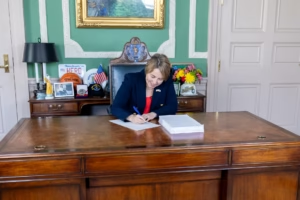



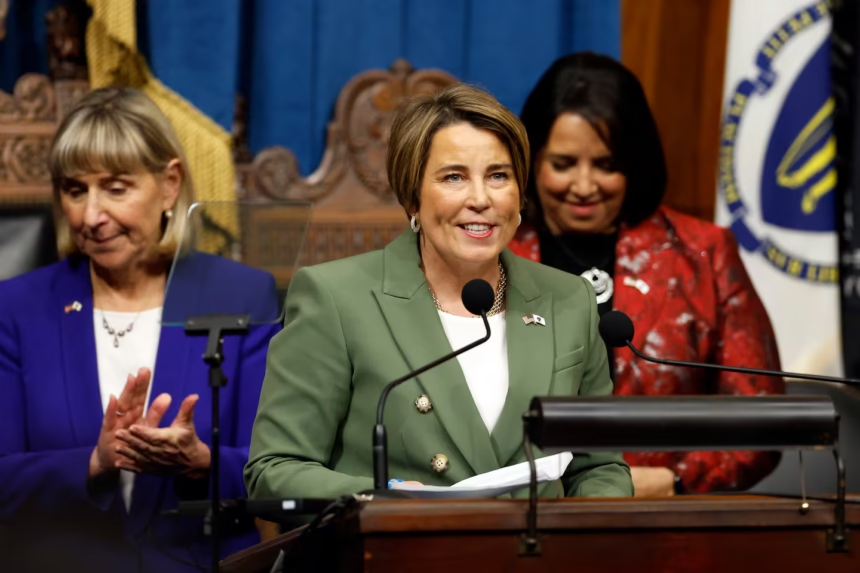
Massachusetts Governor Maura Healey sent a letter to Secretary of Homeland Security Kristi Noem demanding an extension of Temporary Protected Status (TPS) for Haitian nationals living and working in the United States.
In the letter, Governor Healey emphasizes the essential role that Haitian TPS holders play in the Massachusetts and national economy, particularly in the health care sector.
“Massachusetts is home to one of the largest Haitian populations in the nation, including more than 45,000 Haitian TPS holders,” Governor Healey wrote in her January 28 letter. “Many have lived and worked in Massachusetts for well over a decade, since before DHS first designated Haiti for TPS protection in 2010,” Healey noted, emphasizing that these workers are essential contributors to the state’s economy, filling positions vital to economic stability and growth.
Across industries from health care and long-term care to transportation, hospitality, and construction, these workers help keep our economy running,” she added. “The sudden loss of their legal status and work authorization would be devastating for our state. A report by the Massachusetts Economic Partnership estimates that the cost of turnover due to the deportation of TPS workers could exceed $500 million annually, primarily driven by recruitment, training, and productivity losses. In contrast, Haitian TPS holders contribute approximately $300 million annually in state and local taxes, demonstrating the fiscal benefits of retaining these workers in the economy.”
In health care, Haitian TPS holders serve as nurses, home health aides, certified nursing assistants, technicians, and support staff in hospitals, community health centers, nursing homes, and home-based care settings.
Massachusetts and much of the nation are already facing workforce shortages in this sector. If these workers suddenly lost their legal status and work authorization, the consequences would be severe: more acute staffing shortages, increased health care costs, reduced access to care, and additional strain on an already stressed health care system. According to a recent study, the lapse of TPS could lead to a 15% increase in vacancy rates for key positions such as nurses and home health aides, exacerbating the existing crisis. This could lead to a higher patient-to-staff ratio, significantly affecting the quality of care.
A $4.4 Billion Economic Contribution
Nationwide, TPS-eligible Haitians contribute $4.4 billion annually to the U.S. economy. They pay taxes, contribute to Social Security and Medicare, and spend their earnings in local businesses, noted the first female governor of Massachusetts, which is home to the third-largest Haitian immigrant community in the United States. Many are homeowners and parents of U.S.-citizen children, Healey added.
Governor Healey also pointed out that the dangerous conditions in Haiti that justified the initial TPS designation 16 years ago—political instability, widespread violence, humanitarian crises, and limited access to basic services—remain severe.
These circumstances underscore the importance of extending these protections, she argued.
Governor Healey’s intervention comes as TPS for Haitians is set to expire on February 3, 2026. Only 96 hours remain before more than 350,000 Haitian nationals risk losing their work authorization and protection from deportation.
More than 350,000 Haitian nationals across the country risk losing their work authorization and protection from deportation if the Trump administration does not extend the program or if the courts do not rule in their favor.