


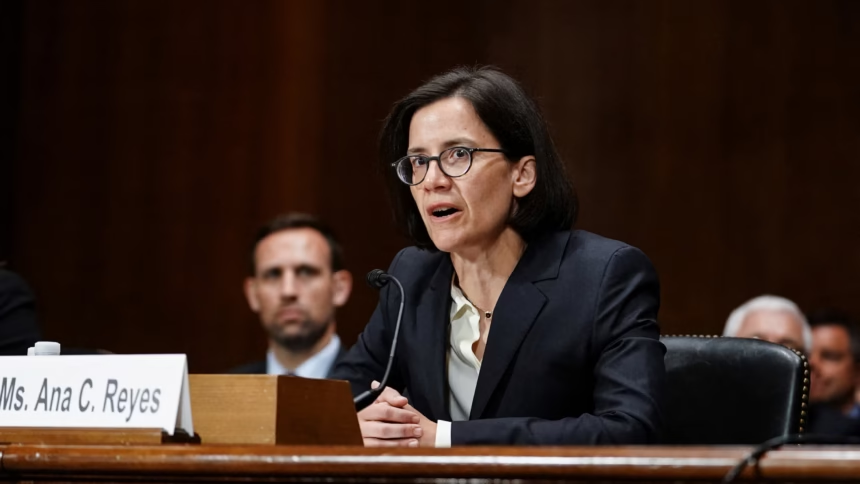
Hours before a looming deadline, a judge intervened. In Washington, D.C., Federal Judge Ana C. Reyes issued her ruling in Miot et al. v. Trump, blocking the termination of Temporary Protected Status (TPS) for Haitian nationals. This decision allows more than 350,000 Haitians to lawfully remain and work in the United States for now; however, this protection is temporary and could change if the ruling is appealed or overturned.
Judge Reyes, of the U.S. District Court for the District of Columbia, promised her ruling by February 2, one day before TPS would expire. In January hearings, she pressed government lawyers on contradictions in the Trump administration’s stance on Haiti.
She pointed out that Homeland Security’s move to end TPS ignored the government’s own reports about Haiti. Secretary of State Marco Rubio called Haitian gangs “foreign terrorists” and cited immediate security risks. The FAA bars U.S. civilian planes from parts of Haitian airspace. The government’s assessments label Haiti as too dangerous, yet it still argues that it was safe for Haitians to return. This contradiction puts families in a precarious situation, worrying whether they might be sent back to an unsafe environment.
Judge Reyes asked Justice Department attorneys, ‘Can you explain to me how it is safe to return to a country when it is not even safe to fly into that country?’ For one TPS holder’s family, the flight to visit relatives in Haiti meant navigating numerous gang-controlled check-points just to reach their hometown, exposing them to hours of fear and uncertainty.
The plaintiffs are represented by Bryan Cave Leighton Paisner, Kurzban Kurzban Tetzeli & Pratt, and Just Futures Law. They include nurses, researchers, and other long-term residents who have built their lives in the United States.
She also questioned how the State Department responded so fast: they said “no foreign policy concerns” only 53 minutes after being asked. She noted, “That response does not address country conditions.”
Conditions in Haiti remain dire: more than 1.4 million people are displaced, gangs control major roadways, and there is an absence of a functioning government.
A Victory That May Be Short-Lived
Despite this favorable ruling, Haitian TPS beneficiaries do not have long-term legal certainty. The Trump administration has a pattern of appealing such decisions, sometimes seeking emergency orders from the Supreme Court. If the ruling is appealed, Haitian TPS holders could again face the risk of losing their status.
In May 2025, the Supreme Court permitted the administration to end TPS for Venezuelans, pending further legal review. This precedent suggests a similar outcome could occur for Haitian TPS beneficiaries if the current ruling is challenged.
Plaintiffs’ attorneys caution that as long as the ruling stands, Immigration and Customs Enforcement (ICE) cannot arrest or remove TPS beneficiaries due to their TPS status. However, if an appeals court sets aside the decision, enforcement could resume immediately, placing TPS holders at risk of detention or deportation.
In Massachusetts, at least 45,000 Haitians are directly affected. Boston is home to the third-largest Haitian population in the country. City Councilor Ruthzee Louijeune, the daughter of Haitian immigrants, sponsored a resolution condemning the TPS termination that passed unanimously. Representative Ayanna Pressley has introduced legislation that would require TPS to remain in place through spring 2029.
For now, Haitian TPS beneficiaries maintain their status and work authorization.
Despite the reprieve, lawyers urge beneficiaries to consult an immigration professional, explore other legal ways to remain, and keep track of changes.