



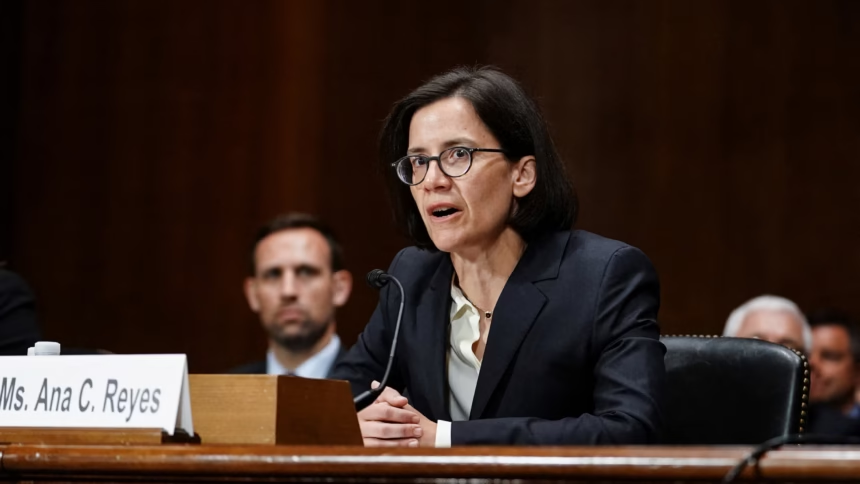
Judge Ana C. Reyes’s ruling on the Temporary Protected Status of Haitian immigrants in the United States is not expected before January 21, 2026. The government has until that date to submit the documents required by the judge.
In an order issued on January 16, 2026, Judge Reyes ruled that evidence beyond the official administrative record is necessary to shed light on the termination of Temporary Protected Status (TPS) for Haiti.
The federal government now has until 2:00 p.m. on January 21, 2026, to provide plaintiffs and the Court with all relevant discovery materials that have not yet been produced.
This decision follows a hearing held on January 7, during which the court determined that “extra-record discovery” was warranted.
The government must specifically provide materials that were cited in the parallel California case, National TPS Alliance v. Noem. In addition to this document production, both parties must submit a joint status report on the progress of the discovery process.
The Significance of the Requested Documents
The purpose of this document production is to determine whether the decision to terminate TPS, announced on November 28, 2025, was made in bad faith or under improper political influence. According to sources, plaintiffs suspect that internal deliberations may reveal that the humanitarian criteria required by law were disregarded in favor of political objectives.
Key points of contention that these documents could clarify include:
The involvement of political advisors: Plaintiffs are seeking to determine whether figures such as Corey Lewandowski influenced the process, which would suggest partisan rather than technical motivation.
The disconnect between reports and the final decision: Information indicates that the analysts who drafted the final decision memo did not participate in writing the reports on actual conditions of instability in Haiti.
State Department communications: Emails regarding consultations on the security situation in Haiti could demonstrate that the government knowingly ignored warnings about the dangers of forced return.
A Race Against Time Before February 3
This new January 21 deadline places the government under intense pressure. Attorneys for the plaintiffs, notably the ACLU, have repeatedly emphasized the “imminent harm” facing the 350,000 Haitian nationals who risk losing their legal protection as early as February 3, 2026.
Until now, the government had attempted to limit the scope of discovery to a three-month window, excluding discussions that took place immediately after the January 20, 2025 inauguration.
Judge Reyes’s order imposes greater transparency, preventing the government from confining itself to the administrative record it compiled itself.
The fate of hundreds of thousands of people, many of whom have lived in the United States for over a decade and have U.S. citizen children, will depend on what these documents reveal before the status expires in less than three weeks.
https://ctninfo.com/?p=39429&preview=true
https://www.facebook.com/CaribbeanNewsMedia