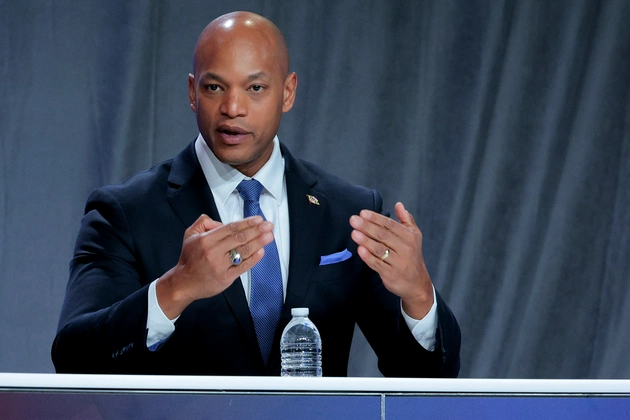


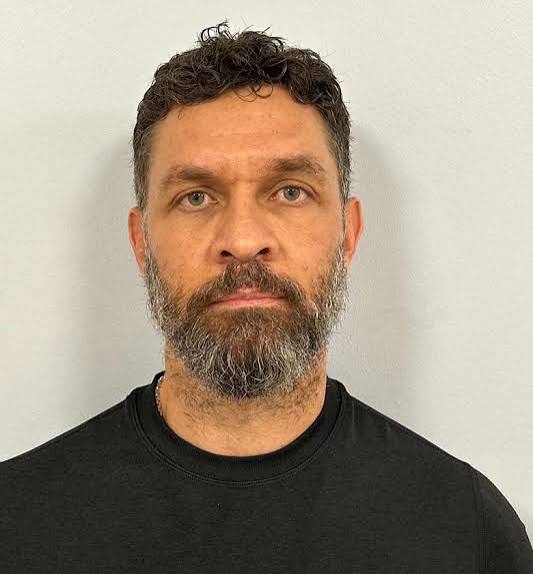
Dimitri Vorbe, a prominent Haitian businessman who spent nearly 11 months in U.S. immigration custody, has been released from detention in South Florida.
The Haitian Times first reported the news in a post on its Facebook page and X account.
Vorbe’s case became a test of how long the government can hold someone it labels a foreign-policy risk without offering a chance at bond.
According to The Haitian Times, which has followed the case closely since Vorbe’s arrest, his release follows a ruling by U.S. District Judge Darrin P. Gayles ordering immigration authorities to either give Vorbe an individualized bond hearing or free him under reasonable conditions of supervision.

The removal proceedings against him remain active, the outlet reported, and the U.S. government must report the case’s status by August 31.
Vorbe was taken into custody on September 23, 2025, when Immigration and Customs Enforcement agents arrested him at his home in the Miami area and held him at the Krome North Processing Center.
The arrest was not tied to publicly announced criminal charges. Instead, it followed Secretary of State Marco Rubio’s determination that Vorbe’s presence in the United States could carry serious adverse consequences for American foreign policy, an unusual legal basis drawn from a provision of immigration law that allows the removal of a noncitizen whose activities are deemed contrary to U.S. foreign-policy interests.
U.S. officials linked the action to broader concerns about instability in Haiti, alleging that Vorbe had contributed to that instability, including through claimed support for armed groups.
Vorbe and his attorneys have firmly denied those allegations and have argued that the government never justified holding him for so long without due process, according to The Haitian Times.
The foreign-policy ground that Rubio invoked is the same rarely used mechanism the administration has deployed against other high-profile detainees, most prominently the former Columbia University activist Mahmoud Khalil, whose months-long detention drew national attention before a federal judge ordered his release earlier this year. In Vorbe’s case, the government argued that the secretary of state’s foreign-policy determination triggered mandatory detention, meaning, in its view, that Vorbe could be held without the bond hearing normally available to people fighting removal.

Judge Gayles was skeptical of that position.
At a June hearing on Vorbe’s habeas corpus petition, the judge questioned how long the government could keep him locked up, saying he was troubled by the notion that Vorbe could “be detained indefinitely,” according to the Miami Herald’s account of the proceeding.
Weeks passed without a ruling as Vorbe’s detention stretched past 300 days. His attorneys pressed the point that a habeas petition is meant to be resolved swiftly, arguing to the Herald that every additional day in custody was a day of freedom their client would never recover.
Judge Gayles ultimately rejected the mandatory-detention argument, ordering authorities to schedule a bond hearing or release Vorbe under supervision—the ruling that, per The Haitian Times, has now led to his release.
Vorbe’s path out of detention has been tangled by the question of where he could even be sent.
In May, Judge Gayles approved a negotiated agreement under which Vorbe would be removed not to Haiti but to the Dominican Republic, with the order explicitly barring U.S. authorities from deporting him to his home country, attorney Frandley Denis Julien told the outlet L’Union Suite.
The arrangement called for the Department of Homeland Security to facilitate his transfer to the neighboring nation.
That plan quickly unraveled. Within hours of the ruling becoming public, the Dominican Republic’s General Directorate of Migration announced that Vorbe would not be permitted to enter Dominican territory, citing an order issued in October 2025, The Haitian Times reported.
The Dominican refusal left the case in an unusual bind: a man the U.S. government wants to remove, who cannot be sent to Haiti under the court’s own order, and whom the most obvious alternative country has refused to accept.
The Vorbe case has been closely watched not only because of who he is — a well-known figure from Haiti’s business elite — but because of what his detention represented: using a foreign-policy label to hold a longtime resident for the better part of a year without the ordinary safeguards of the immigration system.
His attorneys cast the fight as a due-process test, warning that the government was stretching detention authority past its legal limits.
The government, for its part, has maintained that Vorbe’s alleged role in Haiti’s turmoil justified both his removal and his detention. None of those allegations has been tested through criminal charges, and Vorbe has consistently rejected them.
His release does not end the matter.
As The Haitian Times noted, the underlying removal case continues, and the government’s required status update at the end of August will be the next signal of how authorities intend to proceed — whether by pursuing a new destination for removal, contesting the terms of his release, or letting the case grind on.
For now, after nearly 11 months behind the walls of an immigration facility, Vorbe is out, his future in the United States unsettled and the central questions of his case still unresolved.
https://ctninfo.com/haitian-business…in-ice-detention/
https://www.facebook.com/CaribbeanNewsMedia
This article was originally written in English. Other language versions are produced using AI translation software, and errors are possible — the English version is authoritative. CTN also uses AI to convert text into audio.