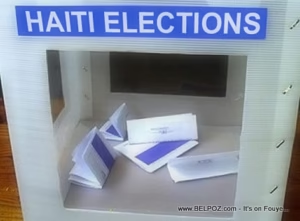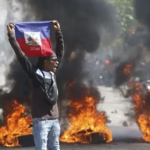



The adoption of the electoral decree, urgently published this Monday, December 1, formally opens the way for elections scheduled for 2026. But this institutional advancement, hailed by transition authorities, confronts a major obstacle: the widespread insecurity paralyzing the country and threatening the very holding of the vote.
The electoral decree was adopted by the Council of Ministers and published in the official gazette, Le Moniteur, on the evening of Monday, December 1. This crucial legal step, described as “a decisive turning point” by presidential advisor Frinel Joseph, now transfers responsibility to the Provisional Electoral Council (CEP) for publishing the detailed calendar.
The transition authorities, gathered around the President of the Presidential Transitional Council (CPT), Laurent Saint Cyr, and Prime Minister Alix Didier Fils-Aimé, see it as proof of an “irreversible march” toward the ballot box. The stated objective is to hold a “transparent, inclusive, and secure” election for a return to “constitutional order,” in accordance with the April 3, 2024 Agreement.
The process is unfolding on a tight and politically sensitive timeline. The mandate of the CPT, the body leading the transition, expires on February 7, 2026. However, according to the CEP calendar that the decree validates, the electoral campaign for the first round would not begin until March 15, 2026, and the vote would only take place on August 30, 2026. This sequence suggests a period of institutional uncertainty between the end of the CPT and the actual launch of the campaign.
The Ever-Present Shadow of Insecurity
Behind the optimism of official communiqués looms a haunting question: how to organize elections in a country where the state no longer controls much of its territory, particularly the capital?
The Prime Minister’s declaration, which promises to “mobilize all state resources” to guarantee a “secure” process, sounds like an admission of the principal challenge. Armed gangs control roadways, terrorize populations, and have demonstrated their capacity to paralyze all national activity. Holding an electoral campaign, delivering materials, securing polling stations and voters represents an unprecedented logistical and security challenge.
The glaring absence of sufficient and equipped national security forces, and the delay in the promised deployment of a more robust international force, create a vacuum that criminal groups are filling. Without a radical improvement in the security environment in the coming months, even the most precise electoral calendar risks running up against the reality of unworkable insecurity.
The Next Step: A Calendar Awaiting Guarantees
The ball is now in the CEP’s court to publish the official electoral calendar. But beyond dates, the real roadmap must imperatively include a credible and funded plan for restoring a minimum of public order. The authorities’ commitment will be judged by their capacity to create conditions that allow not only the enactment of decrees, but also enable Haitians to vote without fearing for their lives.
The Haitian population and especially the international community, which is pressing Haiti to organize elections, are now watching whether national actors can overcome the security obstacle that has caused all past attempts at a return to democratic normalcy to fail.