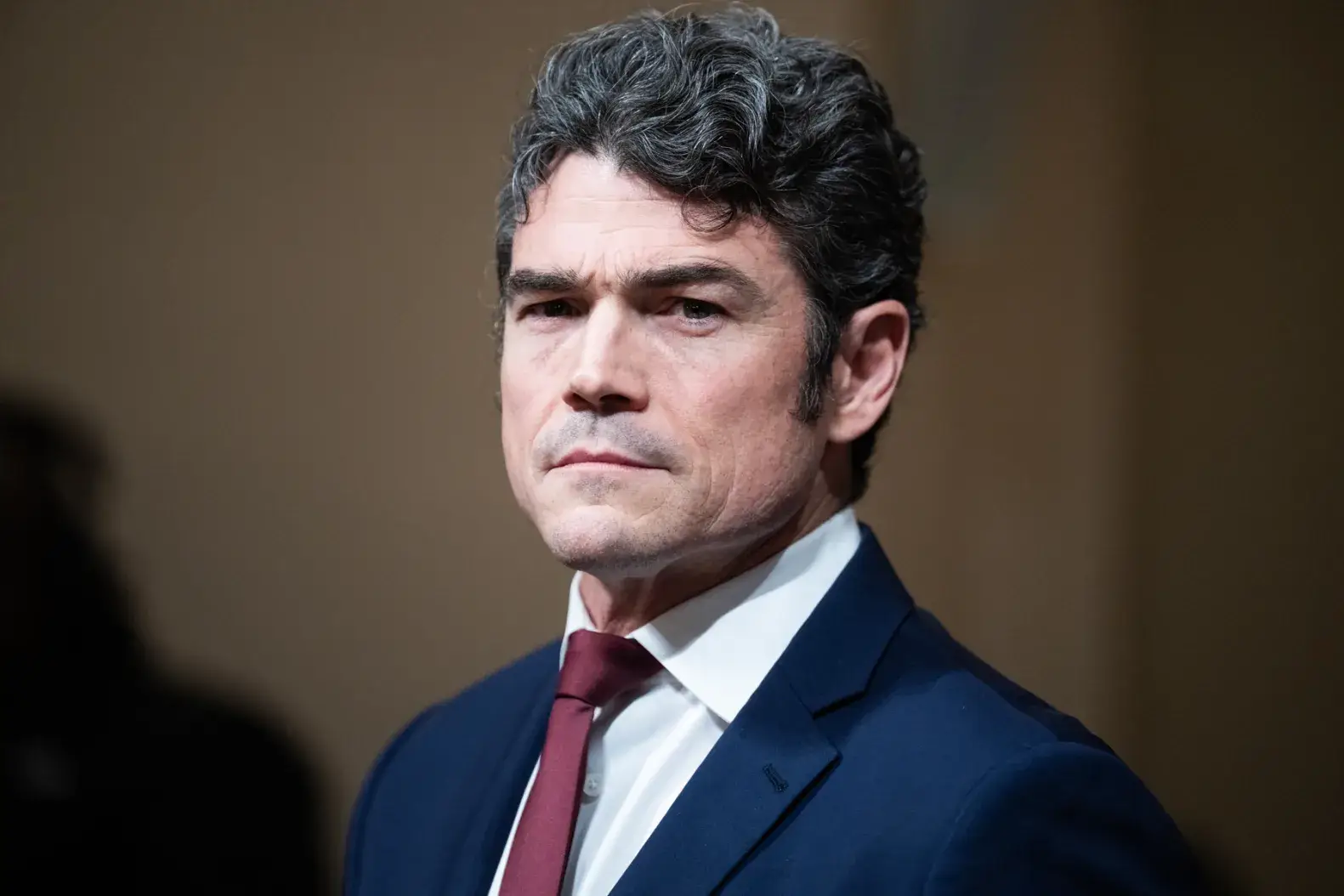
Joe Kent, director of the National Counterterrorism Center, quit Tuesday in an open letter to President Trump — becoming the highest-ranking administration official to break publicly with the president over the 18-day-old war.
For the first time since the United States and Israel launched military operations against Iran 18 days ago, a senior Trump administration official has resigned in direct protest of the war.
Joe Kent, the director of the National Counterterrorism Center, submitted his resignation on Tuesday and made it public in a letter addressed to President Trump, writing that he could not, in good conscience, continue to serve while the conflict persisted.
“I cannot in good conscience support the ongoing war in Iran,” Kent wrote. “Iran posed no imminent threat to our nation, and it is clear that we started this war due to pressure from Israel and its powerful American lobby.”
The resignation, first reported by The New York Times on Tuesday, March 17, 2026, marks a significant moment for an administration whose senior ranks have remained remarkably unified since January 2025. No official of Kent’s stature had previously resigned while openly disagreeing with the president.
A Veteran’s Break With the Commander in Chief
Kent is not a typical Washington bureaucrat. He is a combat veteran who was deployed eleven times across multiple overseas conflicts, and a Gold Star husband — his wife, Shannon Kent, a military cryptologist, was killed in a suicide attack in Syria in 2019. He drew on both of those identities in his resignation letter, framing his decision in explicitly personal terms.
“As a veteran who deployed to combat 11 times and as a Gold Star husband who lost my beloved wife Shannon in a war influenced by foreign interests, I cannot support sending the next generation off to fight and die in a war that does not serve American interests or justify the cost of American lives,” he wrote. Kent drew a direct historical parallel, stating that the justifications for attacking Iran and the promises of swift victory echoed the debate over the 2003 war with Iraq, a conflict he served in and believes was a strategic mistake.
Trump’s Swift Rejection
President Trump did not let the resignation pass without a response. Speaking to reporters in the Oval Office on Tuesday, he dismissed Kent in characteristically blunt terms.
“I always thought he was a nice guy, but weak on security,” Trump said, according to the Times. “It’s a good thing he’s out—he said Iran was not a threat.”
Trump continues to support the war, recently posting on Truth Social that Republicans questioning the mission “are not MAGA,” and emphasizing that stopping Iran from obtaining nuclear weapons is central to his movement.
Kent’s departure has exposed, in unusually sharp relief, a tension that has simmered within Trump’s political coalition since the war began. The president built much of his support in 2016 and 2024 on explicit criticism of prolonged military interventions abroad. An anti-interventionist wing of the MAGA movement — aligned with figures such as Tucker Carlson and, to varying degrees, Vice President JD Vance and Director of National Intelligence Tulsi Gabbard — had hoped that a second Trump term would mean a more restrained American footprint overseas.
The Iran war has sharply tested that assumption. Carlson, a close friend of Kent’s, praised the resignation in terms that made clear he sees it as an act of principle rather than impulsiveness.
“Joe is the bravest man I know, and he can’t be dismissed as a nut,” Carlson said in a brief interview cited by the Times. “He’s leaving a job that gave him access to the highest-level relevant intelligence. The neocons will now try to destroy him for that. He understands that and did it anyway.”
Vance has expressed some personal skepticism about the war — Trump himself acknowledged last week that the vice president was “less enthusiastic” about the mission than others — but has been careful not to put public distance between himself and the president. On Monday, Vance told reporters he would not allow the media to drive a “wedge” between him and Trump.
Gabbard, who is Kent’s direct superior as Director of National Intelligence, is scheduled to appear before the Senate on Wednesday and the House on Thursday for annual threat hearings. The Times reported that Kent’s resignation is expected to dominate lawmakers’ questioning.
Not the First, But the Highest-Ranking
Kent is not the first member of the administration to publicly resign over the Iran war. Last week, Sameerah Munshi, a lower-level appointee to the White House Religious Liberty Commission, announced her own resignation. Munshi, a Muslim woman, wrote that most Americans opposed the U.S.-Israel campaign and that she had witnessed hostility toward her religion within the commission. She also cited the revocation of another commission member’s seat as a contributing factor in her decision to leave.
Kent’s resignation, however, carries a different weight. As director of the National Counterterrorism Center, he held a senior post with access to the highest levels of classified intelligence on threats facing the United States. His willingness to walk away from that access — and to do so publicly — gives his dissent credibility that lower-level departures do not.
Javed Ali, a former senior U.S. counterterrorism official now at the University of Michigan’s Gerald R. Ford School of Public Policy, told the Times that Kent’s background gives his critique substance: “Kent’s former experience as a seasoned combat veteran and with U.S. special operations and intelligence elements gave him a unique perspective on the risks and dangers associated with conflicts overseas.” DISCLAIMER: This article was originally written in English. Translations into other languages are generated automatically using AI software and may not fully reflect the accuracy of the original text. For the most accurate version, please refer to the original English text.
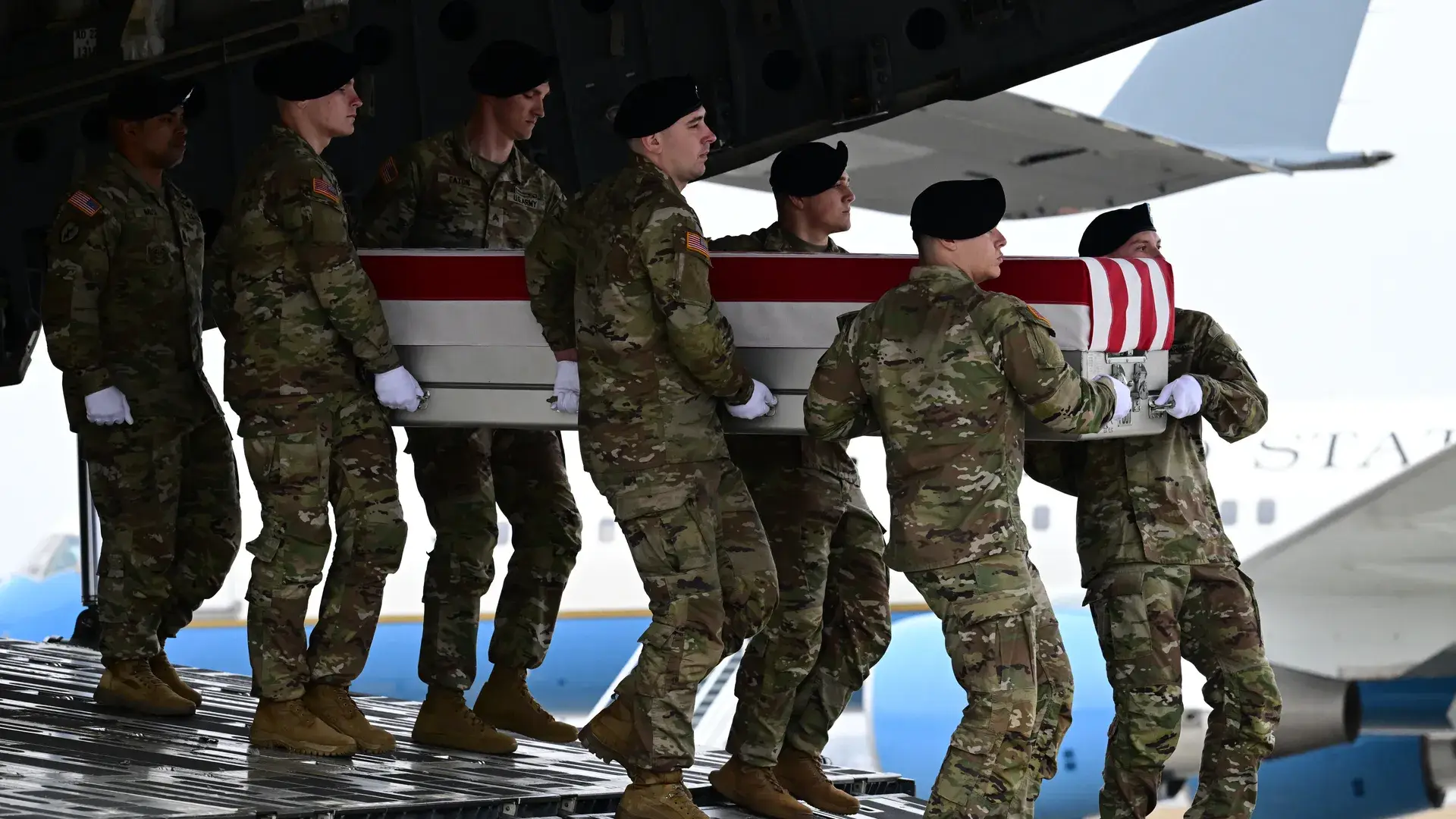
“A U.S. Army carrying the remains of U.S. soldiers killed in Kuwait in Dover, Delaware on March 7. Photo: Kyle Mazza/Anadolu/Getty Images”