



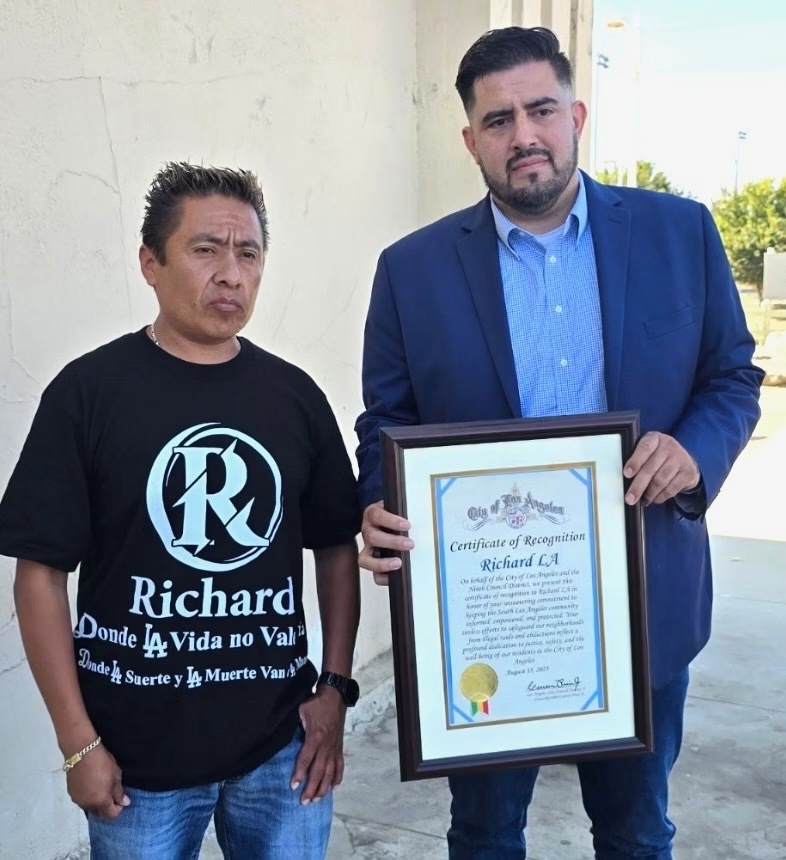
The criminal case against a well-known TikToker in Los Angeles’ Hispanic community has reached an unexpected conclusion. In a rare move, a federal judge has ordered the charges dropped, citing serious violations of the defendant’s constitutional rights. Federal judges seldom dismiss indictments on the grounds of Sixth Amendment violations, highlighting the significance of this decision.
Judge Fernando Olguin issued his ruling Saturday, dismissing the indictment against Carlitos Ricardo Parias, a Mexican content creator with more than 340,000 TikTok followers. The reason: federal authorities repeatedly prevented his defense attorneys from visiting or communicating with him while he was held in immigration detention.
This obstruction made it impossible to prepare for his trial, which had been scheduled for this week. In his ruling, the judge emphasized that the dismissal was ‘with prejudice,’ meaning the government cannot refile the same charges. This decision also prevents the possibility of retrying the case in criminal court; however, Parias could still face civil lawsuits related to the incident.
“In short, the government’s failure to coordinate the overlapping actions of its separate agencies while relentlessly pursuing Mr. Parias’s criminal proceedings created a situation from which constitutional violations could — and did — occur,” Judge Olguin wrote in his decision.
Prosecutors Strongly Contest the Ruling
The U.S. Attorney’s Office in Los Angeles issued a statement indicating it is evaluating its appeal options. “We strongly disagree with the court’s version of the facts as well as its legal conclusions,” the agency said. Prosecutors contest the claim that Parias’s rights were violated, arguing that communication with his legal team was possible, though they acknowledge some logistical challenges related to detention timelines. Additionally, they dispute the characterization of events during the alleged assault, insisting that the federal officers acted within their rights given the circumstances.
Parias had pleaded not guilty last month to charges of assault on a federal officer with a deadly or dangerous weapon, as well as depredation of government property.
The charges stemmed from an incident last October. On a brisk fall afternoon, amidst the hustle and bustle of a busy Los Angeles neighborhood known for its crowded streets and vibrant community life, federal authorities moved to arrest Parias on an immigration warrant. According to federal authorities, Parias allegedly rammed his vehicle into theirs during the attempted arrest. The confrontation quickly escalated in the confined space, leading agents to open fire. He was shot in the elbow and subsequently hospitalized following his arrest.
Released on bond pending trial, Parias was subsequently transferred to an immigration detention facility in Adelanto, California, approximately 70 miles northeast of downtown Los Angeles. The facility is operated by Geo Group, a private prison and detention center contractor. According to the government’s online database, he remained there as of Monday. U.S. authorities say Parias is a Mexican national living in the country illegally.
A Prominent Figure in Los Angeles’ Latino Community
Carlitos Ricardo Parias made a name for himself in South Los Angeles through his Spanish-language videos posted on two TikTok accounts with a combined following of more than 340,000. His content, dating back to 2024, documents police activity, car accidents, and fires, as well as lighter moments such as tortilla-making and rainy days in Los Angeles.
This year, his posts have also focused on protests against immigration enforcement operations and arrests by federal deportation authorities.
Parias is part of a network of content creators who document immigration raids and arrests throughout Southern California. These videographers often relay information in real time to alert community members.
This case illustrates the growing tensions between immigration enforcement operations and respect for detainees’ fundamental rights, particularly their right to effective legal representation.
Article based on information reported by the Associated Press (AP)