


Organization of American States (OAS) Secretary General Albert Ramdin, who began a two-day visit to Haiti on December 2, welcomed recent progress made on key transitional priorities and reaffirmed the OAS’s commitment to supporting the country on its path toward lasting stability, according to a statement from the Haitian presidency.
Ramdin reiterated the OAS’s technical support for Haiti’s electoral process, particularly through assistance to the National Identification Office (ONI). He also urged the country’s political actors to fully engage in efforts to reach a clear, effective, and consensual agreement ahead of February 7, 2026, in order to safeguard gains made since the beginning of the transition and maintain the stability the country urgently needs.
Laurent Saint-Cyr, president of the Transitional Presidential Council (CPT), thanked the OAS for its continued engagement, especially in finalizing Haiti’s transitional roadmap. He underscored the country’s pressing security challenges — a prerequisite for organizing credible elections — while highlighting recent progress, including the adoption on December 1, 2025, of the electoral decree.
Discussions also focused on the operational readiness of the new Anti-Gang Task Force (FRG), international sanctions, measures to address the worsening humanitarian crisis, and ongoing efforts to revive Haiti’s economy, according to the presidency.
Both parties acknowledged the urgent need to restore security, including through coordinated actions to dismantle networks supplying gangs with weapons and funding, and to reinforce maritime surveillance.
A Reception in Honor of the OAS Secretary General
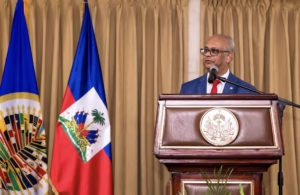
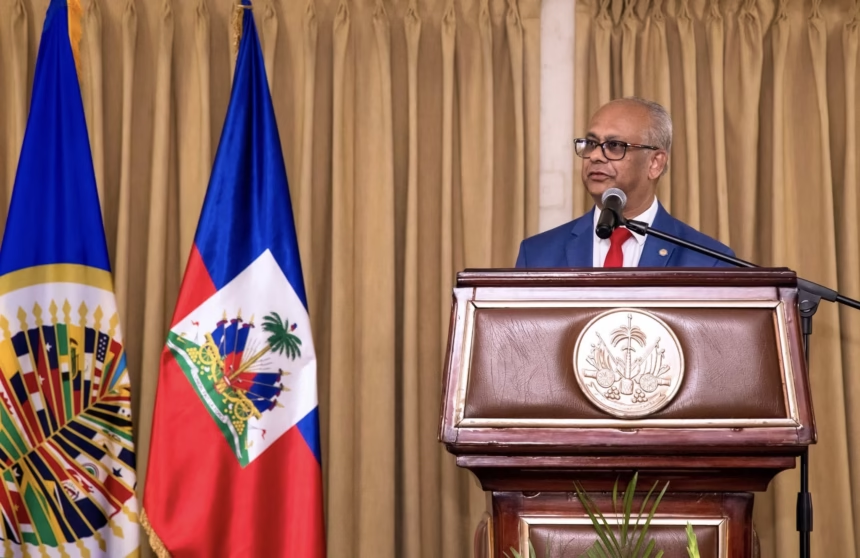
At a reception held Tuesday evening in honor of Secretary General Ramdin, CPT President Laurent Saint-Cyr — accompanied by fellow CPT members and Prime Minister Alix Didier Fils-Aimé — described Ramdin’s visit as a sign of personal commitment to Haiti and renewed interest in the country’s stability and that of the wider region.
Saint-Cyr expressed gratitude to the OAS for its key role in finalizing the national roadmap and supporting the establishment of the FRG. He reaffirmed the CPT’s willingness to work closely with regional and international partners to ensure the swift, coordinated implementation of agreed-upon security measures.
The CPT president stressed that Haitians expect concrete follow-through from the international community.
“The Haitian people must be able to vote in an environment that is safe, calm, and free of intimidation,” he said. “Only a clear and coherent partnership between national authorities and our international partners can guarantee these conditions.”
He also called for unity and dialogue among all sectors of society, insisting that “Haiti can — and must — become a land of hope and dignity for all its children.”
“The Haitian people must be able to vote in an environment that is safe, calm, and free of intimidation,” he said. “Only a clear and coherent partnership between national authorities and our international partners can guarantee these conditions.”
He also called for unity and dialogue among all sectors of society, insisting that “Haiti can — and must — become a land of hope and dignity for all its children.”
For his part, Ramdin said Haiti, as a founding member of the OAS, can count on the Organization’s continued support during this decisive period. He pledged to strengthen regional cooperation and back initiatives led by Haitians themselves to achieve a lasting resolution to the crisis.
Foreign Affairs Minister Jean-Victor Harvel Jean-Baptiste also addressed the gathering, welcoming Ramdin’s presence and applauding the adoption of the roadmap — a critical step for national stability. He reaffirmed Haiti’s expectation that the OAS will fully uphold its role as a guardian of democratic principles in the region.
The ceremony brought together members of the Haitian government, the diplomatic corps, the national police chief, the head of the Multinational Security Support Mission (MMAS), the Provisional Electoral Council, and other senior state officials.
Context: Adoption of the Electoral Decree
Ramdin’s visit comes one day after the official adoption of Haiti’s electoral decree. On December 1, during a formal Council of Ministers session attended by the prime minister, CPT members, and government officials, the draft decree was reviewed and approved.
The decree lays out in detail the procedures, timelines, and mechanisms required to quickly restore elected institutions and strengthen Haiti’s democratic foundations.
Its publication in Le Moniteur, Haiti’s official gazette, is being framed as a strong message to both citizens and the international community. According to the prime minister, the decree demonstrates that “the government and the CPT are acting responsibly, with determination and commitment, to ensure the return of fully democratic governance.”