


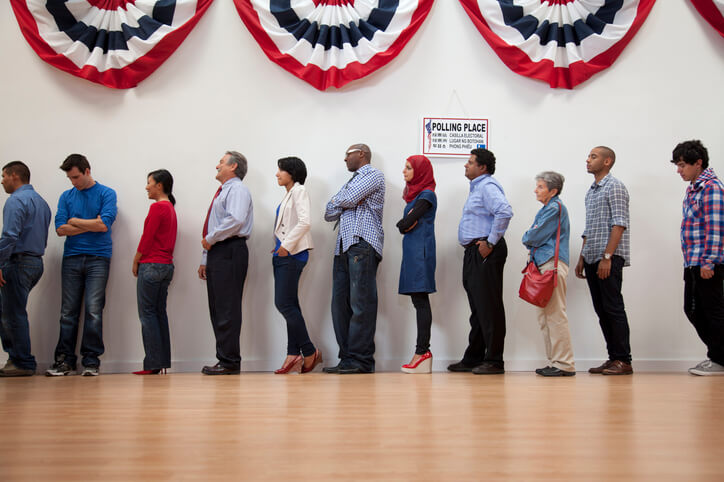
True representative democracy depends on making access to voting a realistic option for all.
The fundamental task for American democracy today is to create an inclusive political order.
An inclusive order includes everyone. It fundamentally entails creating a political and constitutional structure that takes seriously the right to vote and assures that right is not undermined for any group, whether on the basis of race, ideology, or geography. The future of voting rights law and policy should focus on developing a new political and legal consensus in which voting is regarded as a universal and fundamental right, made available to all.
Throughout U.S. history, race and political power have long been interrelated. Structural political inequality and structural racial inequality have been mutually reinforcing, so solving racial discrimination in voting will require a vigorous commitment to resolving political inequality—and vice versa. In other words, commitment to political equality must include a commitment to eradicating racial discrimination in voting. To eradicate discrimination in voting and achieve real political equality, election law must become centralized and nationalized. States should thus be precluded from regulatory practices that undermine inclusiveness and political equality.
In an inclusive political order, the current conception of state sovereignty in setting election rules has no role to play. That current conception holds that a state can effectively discriminate on the basis of race because the only way to stop the state is by proving it acted on the basis of a racial motivation.
In effect, election law today allows a state to engage in a kind of legal arbitrage in their election rules. If states can justify election rules on the basis of politics or political ideology, even though these two things can be interrelated with race, the Court will not say anything about what the state has done. This practice must change. State governments should not…