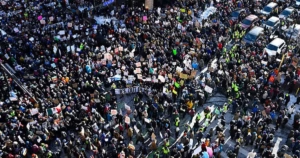


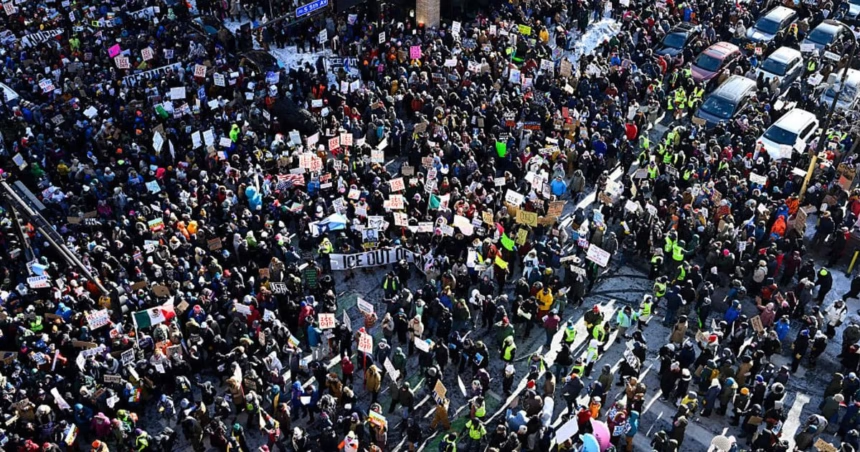
Activists across the country are calling for an “economic blackout” this Friday, January 30, 2026. They are protesting Immigration and Customs Enforcement (ICE) operations. This action follows a massive mobilization in Minnesota last week.
The goal is clear: no work, no school, no shopping. Activist groups, unions, and several celebrities have called for this general strike following fatal shootings involving immigration agents in recent weeks in Minnesota.
Actress Hannah Einbinder and actor Pedro Pascal both voiced support for the strike on social media, urging people to participate and highlighting the victims of recent incidents as a reason for the protest, according to Business Insider.
Actor Pedro Pascal shared an image of Alex Pretti and Renee Good, the two Minnesota residents killed by federal agents. He added the message, “Pretti Good Reason For A National Strike” (a play on the victims’ names and “pretty good reason”). This showed his support for the January 30 strike.
A website dedicated to the “National Shutdown” lists hundreds of organizations supporting this movement. This is according to Business Insider.
Minnesota as a Model
This national strike is an expansion of the “ICE OUT” movement that took place in Minnesota on January 23, 2026.
That day, thousands of Minnesotans took to the streets, and approximately 700 businesses closed their doors in solidarity, according to the Minnesota Star Tribune.
Local news site Bring Me The News compiled a list of more than 200 businesses that posted on social media about their participation in this action.
Among the participating businesses, Catzen Coffee, a café where customers can interact with cats, was not open for purchases that day. However, it still invited customers to spend time with the felines and find a sense of community, reports Business Insider.
“I thought the strike was extremely successful. There were so many participants that it served as a true roadmap for a larger general strike,” said Vanessa Beardsley, owner of Catzen. She was referring to the January 23 strike. “For me personally, there was overwhelming comfort and gratitude that I live in Minnesota and that we are all standing together in this moment of history.”
Unions on the Front Lines
The January 23 action in Minnesota was supported by numerous regional unions. Their demands included ICE leaving the state and no additional federal funding for the agency.
“Working people, our schools, and our communities are under attack. Union members are being detained commuting to and from work, tearing apart families,” said Chelsie Glaubitz Gabiou, president of the Minneapolis Regional Labor Federation, AFL-CIO, in a statement before the January 23 strike. “Parents are being forced to stay home, students held out of school, fearing for their lives, all while the employer class remains silent.”
The University of Minnesota Graduate Labor Union posted on Instagram: “Last week’s march brought out tens of thousands of people; let’s make this Friday even bigger.”
In a statement, White House spokesperson Abigail Jackson said that the Trump administration’s immigration operations “have resulted in many criminal undocumented immigrants being removed from the streets.”
Jackson added that this “will create a safer environment where all businesses can thrive in the long term, and their customers can feel safe.”
The national economic blackout’s level of participation and specific effects on businesses, schools, and ICE operations are not yet known. However, widespread mobilization on social media and support from public figures indicate that Friday’s protest may have a notable impact.
This strike comes amid growing tensions over the Trump administration’s immigration policies. The policies include the end of Temporary Protected Status for Haitian nationals, set to expire on February 3, 2026.