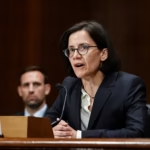




The Massachusetts Congressional delegation will hold a meeting next Tuesday, representing a key effort to protect Haitian nationals in the United States.
Senator Edward J. Markey (D-Mass.) and Representative Ayanna Pressley (MA-07), co-chair of the House Haiti Caucus, have announced a field hearing in Boston on January 20, 2026. This date is significant as it is almost a year since the announcement of key decisions affecting TPS (Temporary Protected Status) beneficiaries. The precedent for extending TPS is robust, as evidenced by previous bipartisan renewals for countries such as Honduras and El Salvador. These extensions demonstrate a historical commitment to humanitarian principles and offer a framework for addressing the current Haitian situation. By referencing these past legislative actions, the delegation aims to underscore the feasibility and urgency of renewing TPS for Haitian nationals.
The urgency of the situation is underscored by the looming expiration of TPS for Haiti on February 3, 2026. This decision, issued on November 28, 2025, places approximately 350,000 Haitians at risk of deportation, including 4,700 in Massachusetts.
Lawmakers aim to collect testimony from community leaders and affected families for inclusion in the Congressional Record, to support legislative and oversight actions. Congress is considering a discharge petition to compel the federal government to reverse its decision not to renew TPS for Haitians. Passing this measure will require support from at least five Republicans.
Ongoing Legal Challenges
As Congress acts, legal proceedings continue in federal courts. In National TPS Alliance v. Kristi Noem, plaintiffs argue that the TPS termination is “arbitrary and capricious,” pointing to a broader pattern of opacity that characterizes the government’s decision-making process.
Court documents filed on January 15, 2026, reveal significant disputes over government transparency. There is a growing concern that the concealment of evidence is shaping the crisis; plaintiffs allege the government is limiting document searches to a three-month period, excluding political discussions after the January 20, 2025, inauguration. This selective transparency has heightened suspicion among civil rights attorneys seeking access to communications from Corey Lewandowski, a senior advisor at DHS and former Trump campaign manager. They argue his involvement indicates the TPS termination was motivated by political ideology rather than conditions in Haiti.
Human Impact
Massachusetts is home to about 46,000 Haitians and Haitian-Americans, with over half residing in the Boston metropolitan area.
For many families who have lived in the United States for over a decade and have U.S.-citizen children, the end of TPS would mean forced return to a country still facing political instability and ongoing humanitarian crises.
The administrative process within the Department of Homeland Security (DHS) is under scrutiny. Clarifications from January 15 indicate that analysts who prepared the final decision memo did not assess conditions in Haiti directly. This separation raises concerns that technical reports from career experts were disregarded in favor of predetermined political outcomes.
Toward a Resolution
The situation is urgent. ACLU attorneys stress the “imminent harm” to their clients and are working continuously to secure judicial intervention before February 3.
Next Tuesday’s meeting in Boston will provide a platform for affected individuals and remind the federal government that legal and procedural debates impact thousands of lives. The Ninth Circuit Court of Appeals in California and Judge Ana C. Reyes in Washington must rule promptly to determine whether over 350,000 Haitian immigrants can remain in the United States beyond February 3, 2026.

https://ctninfo.com/?p=39414&preview=true
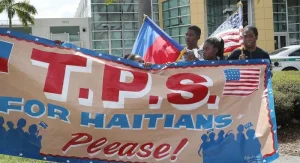
https://ctninfo.com/?p=39414&preview=true